Top 10 Luxury Pool Designs for Florida Homes
Luxury in a Florida pool is not a feature list. It is a pool that fits the house and the lot, with finishes and details chosen together. These ten design directions are the ones we build most, with what each asks of the site and the budget.
Luxury in a Florida pool is not a feature list. It is a pool that fits the house and the lot, with finish, tile, coping, deck and lighting chosen as one palette, the equipment out of sight, and the details resolved before the shell is shot. The ten directions below are the ones we build most in North and South Florida. For each, we note what it asks of the site and the budget, because a design that ignores either is a mistake with a nice rendering.
1. The geometric pool with a raised spa
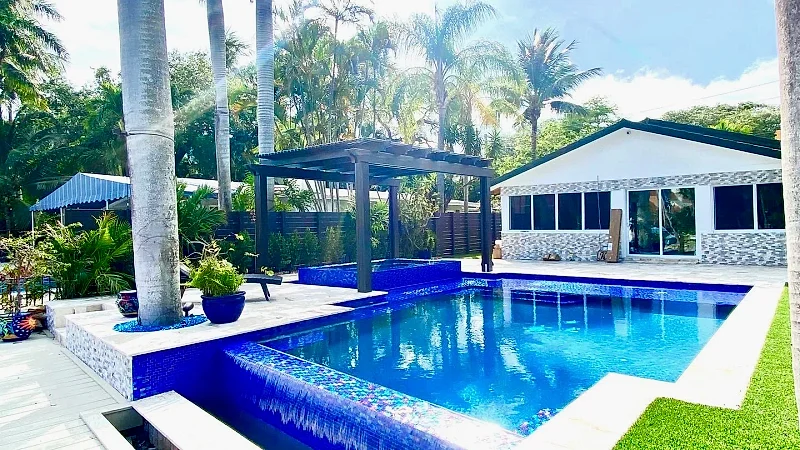
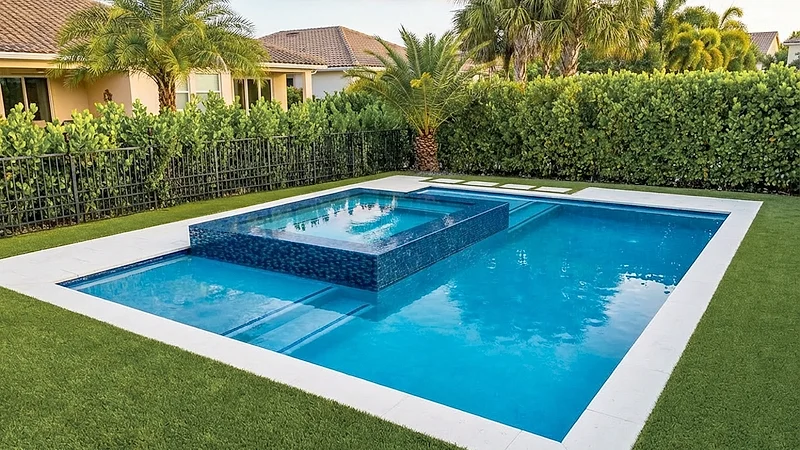
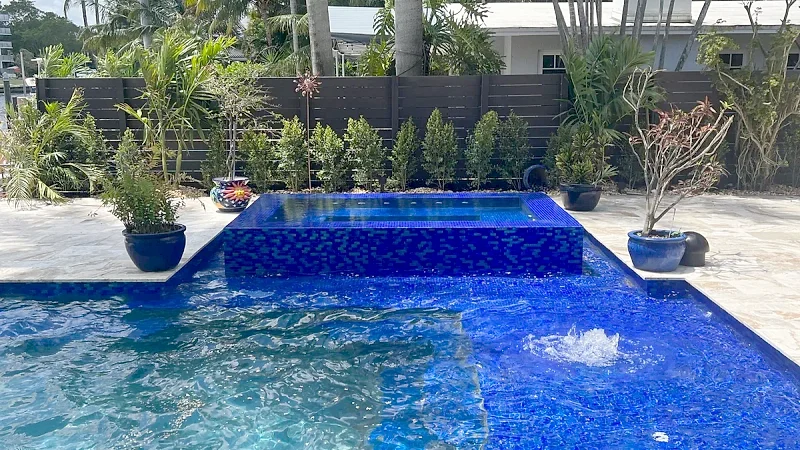
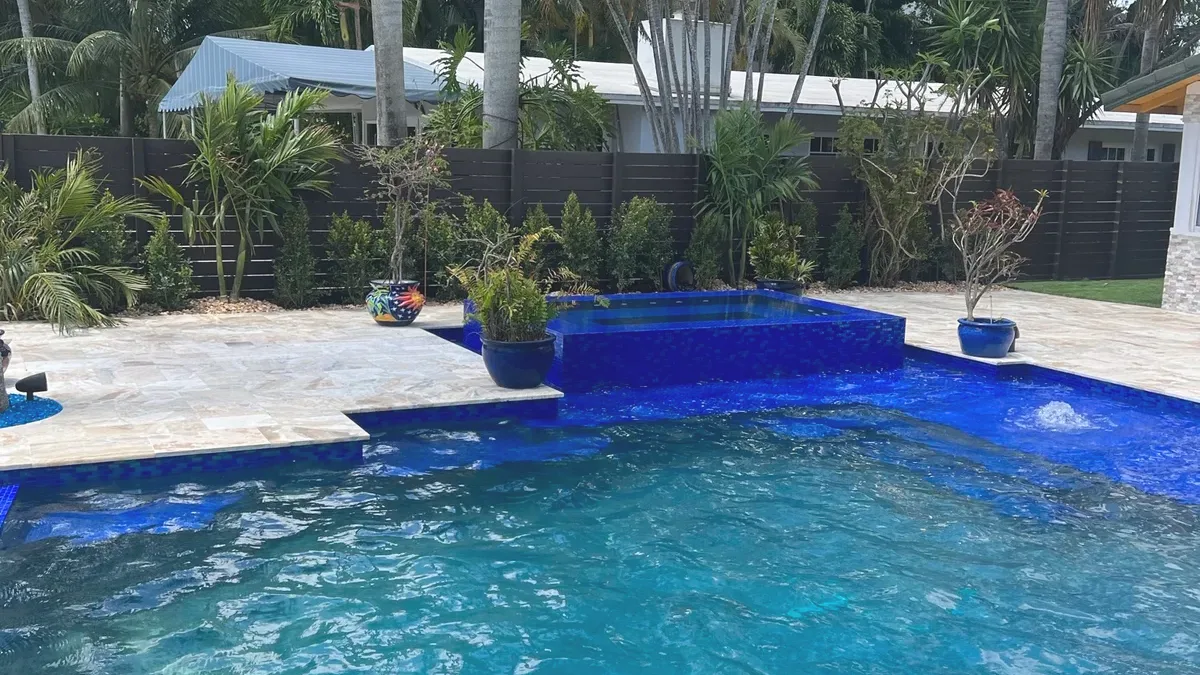
A rectangle or a clean L-shape, a raised spa at one end clad in mosaic tile with a spillway into the pool, and a deck that runs the width of the house. It suits contemporary and Mediterranean homes alike, reads as custom from the first photograph, and is forgiving on narrow lots.
What it asks: a spa shares plumbing and heating with the pool, so its position is decided with the hydraulics. The spillway is a detail that has to be built, not added.
2. The sun shelf pool
A shallow ledge, usually along one side or across the entry, where loungers sit in a few inches of water. In Florida it is the most used square footage of the pool: children play on it, adults read on it, and it is where bubblers and umbrella sleeves go.
What it asks: the shelf is part of the shell, so it is in the engineered plans. Bubbler plumbing and umbrella sleeves go in before the shell is shot. Our guide to upgrades worth planning before construction lists what cannot be added later.
3. The infinity or knife-edge pool
The water appears to run over an edge into the view. It belongs on a lot with a view to fall into: a lake, a golf course, a slope. On a flat suburban lot it is an expensive way to look at a fence.
What it asks: a catch basin, a second pump and careful hydraulics; the edge is a structural element engineered to tight tolerances. Both are decided in design.
4. The pool with integrated lighting design
Underwater LED lighting is standard. Designed lighting is different: lights positioned so the pool, the spa spillway and the water features are lit as a composition, with deck and landscape lighting on the same control, and no fixture pointed at the house.
What it asks: fixture positions and niches in the shell, transformer capacity, and conduit for the deck and landscape circuits, all before the deck is poured. Automation ties it to one app; our pool automation for new construction guide explains what to decide.
5. The dark-finish pool
A dark plaster, quartz or pebble finish turns the water a deep blue or green, reflects the sky and the house, and reads as a natural pool or a reflecting pool. It is the single finish choice that changes a pool's character most.
What it asks: dark finishes warm the water faster and show chemistry problems sooner. In Florida that is a trade-off worth understanding before you choose; we cover it in dark pool finishes in Florida.
6. The pool and pergola designed together
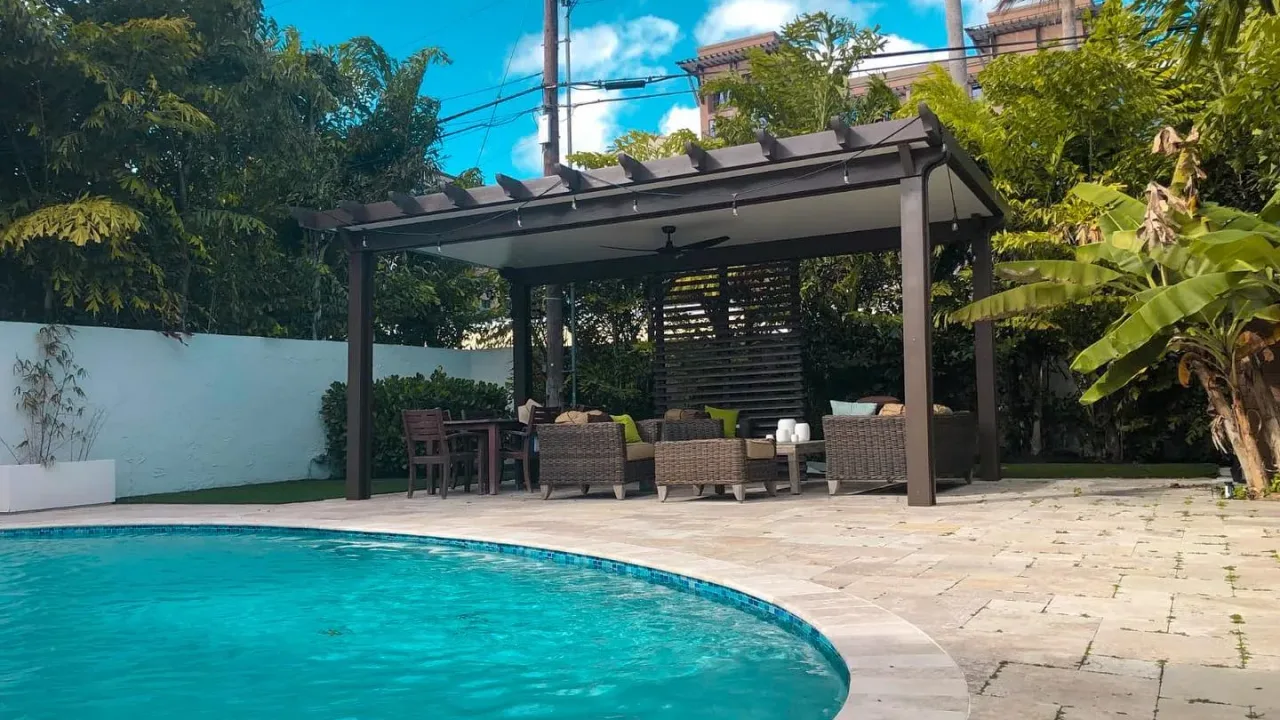
A pergola or louvered roof over part of the deck, placed so that shade falls where people sit and the structure frames the pool from the house. When the two are designed together, the footings miss the plumbing, the deck pattern aligns with the posts, and the pergola's electrical runs in the same trench.
What it asks: a single plan. Our guide to a pergola beside a pool lists the eight things to settle together.
7. The spa-forward design
For homes where the spa is the point, especially in North Florida where the cooler months are real: a larger spa, a spillway that is the focal point from the lanai, lounge seating with jets planned to the people who will use it, and a heater sized to bring it up quickly.
What it asks: heater capacity and gas or electric supply, planned with the equipment pad. Read pool and spa or pool only for the decision itself.
8. The plunge pool or spool
A compact pool, sometimes with spa jets and a heater, for lots that cannot fit a full pool or owners who want to cool off and soak rather than swim. On a courtyard lot it can be the whole backyard.
What it asks: the same engineering as a full pool in a small footprint, which is why it is not cheap per square foot. Luxury here is entirely in the finish and the deck.
9. The pool with water features
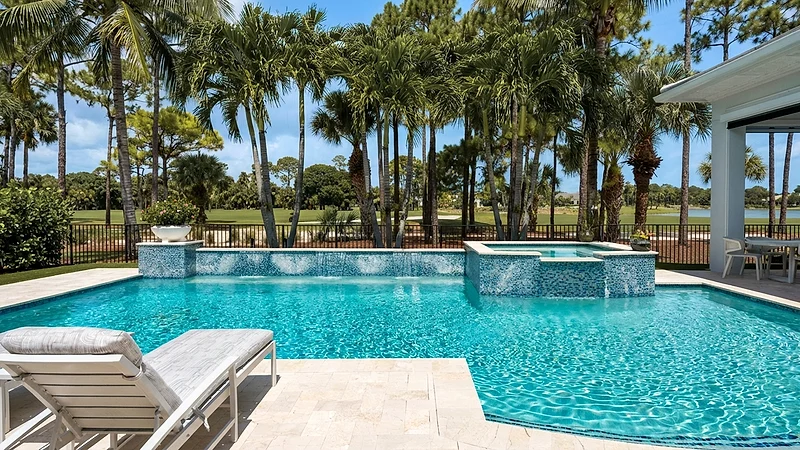
Sheer-descent waterfalls from a raised wall, deck jets arcing into the shallow end, bubblers on the shelf, a spillway from the spa. Water in motion masks road noise and makes the pool read as alive from inside the house.
What it asks: every feature is plumbing, a pump or a valve, and often a structure. They are designed in, with the hydraulics sized to run them.
10. The screened resort pool
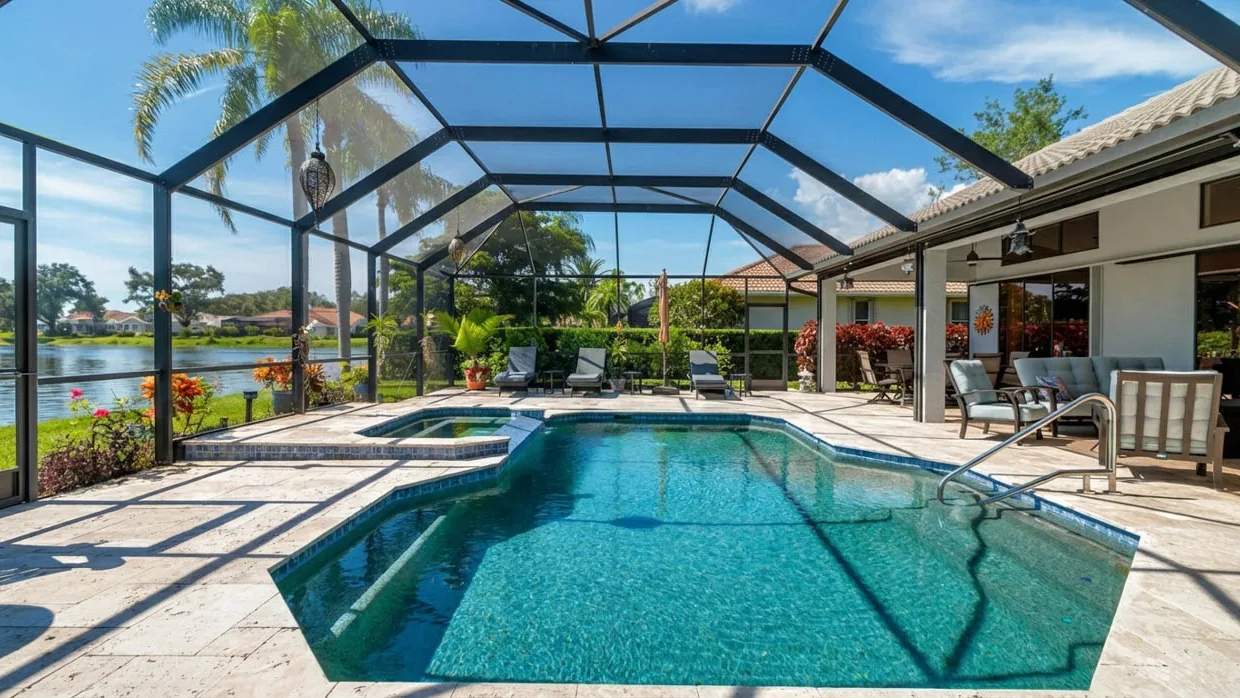
A pool and deck under a screen enclosure, with the enclosure's roof line following the house and the panels sized so the view reads as open. In Florida it is the most practical luxury: no insects, less debris, lower chemical demand, and it can serve as the code-required barrier.
What it asks: the enclosure is a structure engineered for the local wind design, with its own footings and permit. Its columns are placed with the pool and deck so nothing lands on plumbing. See our pool screen enclosures page.
How to tell a design idea from a design mistake
Three tests, in order:
- Does it fit the lot and the house? Scale, sight lines from the main rooms, setbacks and easements. A 3D model against the real lot answers this before engineering.
- Can it be built as one system? Hydraulics, structure, electrical and the barrier all have to carry it. Features that are "added later" usually cannot be, or cost more than the pool did.
- Will you use it in August and in January? Shade, a heater, a screen and lighting are what make a Florida pool a year-round room rather than a summer photograph.
Our guide to what makes a pool look custom covers the nine detail choices that separate the two. When you are ready to see your own lot in 3D, request a project evaluation on our custom pool construction page.
Common questions
What makes a pool design luxury rather than just expensive?
Coherence. A luxury pool is sized and shaped to the house and the lot, its finish, tile, coping and deck are chosen as one palette, the equipment is hidden and the lighting is designed. Adding features to a pool that does not fit the space makes it expensive, not luxurious.
Which luxury pool features are worth it in Florida?
The ones you will use most of the year: a sun shelf, a spa for the cooler months, shade over part of the deck, and lighting that makes the pool usable after dark. A heater extends the season in North Florida. Features chosen for a photograph are the ones that go unused.
Can a small backyard have a luxury pool?
Yes. Several of the designs here, the geometric pool, the plunge or spool, and the courtyard pool, are built for compact lots. Luxury on a small lot comes from proportion and finish, not size.
Does a dark pool finish make the water hotter?
A dark finish absorbs more sun and the water warms faster and reads a deeper color. In Florida that is welcome in winter and a consideration in summer; shade, water features and a chiller are the usual answers. Our guide to dark pool finishes covers the trade-offs.
Most Read Articles