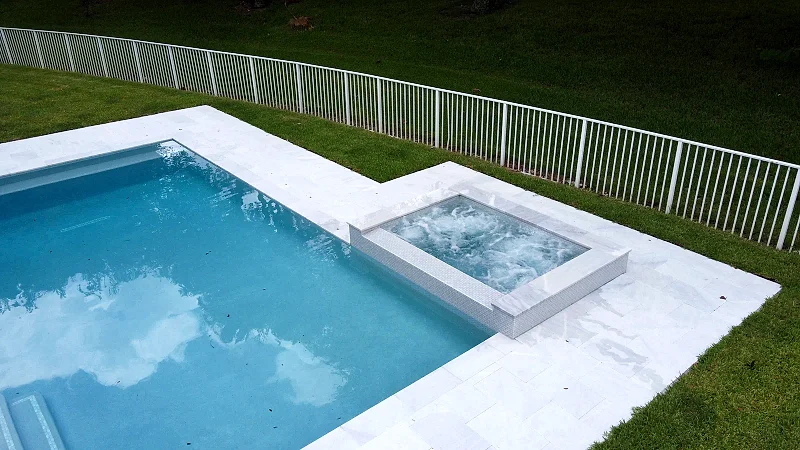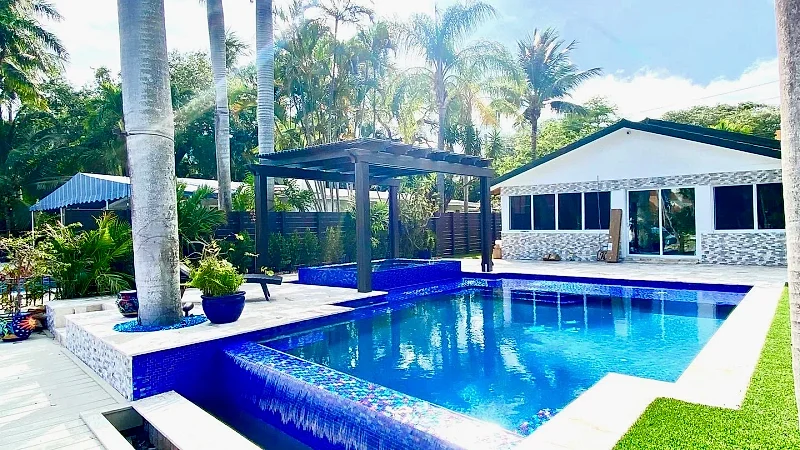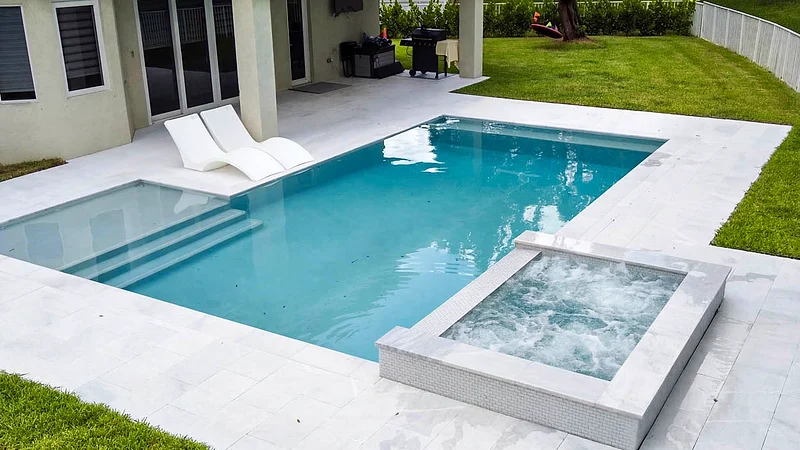
A dark finish turns a Florida pool into a deep blue or green mirror, warms the water faster, hides debris and shows chemistry mistakes. It is the single choice that changes a pool's character most, and it rewards owners who understand the trade-offs before they pick a sample.
A dark interior finish changes a pool's character more than any other single choice. The water turns a deep blue, teal or green and reflects the sky, the house and the trees; the pool reads as a reflecting pool or a natural pond rather than a bright aqua rectangle. It also warms faster, hides some things and shows others, and asks more of the water chemistry. This guide covers what actually changes in a Florida pool so that the sample you pick is a decision, not a surprise.
The interior finish of a gunite pool is a cementitious layer applied over the shell: standard plaster, plaster with quartz aggregate, or an exposed pebble finish. Each is made in a range of colors from white through blues and grays to charcoal and black. "Dark" covers the deep end of that range in any of the three materials.
The material decides durability and texture; the color decides how the water reads. A medium gray quartz and a black pebble are both "dark" and look nothing alike. We discuss brands and specific product lines in a design meeting with samples in hand, because the right choice depends on the look you want, the sanitizer you will use and how the pool is maintained.
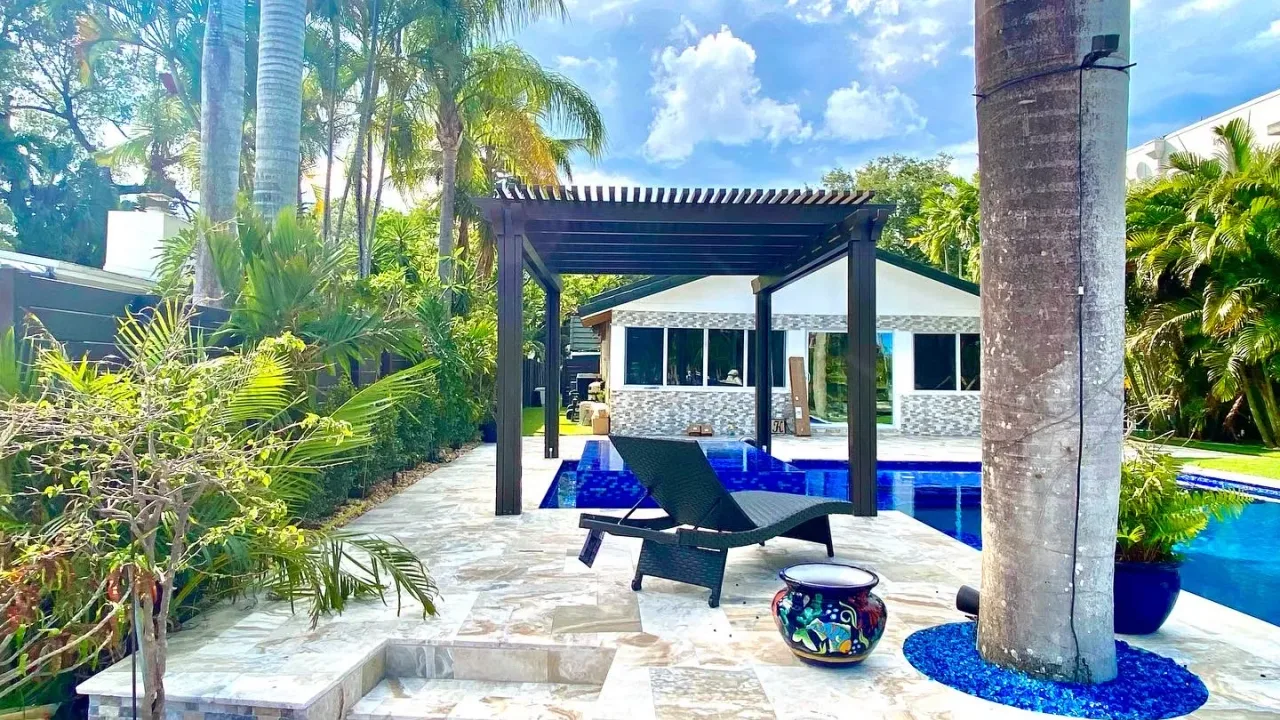
Water has no color of its own in a pool; what you see is the finish, the depth and the sky. Against a white finish the water reads pale aqua. Against a dark finish it reads deep blue or green, darker with depth, and the surface becomes a mirror in the right light. That is why dark finishes suit contemporary homes, reflecting-pool designs and lots with trees or a view to reflect, and why they can look flat in a small, fully shaded pool.
Two practical consequences:
A dark surface absorbs more of the sun that reaches it than a white one does, and the water above it warms faster and holds heat longer. How much depends on the shade on the pool, its depth, the wind, and how many hours of direct sun it gets. In the North Florida winter and the shoulder seasons, that is free heating. In a South Florida summer, where pools already run in the 80s, it can push the water past comfortable.
The answers are decided in design: shade over part of the pool, water features that move water and air, running the pump and features at night, and, where the owner wants a guaranteed temperature, a heat pump that cools as well as heats. None of them are reasons to avoid a dark finish; they are the reasons to choose it with your eyes open.
| Dark finish | Light finish | |
|---|---|---|
| Leaves, sand and debris on the floor | Less visible | Very visible |
| Calcium scale and white deposits | Very visible | Less visible |
| Mottling and color variation in the cure | More visible | Less visible |
| Steps, benches and depth changes | Harder to read; needs contrasting tile and light | Easy to read |
| Metal staining | Reads differently by color; still a chemistry problem | Visible |
The honest summary: a dark finish forgives a day of leaves and does not forgive a month of high calcium.
Every plaster-type finish is a cement product that cures in the water, and the first weeks decide how it looks for years. The startup procedure, brushing schedule and water balance in that period are specified by the finish manufacturer and followed by the builder; on a dark finish the result is visible, because unevenness in the cure reads as mottling against a dark background. After startup, balanced water, keeping calcium and pH in range, matters more on a dark finish because scale is white and the finish is not.
Salt chlorination, mineral systems and ordinary chlorine all work with dark finishes. What changes is attention: the pool shows when the water drifts, and that is an argument for automation with chemistry monitoring, which we cover in pool automation for new construction.
A dark finish is chosen with the tile, the coping and the deck, not after them. Tile that looked right against white plaster can disappear against charcoal, and a pale travertine deck that reads clean beside aqua water reads dramatic beside a black pool. Lighting is designed for it: fixtures lower and more of them, because dark water absorbs light. Our guide to what makes a pool look custom covers the palette as a whole, and ten luxury pool designs for Florida homes shows where a dark finish earns its place.
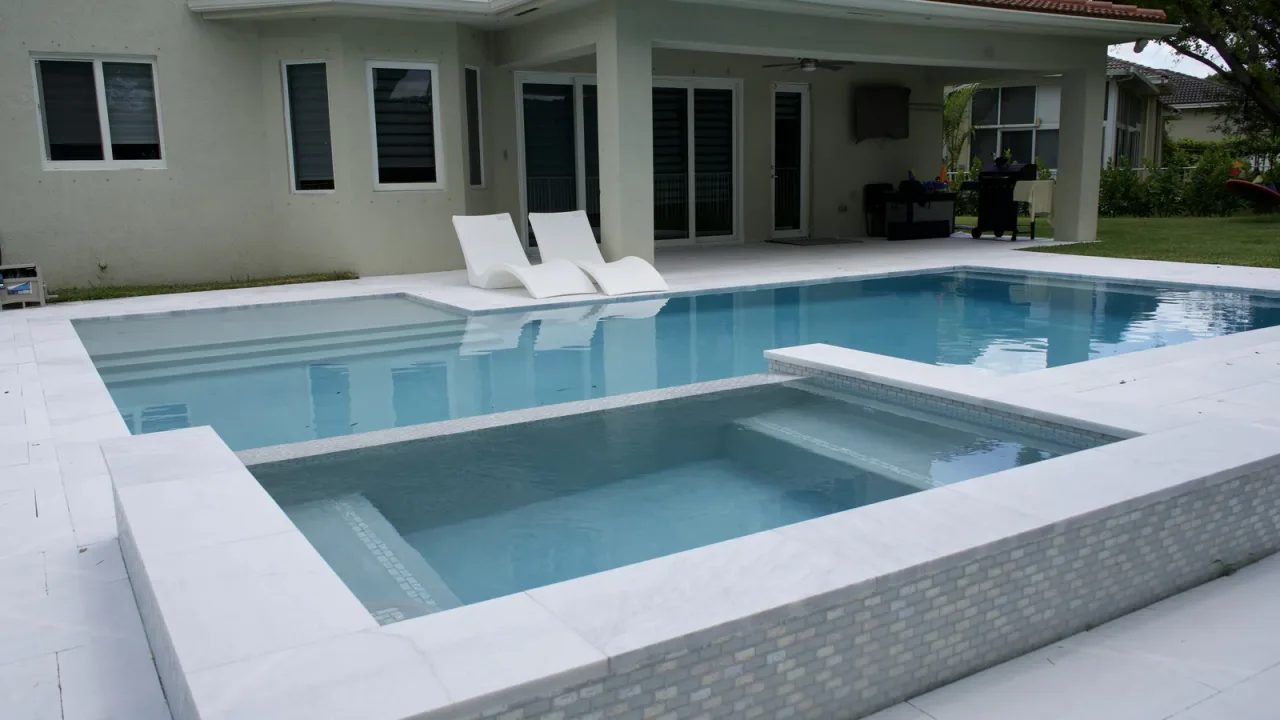
On a new pool the finish is chosen in design and applied after the tile and coping. On an existing pool it is replaced during a resurfacing or a complete remodel, and switching from a light to a dark finish is one of the most common renovation requests we see. The decision is the same either way, and so are the trade-offs; what differs is that a remodel can also change the tile, the lighting and the deck to suit the new color. Our guide to resurfacing vs. a full renovation explains when each is the right project.
If you are deciding on a finish, ask to see a real pool with it in the afternoon light, not a sample on a desk. We can arrange that as part of a project evaluation on our custom pool construction page, or through our complete pool remodeling page if the pool already exists.
Yes, somewhat. A dark interior absorbs more sunlight than a white one and the water warms faster and holds heat longer. In a Florida summer, where pools already run in the 80s, that can push the water past comfortable; shade, water features that move air through the water, and a chiller are the usual answers. In the North Florida winter it is a benefit.
They show different things. Calcium scale, which is white, is far more visible on a dark finish; dirt, leaves and small debris on the floor are less visible. Mottling and color variation, which are part of how plaster and pebble cure, also read more on a dark surface. Water balance and a proper startup matter more with a dark finish, not less.
Deep blue, teal or green depending on the finish, the depth, the sky and what is reflected in it. A dark finish reads as a reflecting pool or a natural pond rather than the bright aqua of a white plaster pool. Look at a real pool with the finish you are considering, in the afternoon, before choosing from a sample.
Yes. The interior finish is replaced during a resurfacing or a complete remodel, and switching from light to dark is one of the most common requests we see in a renovation. The tile, coping and deck should be chosen with the new finish, because what worked against white plaster may not against charcoal.