Resurfacing and a full renovation are not two budgets for the same job. One changes the surface; the other changes the pool. Here is where the line falls and the question that decides which side of it you are on.
Resurfacing replaces the interior finish of your pool and nothing else. A full renovation is that same work plus everything an empty pool gives access to: the waterline tile and coping, the deck, the penetrations through the shell, and the buried work between the pool and the equipment pad.
The difference that decides it is not budget. It is that resurfacing cannot change the pool. Not the shape, not the depth, not the steps, not where the water enters and leaves. If what bothers you about your pool is one of those things, a resurface will hand it back with a cleaner surface and the same problem.
A finished pool reads as a single object. It is five systems with independent lifespans, and knowing which one is actually failing is most of the decision.
Resurfacing is layer one. A full renovation is the decision to open all five while the water is out.
The pool is drained, the old interior surface is prepared or removed, and a new one goes on. The shell is not modified. Dimensions, depth, the step and bench layout, and the position of every return and skimmer come back exactly as they were.
What genuinely changes is how the pool looks, how it feels underfoot and how it holds up. Finish is a real decision, not a color swatch: our estimator applies a 15% factor for pebble over plaster and 35% for premium aggregates, on the pool line. The ordering holds on a remodel — the finish that costs more is the one that looks the way it looked for longer, under Florida sun and Florida water chemistry.
What does not change is everything in the other four layers. A resurfaced pool with the original waterline tile very often looks worse at the tile line than it did before, because the new finish is the only thing in the frame that is not aged.
The tile is also the one layer that will not wait politely. Waterline tile and coping sit at the top of the finish, where the pool meets the deck, so replacing them later means lowering the water, breaking out the first band of deck and working against the top inch of a surface you already paid for. A finish two years old ends up patched along the line everyone looks at first. If the tile is close to done, it goes with the finish or it goes before it — not two years after.
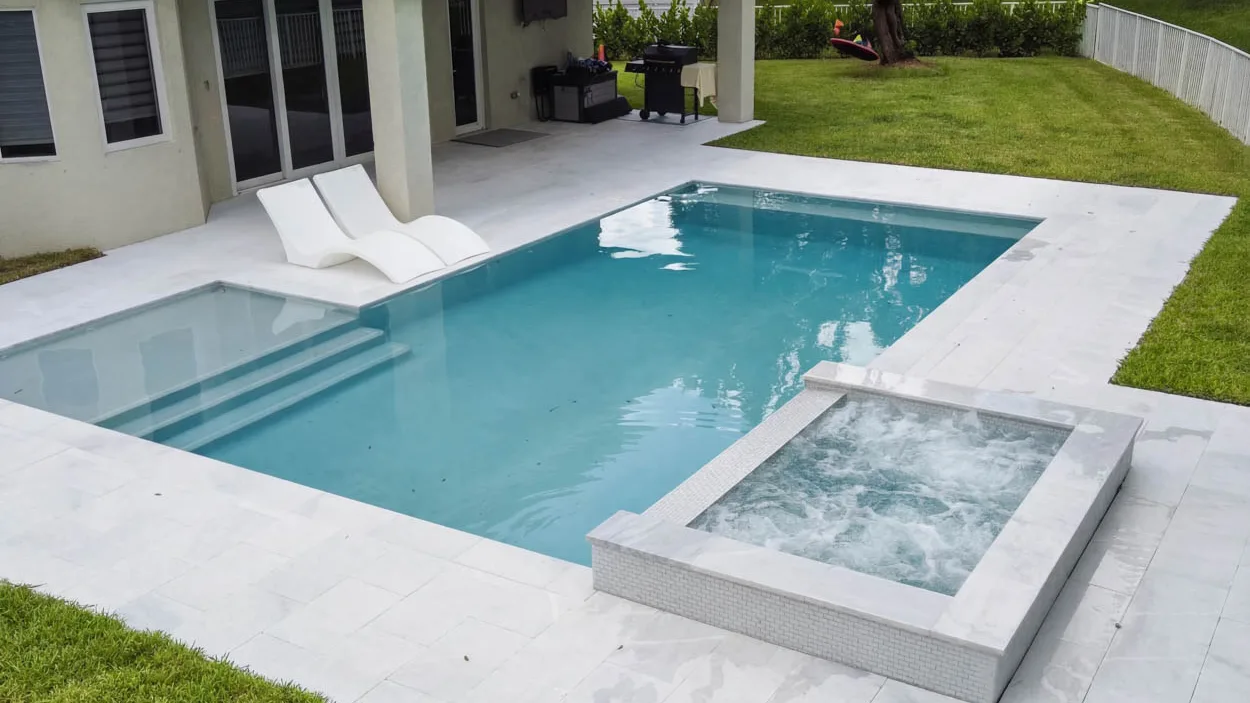
Everything below the water line requires the pool to be empty, and a full renovation is what happens when you use that one opening for all of it: tile and coping off and replaced, returns and skimmer relocated if they are in the wrong place, light niches reworked, deck resurfaced or extended, buried pipe and conduit re-run while the ground is open, and then the new interior finish over a shell that has been dealt with rather than covered up.
| Layer | Resurfacing | Full renovation | What tells you it is due |
|---|---|---|---|
| Interior finish | Replaced | Replaced | Staining that will not brush out, rough patches underfoot, bare spots or exposed aggregate |
| Waterline tile and coping | Left in place | Replaced or reset | Loose or missing tile, a calcium band that keeps coming back, coping that moves when you lean on it |
| Deck | Untouched | Resurfaced, replaced or extended | Trip edges at the joints, water running toward the house, a surface too hot to cross barefoot in August |
| Penetrations and plumbing | Reused as found | Reworked; returns and skimmer can move, niches can take modern fixtures | A skimmer that misses debris at normal water level, lines that will not hold pressure, a niche nothing current fits |
| Equipment pad | Untouched | Pipe runs, pad location and conduit can all change | Noise under a bedroom window, a pump that runs one speed, no spare conduit for a light or a future structure |
That last row is the one most often oversold, so it is worth splitting in two. What genuinely has to happen while the ground is open is the buried half: pipe diameter, where the pad sits, and sleeves under a deck that is coming out anyway. The equipment standing on the pad is not that. A heater at $4,500, salt chlorination at $2,200 and automation at $3,500 in our estimator all bolt on in a later year for about the same money, as long as the power and the pipe they need are already there. What to upgrade while the pool is open sorts the whole list on that test. It matters here because "while we are here" is the argument that turns a resurface into a renovation, and it is only true for about half of what it gets used on.
Not which one do I want. How many of those five layers are close to due at the same time.
Be precise about which ones actually share the opening, because not all five do. The finish, the waterline tile and coping, and anything that goes through the shell — returns, skimmer, main drain, light niches — all need the water out. The deck does not, except the band next to the coping. The equipment pad does not at all. So the layers that genuinely have to be decided together are the first three, and those are the ones where doing it in two visits means paying to open the pool twice.
Draining is not a free act in Florida either. Groundwater can lift an empty shell, which is what the hydrostatic relief valve in the floor is there for, so a pool comes down when there is a crew ready to work in it and not before. The drain, the chip-out, the cure and the chemical start-up happen once per scope, whatever the scope is — how long a remodel takes is the calendar that follows from it.
So the rule is short:
These are the complaints most often answered with a resurface, and should not be:
That last one is structural and is the reason the shell gets assessed before anything else. The rest are geometry, and geometry lives in the shell.
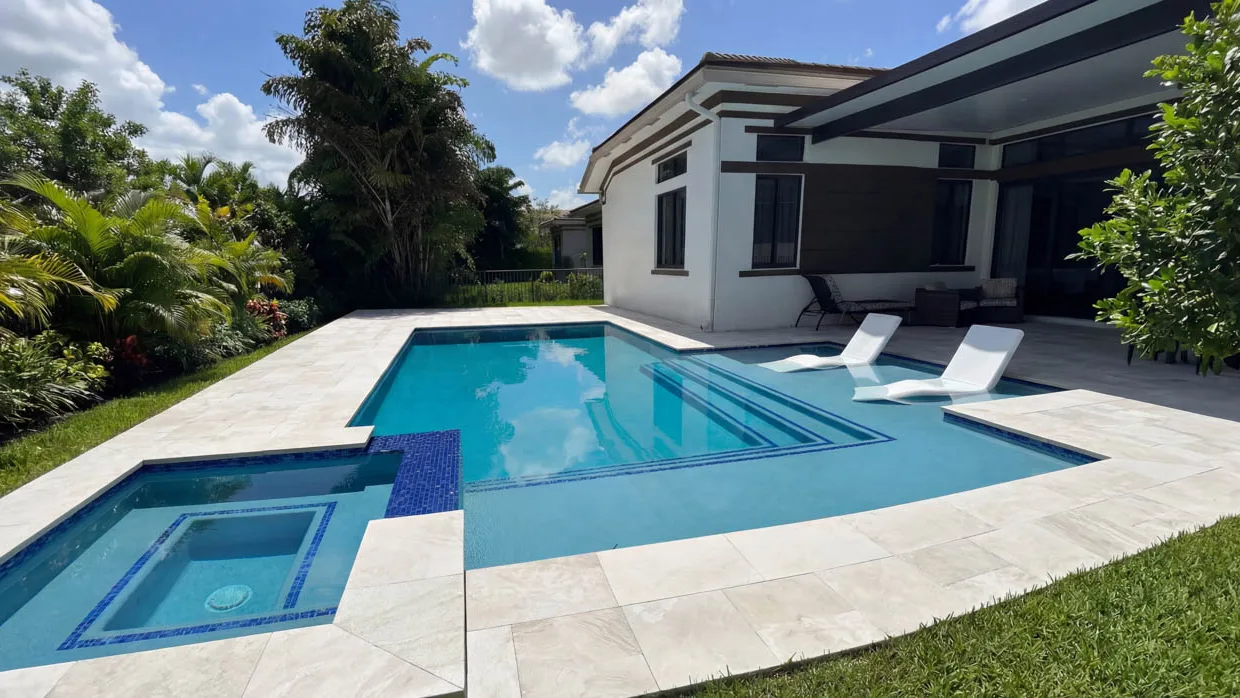
The deck deserves singling out, because it is the most common misdiagnosis. Our estimator prices deck at $12 a square foot for concrete, $22 for pavers and $35 for travertine, and a deck is usually the larger surface of the two — so a yard where the deck is the disappointment is a yard where resurfacing spends real money on the wrong half of the picture. It is also the layer you can do on its own schedule, since the water stays in.
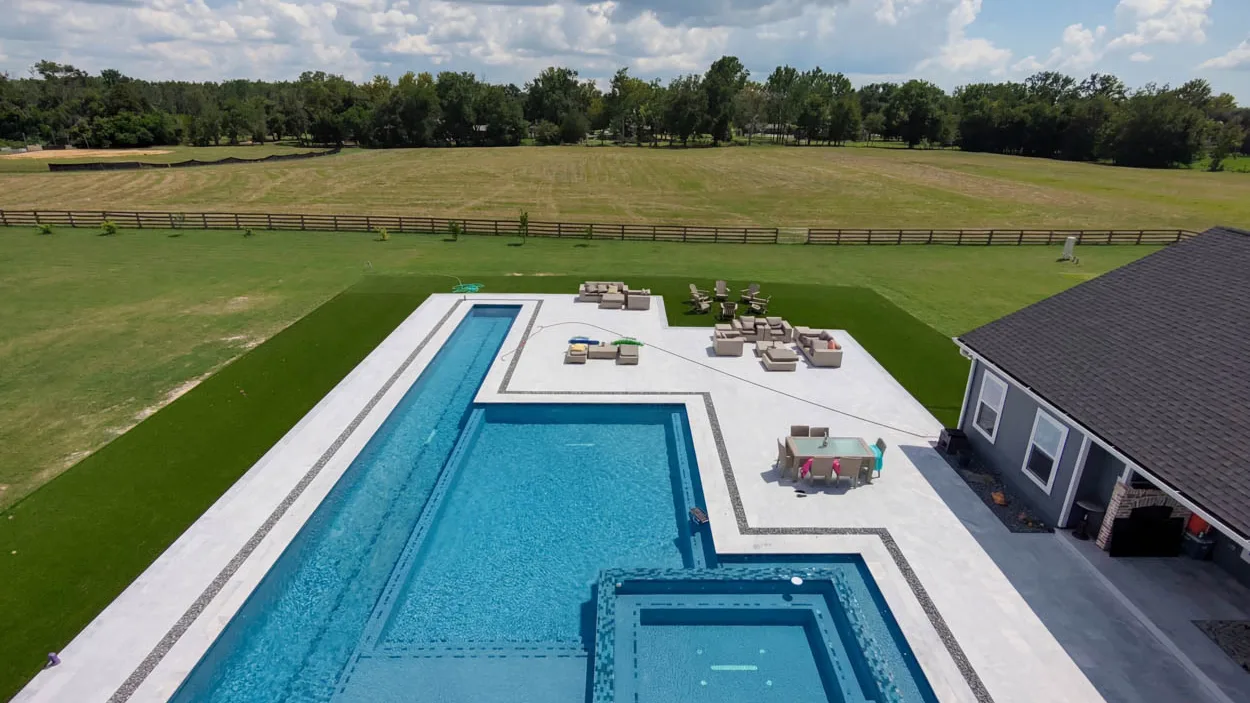
A resurface quote given without the pool drained is an estimate about the one thing that sets the job: what the shell looks like behind the old finish. Hollow areas, delamination and previous finishes layered over each other are found on removal, not before.
That is not evasiveness, and there is a version of it that is honest. Before the pool is opened, a contractor can reasonably assess the waterline and coping, deck grade and drainage, how the water behaves in heavy rain, and what is on the pad. What they cannot assess goes in writing as a stated assumption, and two are worth asking for by name: whether the price assumes the new finish bonds over what is there or the old surface comes off to the shell, and what happens to the number if a second or third layer of previous finish turns up. Named in the quote, that is a line you can compare. Discovered in week two, it is a change order negotiated with your pool already empty. Common pool construction mistakes we see in Florida covers what that looks like when it is handled badly.
Our estimator prices a complete remodel at 82% of what the same finished result would cost as new construction, and shows every figure as a ±10% band. That is a full renovation number — it assumes the deck, the finish, the equipment and the rest are all in scope — and what actually changes a remodel's scope is where it gets taken apart line by line.
A resurface on its own sits below anything the estimator models, and it is more useful to say that plainly than to invent a range. It is a single-trade job priced by three things: the size of the pool, the finish you choose, and how much of the old surface has to come off — and that third factor is the one nobody knows until the pool is empty.
If you want to see what the full-scope number looks like for your yard, the pool cost estimator runs the renovation version; browsing finished pools is the faster way to work out whether what you are reacting to is the finish or the shape.
Stand at the edge of your own pool and go through the five layers in order. Write down which ones you would replace if money were not the question. If the list is one item long, you are looking for a resurface. If it is three or four, you are looking at a renovation and the resurface is simply one line inside it.
Then look at the sequence. A full renovation runs several trades in an order that cannot be rearranged, the same way a new build does — how a pool project sequences from start to finish is the closest map of that.
When you want the shell assessed rather than guessed at, that is what the site visit is for: pool remodeling and renovation explains how ours runs, and a project estimate starts there rather than with a number.
No. Shape, depth, step and bench layout are all shell geometry, and a resurface does not touch the shell. The new finish follows exactly the same lines as the old one. Changing any of those means structural work, which is a renovation question rather than a finish question.
Count how many of the five layers are close to due at the same time: finish, waterline tile and coping, deck, the penetrations and plumbing, and the equipment pad. If only the finish is failing, resurface. If two or more of the others are also near the end of their life, opening the pool once for all of it is the cheaper path.
Physically yes, but the two jobs overlap enough that they are usually done together. Tile work means lowering the water and disturbing the top of the finish, so tile replaced a couple of years after a resurface tends to leave the new surface patched along the line everyone looks at first.
Because the condition of the shell behind the old finish is what sets the work, and it cannot be seen through water. Hollow areas, delamination and previous finishes layered over each other all change how much has to come off before anything new goes on.
No. A renovation keeps the existing shell and reworks everything around and through it. A rebuild replaces the structure itself. The shell's condition is what separates the two, and it is the first thing worth establishing before comparing any prices.