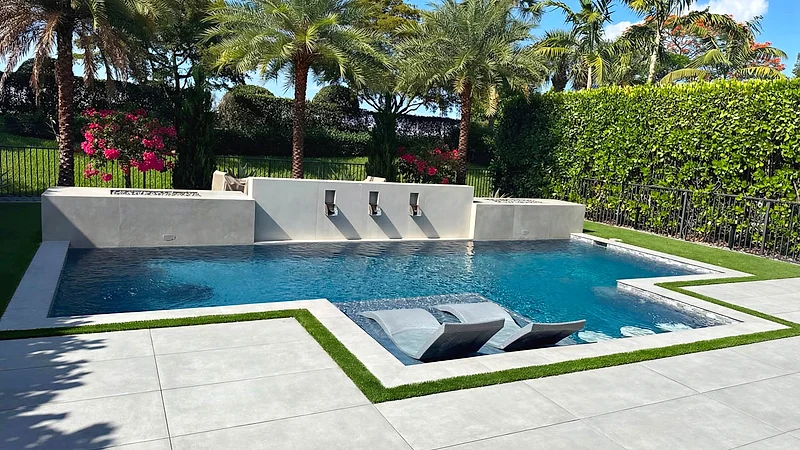
A remodel is not a shopping list. It is a window in which the shell, the deck and the ground between them are open. Here is what belongs in that window, and what you can buy any year without penalty.
Upgrade what needs the pool empty, the deck broken out, or the ground open between the pool and the equipment pad. Everything else — the heater, the salt system, the automation, the cleaner, the furniture, the planting — costs about the same next year as it does during the remodel, and does not belong in the fight over this budget.
That is the whole rule, and it is worth stating plainly because most upgrade lists are built the other way around: by walking the yard and naming what would look better. This article does not rank upgrades by how much they improve the pool — the decisions that make an old pool feel new does that, item by item. This one sorts the same list by a narrower question: what happens if you say not yet.
Run every line of the proposal past one test. Does this need something open that will be closed when the crew leaves?
| Upgrade | What has to be open | Verdict |
|---|---|---|
| Interior finish | The shell, drained and chipped | Now — there is no later |
| Steps, bench, tanning ledge | The shell, with the structural crew on site | Now |
| Light niches and how many | The shell wall | Now |
| Extra returns, drain configuration | The shell and the suction lines | Now |
| Spa | The shell, structure and plumbing | Now, or it becomes its own project |
| Deck replacement, elevation, drainage | The deck slab, demolished | Now |
| Conduit and sleeves under the deck | The deck slab, demolished | Now, even if you build nothing yet |
| Pipe sizing, equipment pad location | The trench between pool and pad | Now |
| Gas stub for a future heater | The trench between pool and pad | Now — the stub, not the heater |
| Heater, salt chlorination, automation | Nothing | Any year, same price |
| Cleaner, furniture, shade, planting | Nothing | Any year, same price |
The bottom two rows are where remodel budgets quietly go wrong. They are the easiest items to picture, the easiest to get excited about in a showroom, and the only ones on the list you can genuinely buy on a Saturday two years from now.
Three kinds of item live here, and they close together.
The finish, because it is the reason the pool was drained in the first place. There is no scope in which it waits.
Anything shaped into the shell — a bench, a wider entry, a sun shelf, a raised wall. These need the shell cut and re-formed, so they are what stops a job being a resurfacing and makes it a renovation. If your scope was a finish and tile, adding one of them changes the trade list, the schedule and the permit. Which side of that line you are on is the subject of resurfacing versus a full renovation, and it is worth knowing before you ask.
Anything that goes through the wall, which is more than it sounds. A pool light is a niche cast into the wall with conduit back to a junction box, not a lamp; our estimator prices pool LEDs at $450 per fixture, so the count is a line item today and a saw-cut tomorrow. The same applies to where returns point and how many there are. Circulation complaints in an old pool are usually geometry — a corner that stays warm, a spot where leaves collect — and geometry is only cheap to fix while the walls are exposed.
The spa is the largest single item in this group and the one most often postponed by accident. Our estimator prices an integrated spa at $12,000 and a spa with a spillway into the pool at $18,000. Added later it is not an upgrade to a pool; it is a small pool built next to one, with its own excavation, plumbing and finish. If you want it eventually, it belongs in this project.
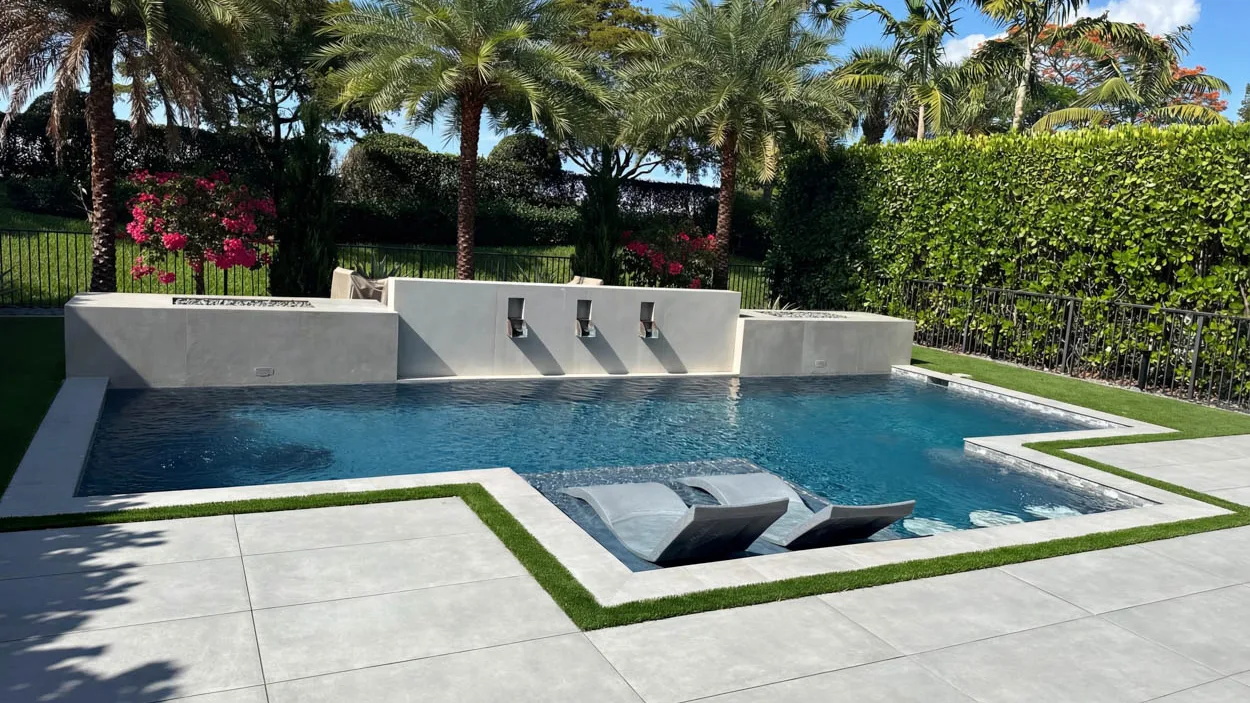
Replacing a deck is usually argued on appearance, which is the weakest version of the argument. The two things a new deck can fix that nothing else can are invisible in the after picture: water that runs away from the house instead of toward it, and the trip step between coping and deck that everyone in the family has learned to step over. Neither is correctable by sealing, and both need the slab out.
So the honest test is not whether the deck looks tired. It is whether it drains and sits flush. If it does, patching and resealing is a legitimate answer and the money is better spent in the shell.
If the slab is coming out anyway, bury what you might want in five years while it is. Conduit at that moment is trenching labor and a length of pipe; after the pour it is a saw cut across a finished surface or an extension cord taped to a wall. Worth sleeving whether or not you commit:
None of them commit you to building anything. They keep the decision cheap, which is the entire point of the list.
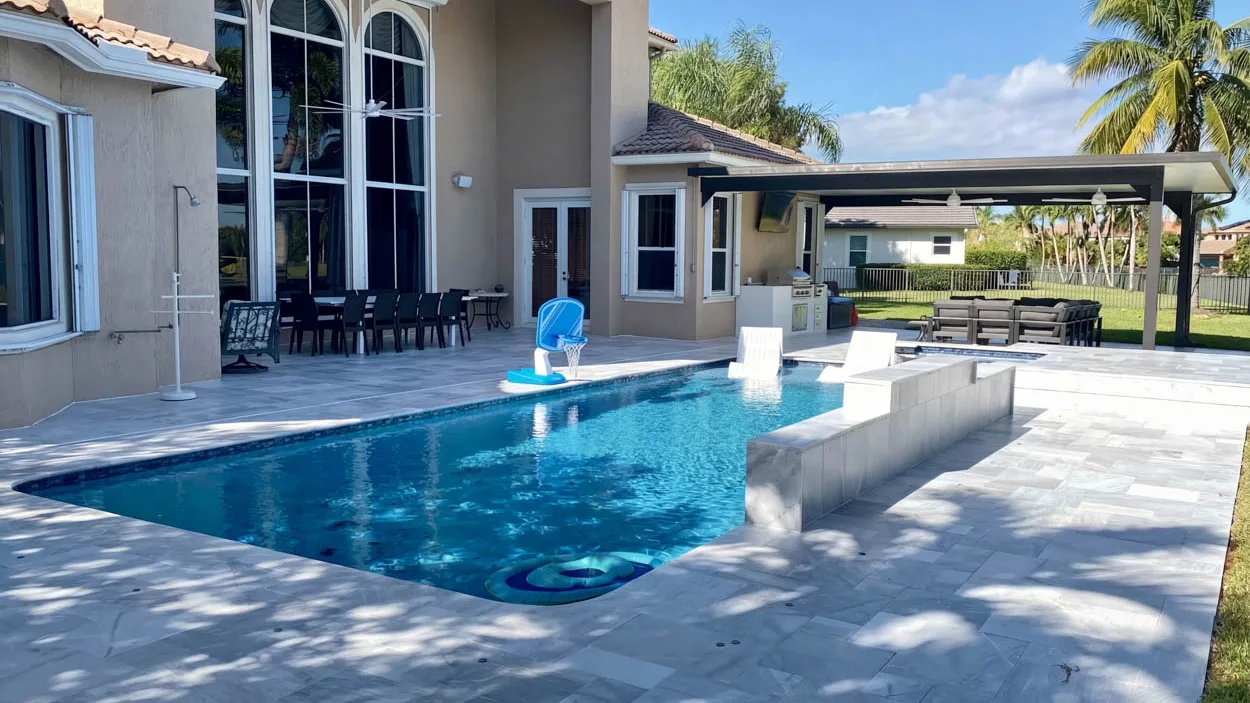
The run between the pool and the equipment pad is open for a few days and then not again for years.
Failing to defer these is how a remodel budget gets thin in the places that matter.
The qualifier at the end of that last line applies to the whole group. Nothing here is deferrable in principle; it is deferrable because it does not need the shell, the slab or the trench. The moment an item needs one of them, it moves up the page regardless of what it is.
This is the part that makes the sorting usable, and almost nobody asks for it. Request the itemization grouped by access rather than by trade, so that it reads top to bottom as:
Quoted that way the list cuts cleanly. If the number comes back high you trim from the bottom, and nothing you remove costs more to add later than it costs today. Quoted by trade — the usual format — the same conversation turns into a redesign, because the item you can safely drop and the item you cannot are tangled in the same row under the same subtotal.
Two things worth asking for alongside it: every rough-in as its own accepted-or-declined line, and the stage each item closes at written beside its price. A sleeve that is a favor does not get laid on a busy morning. A sleeve that is a line item does. The same request on a new build, where the stages are different, is in the upgrades worth planning before construction begins.
The argument for putting everything structural in a single remodel is not that it is tidier. Our estimator adds 8% for difficult access — a narrow side gate, an enclosure that has to come apart, machines that cannot reach the water. A yard carrying that surcharge pays it again on every separate trip back, on top of reopening a deck that was just finished.
That is also the limit of the rule. The items on the defer list do not trigger any of it: a heater, a salt cell or a cleaner arrives through the same gate in someone's hands. Which is exactly why they are on that list and the trench work is not.
If the pile of now items has grown to a new spa, a relocated pad, a full deck replacement and a new ledge, the question has changed from what to upgrade to whether to keep the shell at all — remodel or rebuild is where that gets decided, and what actually changes a remodel's scope is where the arithmetic sits.
The scope we work through on a complete pool remodel follows the same order as the list above. To test the shape of a budget before anyone visits, the pool cost estimator uses the figures quoted here and returns a band rather than a price; a project estimate starts with someone standing in the yard looking at the deck slope.
The ones that need the shell, the deck slab or the trench open. Steps, benches, tanning ledges, light niches, extra returns, deck drainage and buried conduit are cheap now and disruptive later. Equipment can be added any year at roughly the same price.
The interior finish. It is the reason the pool is drained, so there is no version of the project that leaves it for later. Which grade of finish to choose is a separate question, and it is about years to the next drain rather than about the sample board.
Yes, but it is structural work rather than a fixture, so it turns a resurfacing into a renovation. Our estimator prices an integrated spa at $12,000 and one with a spillway into the pool at $18,000, before the finish and tile that go with it.
The case for replacing it is drainage, elevation and the conduit you can bury while it is out, not appearance. If water still runs away from the house and the coping sits flush, patching and resealing is a legitimate answer.
Scope added after a permit has been issued is generally handled as a revision rather than as part of the original review, which means going back to the reviewer and, depending on what changed, adding an inspection. It is one more reason to settle the structural list before the file goes in.