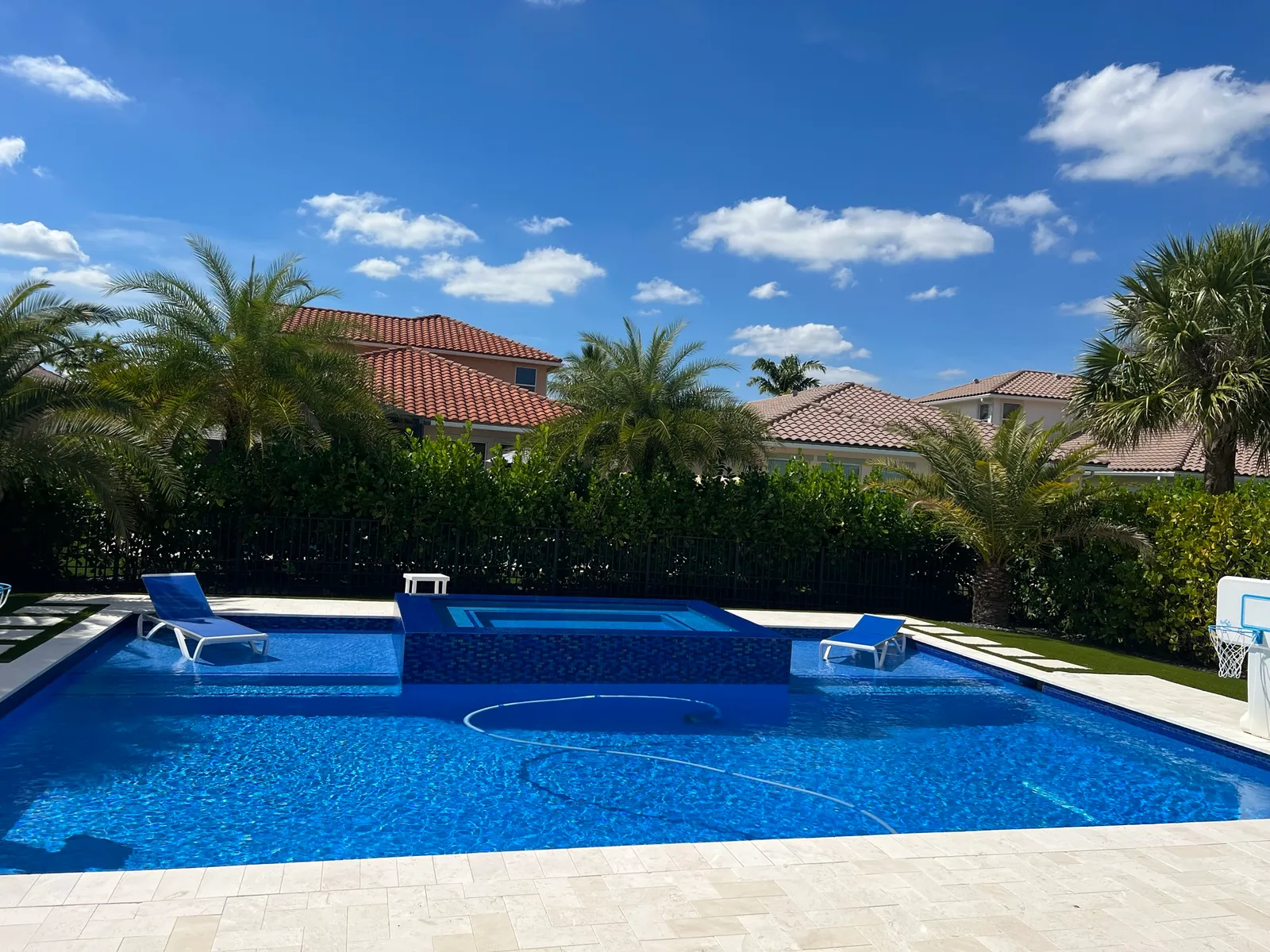
Pool Finishes Compared: Plaster, Quartz and Pebble
Plaster is the smoothest and cheapest, pebble is the most textured and the longest-lived of the two our estimator puts a number on, and quartz sits in a tier our estimator prices as premium. The finish is the last thing applied and the first thing you touch.
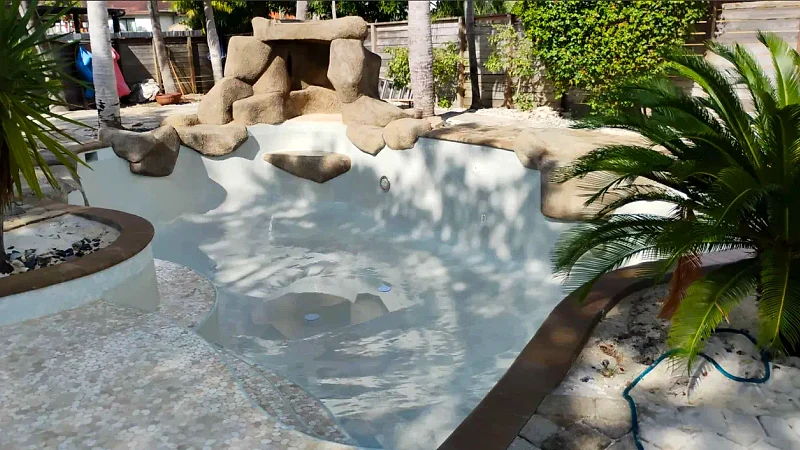
Plaster is the smoothest and least expensive pool finish. Pebble is textured and, on our estimator's planning ranges, lasts about twice as long as plaster. Quartz is a plaster-type finish with quartz aggregate, which our estimator prices in its premium tier. The finish is applied last and touched most, so choose it for feel and color as well as price.
The finish is one of the choices behind the ten luxury pool designs we build most in Florida. This guide compares the three materials on feel, planning life and cost, on a new pool and in a remodel.
The three finishes side by side
| Standard plaster | Quartz | Exposed pebble | |
|---|---|---|---|
| What it is | Cement-based finish troweled smooth | Plaster-type finish with quartz aggregate in the mix | Cement-based finish with pebbles exposed at the surface |
| Feel underfoot | Smooth | Smooth to lightly textured, depending on the product | Textured |
| Color range | White and colored plasters | Wide, from light to dark | Wide, set by the pebble mix |
| Tier in our estimator | Standard (×1.00) | Premium (×1.35), grouped with glass bead and polished aggregate | Pebble (×1.15) |
| Planning life in our estimator | 7 to 10 years | Not stated as a number | 15 to 20 years |
All three are cementitious finishes applied over the gunite shell, and all three are sold in many colors. The color decides how the water reads. The material decides how the surface feels and wears. A dark gray quartz and a black pebble are both "dark" and look nothing alike, which is the subject of our guide to dark pool finishes in Florida.
How long does each pool finish last?
Our pool cost estimator states a planning life for two of its three tiers: 7 to 10 years for standard plaster and 15 to 20 years for pebble. It describes the premium tier as offering "maximum longevity" without a number. We have not found a public standard that sets a service life by finish type, so those ranges are planning assumptions, not a warranty.
What shortens any finish is the same short list:
- Water chemistry. Every one of these finishes is a cement product. Water that is out of balance can etch it or leave scale on it, and that damage starts in the first weeks.
- The start-up. The brushing and water-balance routine after the finish is applied is specified by the finish manufacturer. It decides how the surface looks for years.
- Workmanship. Mixing, timing and troweling happen in one day and cannot be redone without draining the pool.
When a finish is wearing out, and what the signs are, is covered in how long pool resurfacing lasts in Florida.
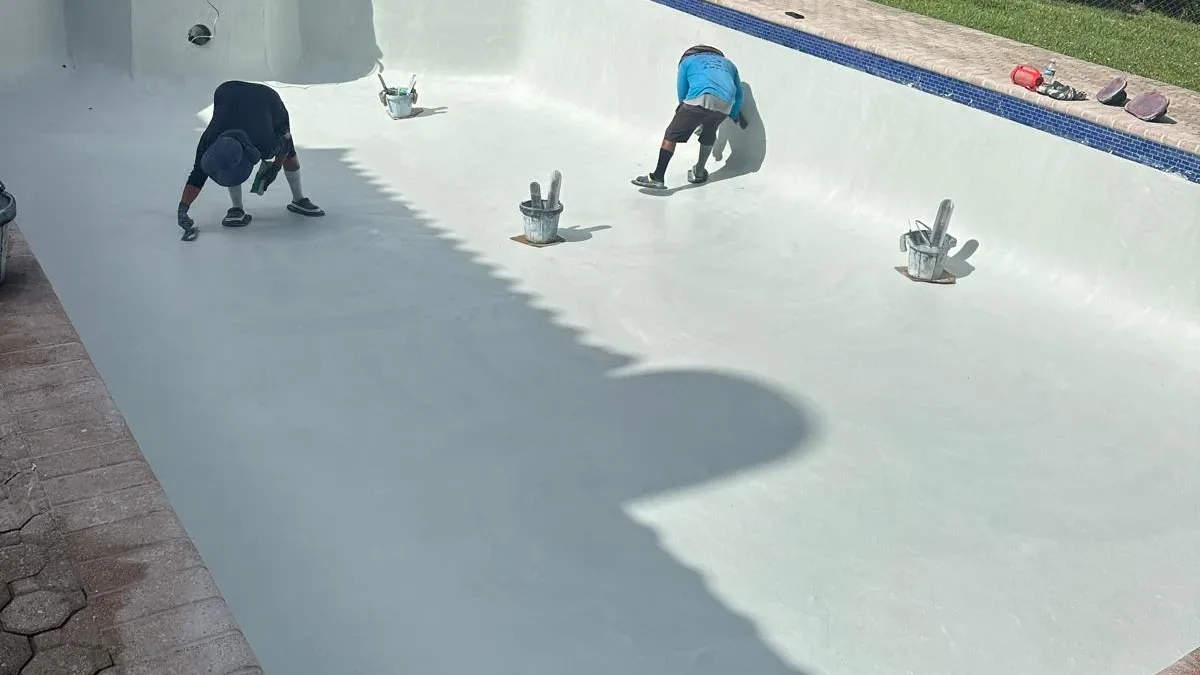
What does each finish cost?
Our estimator prices the finish as a multiplier on the pool line, not as a flat item, so it scales with the size and style of the pool. The permit line follows it, because the estimator charges permits at 9 percent of the pool and deck after the multiplier.
On the estimator's default configuration, a 450-square-foot freeform pool with a 600-square-foot paver deck, heater, salt system, three lights and landscaping:
| Finish | Pool line | Estimator range for the whole project |
|---|---|---|
| Standard plaster | $49,500 | $76,000 – $93,000 |
| Pebble | $56,925 | $83,000 – $102,000 |
| Premium (quartz, glass bead, polished aggregate) | $66,825 | $93,000 – $114,000 |
So on that pool, pebble adds about $8,100 to the total over plaster, and the premium tier about $18,900, permits included. Our estimator prices a full remodel at 82 percent of the same project built new; in that mode the same choices add about $6,600 and $15,500.
Read against the planning life, the pebble tier costs 15 percent more on the pool line and is assumed to last about twice as long as plaster. That is an argument for pebble on a pool you plan to keep, not a guarantee. Every figure comes from the approved price table the estimator uses, and the estimator returns a range of plus or minus 10 percent, not a quote.
Is quartz better than plaster or pebble?
Quartz finishes are plaster-type finishes with quartz aggregate added. People choose them mostly for color: quartz products come in a wide range, including the mid and dark tones that plain white plaster does not offer. They are smoother than pebble.
Where quartz sits on price is the part to read carefully. Our estimator groups it with glass bead and polished aggregate in its premium tier, the highest multiplier. Quartz products vary widely, so treat that tier as the ceiling for quartz in planning, and let the written quote, with the product named, decide the real number.
Where the finish matters most
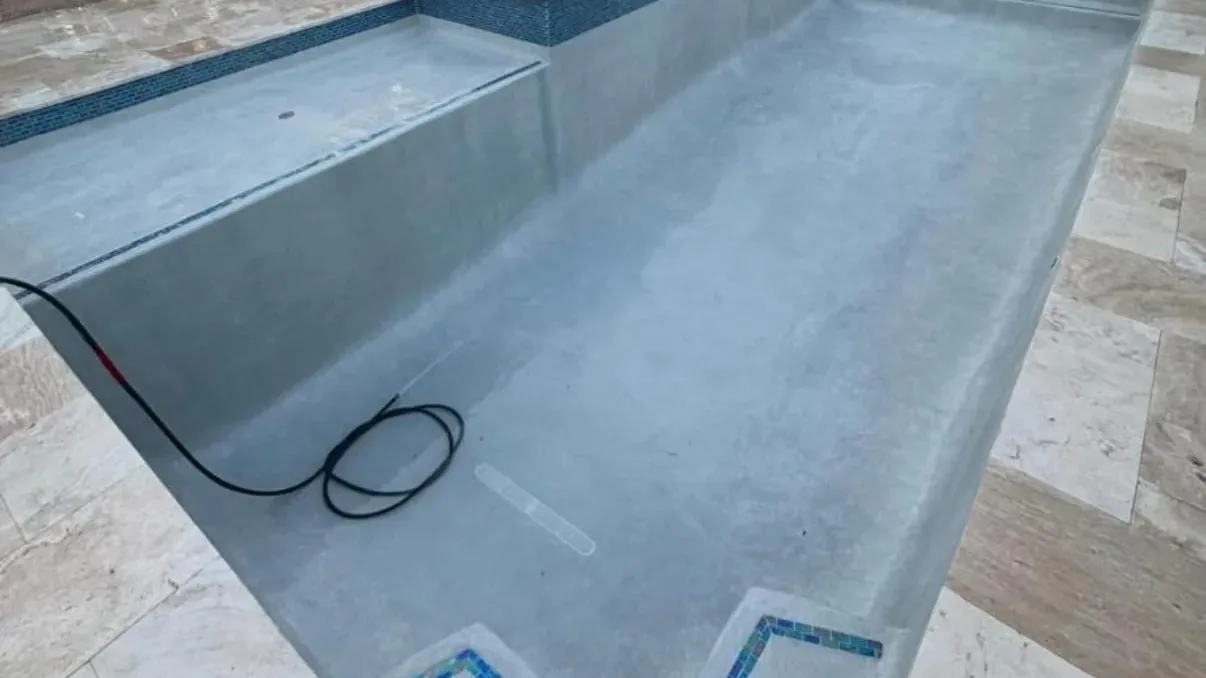
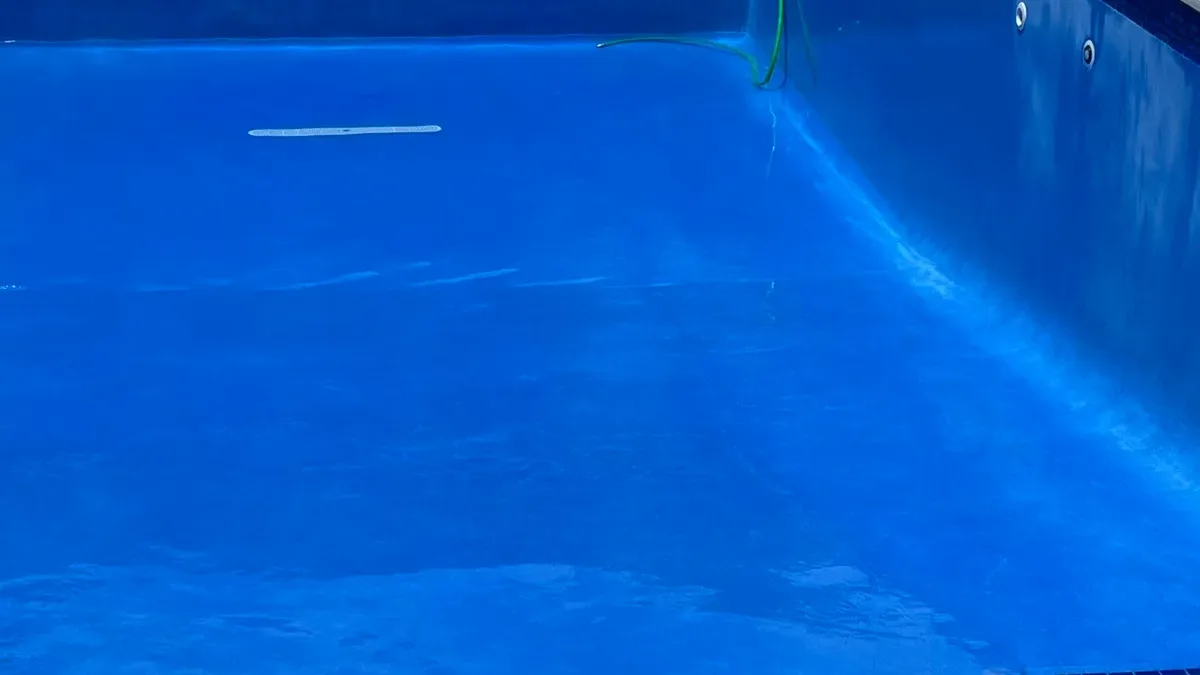
The finish on the deep-end floor is seen through water. The finish on the sun shelf, steps, bench and the top of a spa wall is seen dry, close up, and touched with bare feet and legs. That is where texture becomes a daily experience. The photo above shows a light gray plaster just applied: color is a separate choice from material, and plaster comes in more than white.
Two practical tests before you choose:
- Feel a wet sample with bare feet, especially if you are planning a shelf or a beach entry. Our guide to sun shelves, tanning ledges and beach entries explains why those surfaces get the most contact.
- Look at a real pool in afternoon light, not a chip on a desk. A sample a few inches across does not show how the color reads over a whole floor.
New pool or remodel: what changes
The finish choice is the same in both. The sequence is not.
- On a new pool, the finish goes on after the tile and coping, at the end of construction. The Florida Building Code, Residential, R4501.19 requires the final electrical and barrier inspections to be completed before the pool is filled with water. Because a plaster-type finish cures underwater, the fill follows the finish closely. In practice the barrier and electrical inspections have to pass before the finish is scheduled, not after.
- In a remodel, the old surface comes off first. The shell is prepared down to a sound base, repairs are made, and the new finish goes on. That is also the moment to change color or material, or to update the tile and lighting with it. Whether your pool needs only a new surface or more, see pool resurfacing vs. a full renovation.
In Gainesville and Ocala
In North Central Florida many pools are filled from a private well. Well water in this region can carry iron and hardness, and a new finish meets that water on the first day. Test the fill water before start-up, not after the first stain. What else changes in this region, from limestone to the swim season, is in building a pool in North Florida.
Most finish decisions here are made during a remodel of an older pool. Our pages on pool remodeling in Gainesville and complete pool remodels in Ocala and Marion County explain how we sequence the finish with tile, coping and equipment. On a new pool, the finish is one of the details in what makes a pool look custom. Our custom pool construction page covers the whole region.
Compare the finishes on your own pool
Open our pool cost estimator, set your pool size and style, and switch between plaster, pebble and premium to see how the range moves.
Common questions
Which pool finish lasts the longest?
Of the two finishes our estimator puts a planning life on, pebble is assumed to last about twice as long as standard plaster: 15 to 20 years against 7 to 10. Real life depends more on water chemistry and the start-up than on the label, so treat both ranges as planning numbers, not a warranty.
Is a quartz finish better than plaster?
Quartz finishes are plaster-type finishes with quartz aggregate in the mix, chosen mainly for color and a harder-wearing surface than plain white plaster. Our estimator groups quartz with glass bead and polished aggregate in its premium tier, which is the highest of its three finish multipliers.
Is a pebble pool finish rough on feet?
It is textured, because the pebbles are exposed at the surface. How rough it feels depends on the size and shape of the aggregate and how it was finished. If the sun shelf, steps and bench will be used a lot, feel a real sample with wet bare feet before you choose.
Can you change the finish when you resurface?
Yes. Resurfacing is the moment to change it, from plaster to pebble or from a light color to a dark one. The old surface is removed and prepared, and the new finish goes on in its place, so the choice is open again.
Sources
- Mr & Mrs Outdoor Living — Pool Cost Estimator (finish multipliers and planning life by finish)
- Florida Building Code, Residential, 8th Edition (2023), R4501.19 Final Inspection — via UpCodes
- Florida Building Code, Residential, 8th Edition (2023), R4501.6.1 Conformance Standard — via UpCodes
- Pool & Hot Tub Alliance — PHTA Standards
About the author
Robert Wesley Brannen is the co-founder of Mr. & Mrs. Outdoor Living and a Florida-certified pool and spa contractor. Having started in his family's aluminum business at age 13 and previously led Happy House Outdoor Living, Robert brings extensive experience in custom pool construction, outdoor structures, and design-build project management.
Florida Licenses: CPC1460562 · CPC1461119 · SCC131153553.
Most Read Articles
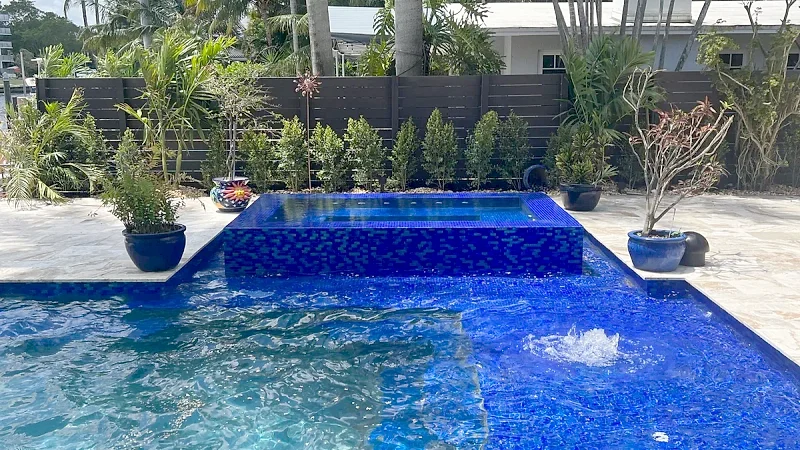
Dark Pool Finishes in Florida: What Changes With the Water, the Heat and the Chemistry
A dark finish turns a Florida pool into a deep blue or green mirror, warms the water faster, hides debris and shows chemistry mistakes. It is the single choice that changes a pool's character most, and it rewards owners who understand the trade-offs before they pick a sample.Read More: Dark Pool Finishes in Florida: What Changes With the Water, the Heat and the Chemistry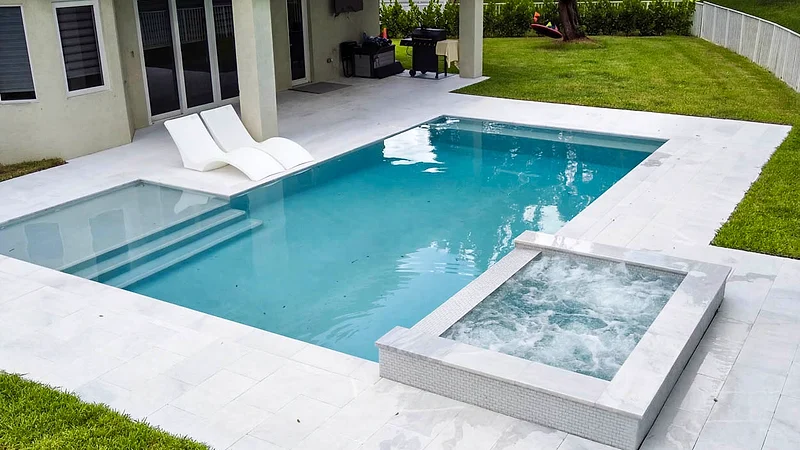
Pool Resurfacing vs. Full Pool Renovation: What's the Difference?
Resurfacing and a full renovation are not two budgets for the same job. One changes the surface; the other changes the pool. Here is where the line falls and the question that decides which side of it you are on.Read More: Pool Resurfacing vs. Full Pool Renovation: What's the Difference?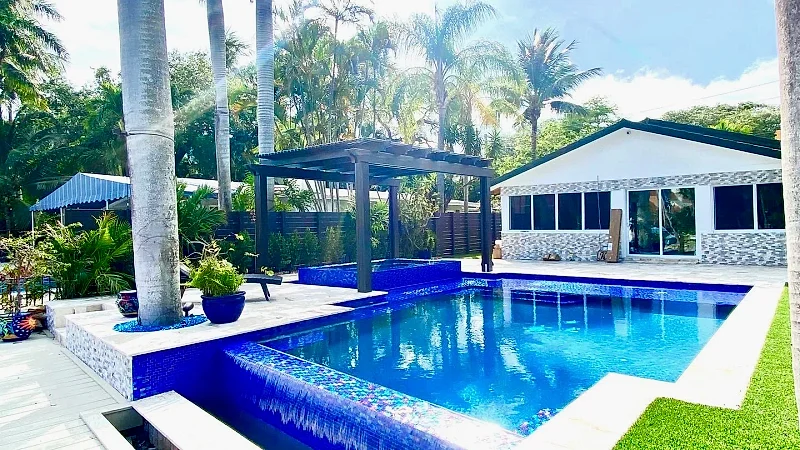
What Makes a Pool Look Custom? 9 Design Choices That Transform the Backyard
The choices that make a pool look custom are mostly early, mostly cheap, and mostly decided on the layout drawing. The ones that cost the most show the least. Here are the nine, in the order they get locked.Read More: What Makes a Pool Look Custom? 9 Design Choices That Transform the Backyard
Request a Design-Build Project Evaluation
Share your property details, project scope, and investment range. Our licensed design-build pool builders will review your request and confirm alignment before next steps.
Get a Free Estimate