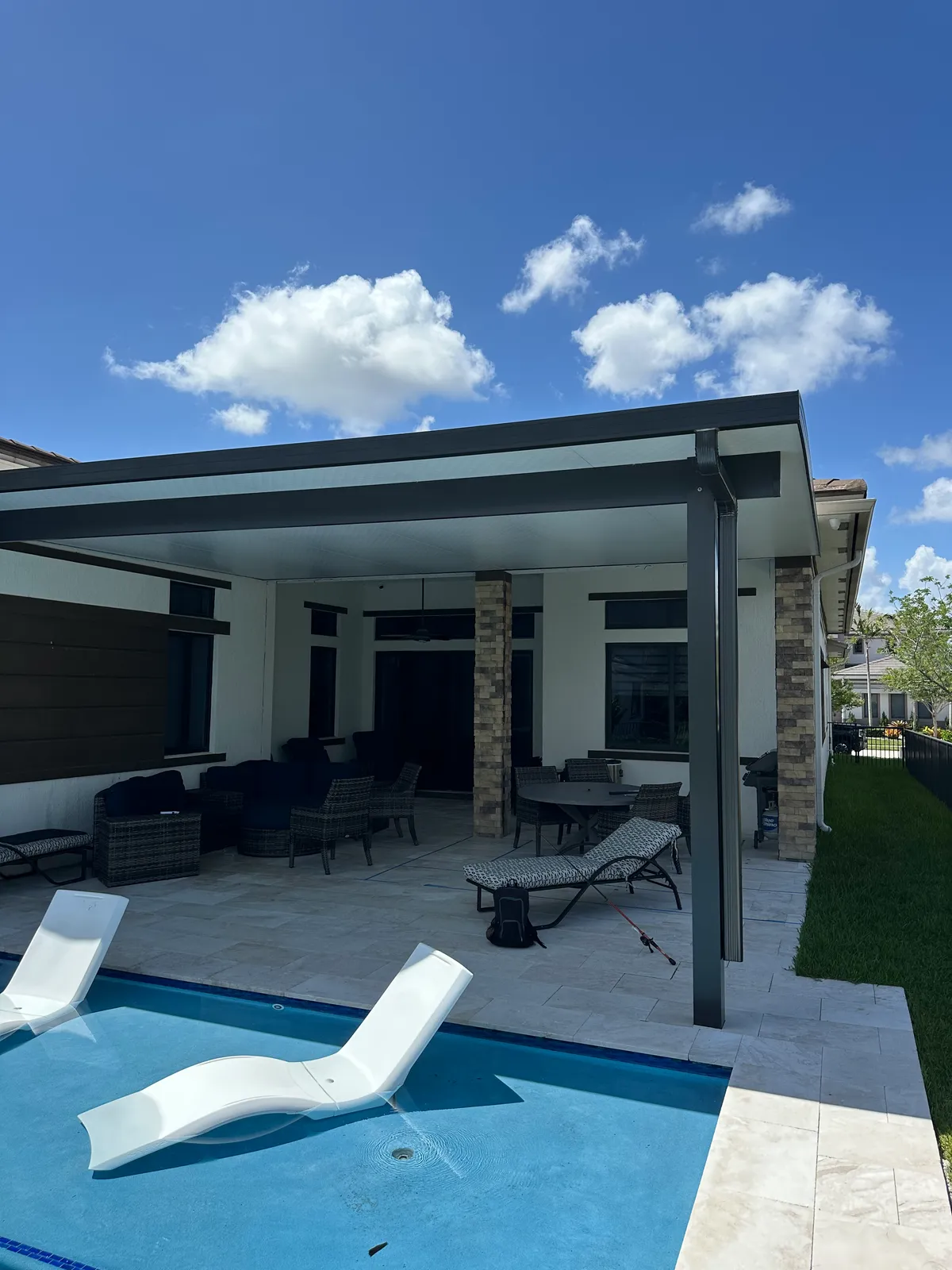
Pool Deck Materials for Florida: Pavers, Travertine and Cool Deck
In Florida a pool deck is chosen for heat underfoot first, grip when wet second and price third. Light, reflective surfaces run cooler, joints decide how easy a deck is to repair, and the spread between concrete and travertine on a typical deck is about $15,000.
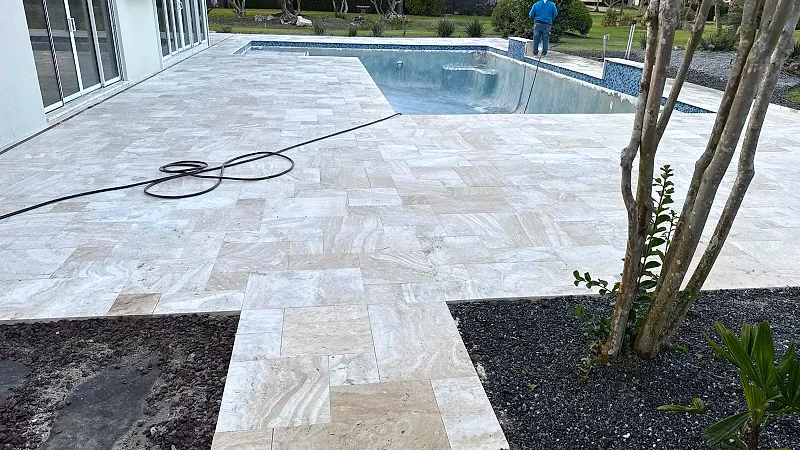
For a Florida pool deck, choose on heat underfoot first, grip when wet second, and price third. Light, reflective surfaces run cooler, so color matters as much as material. Our estimator prices decking at $12 per square foot for concrete, $22 for pavers and $35 for travertine; on a 600-square-foot deck the spread from concrete to travertine is about $15,000.
The deck is also the part of the pool you see from inside the house. It is one of the design choices behind the ten luxury pool designs we build most in Florida, and this guide compares the materials one decision at a time.
The main pool deck materials at a glance
| Broom or stamped concrete | Cool deck (coating over concrete) | Concrete pavers | Travertine pavers | |
|---|---|---|---|---|
| What it is | A poured slab | A light, textured coating on a poured slab | Precast units set on a compacted base | Natural stone units set on a compacted base |
| Heat underfoot | Depends on color; light runs cooler | Light by design | Depends on color | Light stone runs cooler than dark surfaces |
| Grip when wet | From the broom or stamp texture | From the coating texture | From the paver face | From the tumbled or textured face |
| Repairs and access | Saw-cut and repour | Recoat; cracks in the slab show through | Lift and relay units | Lift and relay units |
| Our estimator, per sq ft | $12 (concrete) | Not priced separately | $22 | $35 |
Cool deck is a coating, not a separate structure, and our estimator has no line for it. It prices concrete, pavers and travertine. Porcelain pavers, which we also install, are not in the estimator's table either, so they are priced from a quote, not from a rate.
Which pool deck material stays coolest?
The surface that reflects more sun stays cooler. The U.S. Environmental Protection Agency describes "cool pavements" as materials that reflect more solar energy, enhance water evaporation or are otherwise modified to stay cooler than conventional paving. It cites a pilot study in Arizona where conventional asphalt reached 152°F at mid-day, while cool pavements stayed 10 to 16°F cooler.
A pool deck is not a road, but the physics is the same. In practice:
- Color comes first. A light deck in any material runs cooler than a dark one. A charcoal paver can be the hottest option on the list.
- Light travertine and cool deck coatings are the usual choices when bare feet are the priority, because both are light by design. Our estimator describes travertine as staying cool underfoot.
- Shade changes everything. A deck under a patio cover or a screen enclosure never reaches full-sun temperature. If part of the deck will be shaded, the material there can be chosen for looks.
Which deck is least slippery when wet?
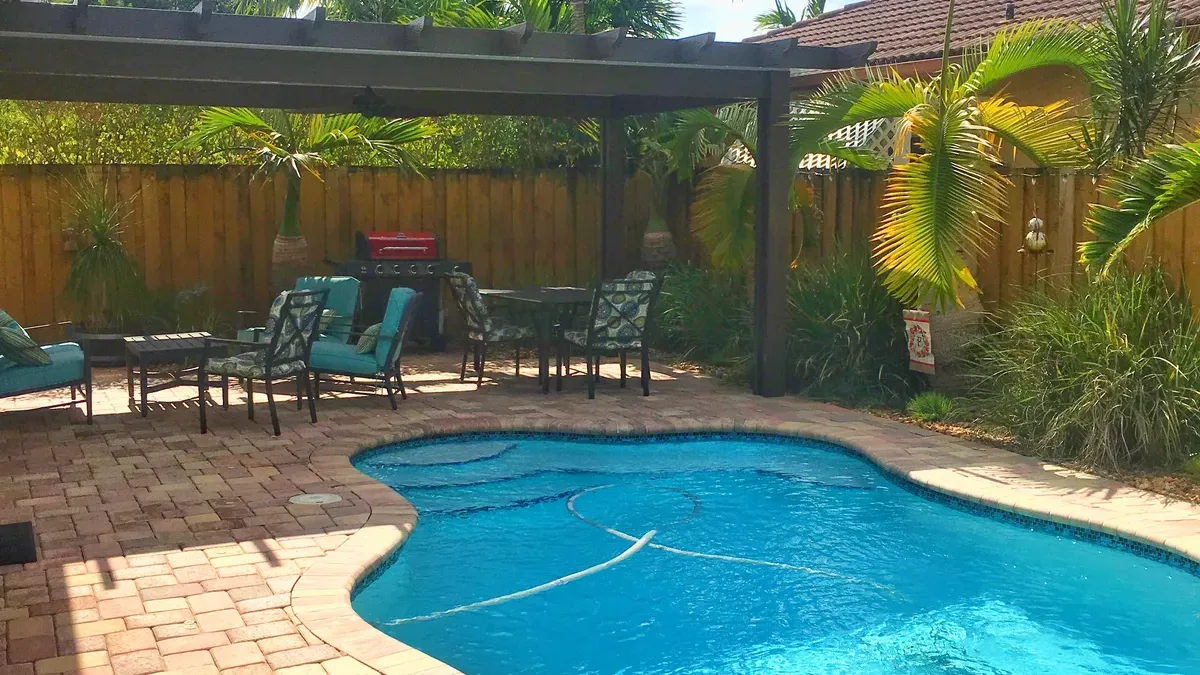
Grip comes from texture. Broom-finished concrete, a textured coating, a tumbled travertine face and a textured paver face all give the foot something to hold. Smooth, polished or glossy surfaces do not belong on a pool deck.
Two things change grip after installation:
- Sealers. A sealer protects stone and pavers from stains and helps hold joint sand. It also changes how the surface feels wet. Ask which product will be used and how it finishes.
- Wear and growth. In shade and humidity, any deck can grow a film that gets slick. That is maintenance, not material, but it happens faster where the deck never dries.
Test a wet sample with bare feet before you commit. It takes a minute and settles more than a brochure does.
How does each deck handle Florida rain?
Water has to leave the deck and go somewhere approved. UF/IFAS recommends that paved areas around a home have a minimum 2 percent slope to direct stormwater to planted areas (EDIS EP374). Where a deck has drains, the Florida Building Code, Residential, R4501.13.1 requires deck drain piping to have continuous grade to its discharge point, and R4501.10.1 prohibits connecting pool lines to a storm drain, sewer or similar system unless the building department approves it.
The material changes how that water behaves:
- Poured concrete and cool deck shed water across the surface to the edge or to drains.
- Pavers and travertine shed most of it across the surface too, and a little goes through the joints. That is not the same as a permeable paving system. UF/IFAS describes permeable pavements as engineered systems with open-graded stone layers and a minimum clearance above the seasonal high water table (EDIS AE530). A standard paver deck is not designed that way.
What does each pool deck material cost?
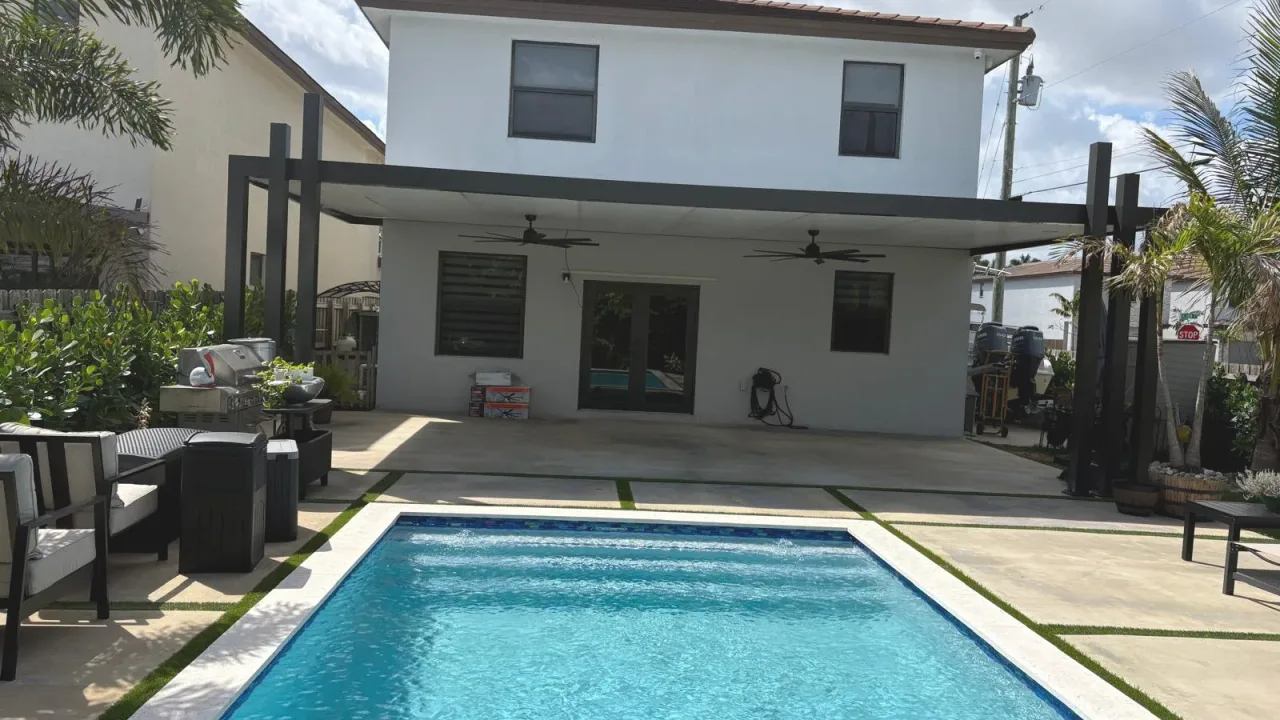
Our pool cost estimator prices the deck per square foot by material, and it adds permits at 9 percent of the pool plus the deck. On the estimator's default configuration, a 450-square-foot freeform pebble pool with a 600-square-foot deck:
| Deck material | Deck line | Estimator range for the whole project |
|---|---|---|
| Concrete | $7,200 | $77,000 – $95,000 |
| Pavers | $13,200 | $83,000 – $102,000 |
| Travertine | $21,000 | $91,000 – $111,000 |
Including the permit line, every added square foot of deck costs about $13 in concrete, $24 in pavers and $38 in travertine. Moving the same 600-square-foot deck from concrete to pavers adds about $6,500 to the total, and from concrete to travertine about $15,000. Size matters as much as surface, which is why our guide to what a custom pool really costs treats the deck as one of the main levers.
Every figure comes from the approved price table the estimator uses, and the estimator returns a range of plus or minus 10 percent, not a quote.
Repairs: why joints matter in Florida
A poured slab is one piece. When the ground under it moves, it cracks, and the repair is a saw cut and a patch that rarely matches. Pavers and travertine are many pieces on a compacted base. When something settles, or a pipe under the deck needs work, the units come up and go back down.
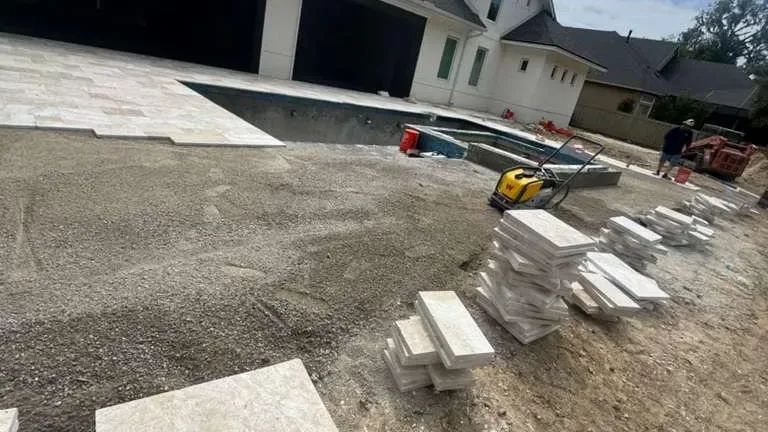
The photo above shows why: travertine units waiting on a compacted base, before any of them are set. That base is what holds the deck level for years, and it is the part nobody sees.
On an existing pool the question is different. Whether an old deck needs a coating, an overlay or replacement is covered in our guide to resurfacing an existing pool deck. For a new pool, the deck size goes on the permit application, so it is settled early; our list of upgrades worth planning before construction explains when each decision closes.
In Gainesville and Ocala
Lots in North Central Florida are often larger and more wooded than at the coast. Under oak canopy, a deck stays shaded and damp for longer, so grip and cleaning matter more than peak heat. Leaves and acorns land on the deck all year, so how easily the surface cleans, and whether it is sealed, are part of the choice here. On open lots in Marion County, full sun all afternoon makes color and heat the first decision.
Where the deck sits relative to the drainfield, the well and the equipment route is a site question that belongs in the first visit. What changes in this region is in building a pool in North Florida. Our pages for custom pools in Gainesville and Alachua County and pool builders in Ocala explain how the deck is drawn with the pool from the start. Our custom pool construction page covers the whole region.
Price your deck before you pick a sample
Open our pool cost estimator, set your deck size, and switch between concrete, pavers and travertine to see how the range moves.
Common questions
What is the coolest pool deck material in Florida?
Light-colored, reflective surfaces run cooler than dark ones, whatever the material. Light travertine and light coatings over concrete are the usual choices when heat underfoot matters most. Color matters as much as material: a dark paver can run hotter than a light concrete deck.
What is cool deck?
Cool deck is the common name for a light-colored, textured coating applied over a concrete pool deck. It is a surface treatment, not a different structure: the deck underneath is still poured concrete, with its control joints and its way of cracking.
Are travertine pool decks slippery?
Travertine is commonly supplied with a tumbled or textured face for pool decks, and that texture is what gives grip when wet. Sealers change how a surface feels wet, so ask what sealer will be used and test a wet sample with bare feet before you choose.
Can you put pavers over an existing concrete pool deck?
Sometimes, if the slab is sound and the added height works at the doors and the pool edge. Whether an existing deck needs a coating, an overlay or replacement is a different decision, covered in our guide to resurfacing an existing pool deck.
Sources
- U.S. EPA — Using Cool Pavements to Reduce Heat Islands
- UF/IFAS EDIS ENH 1110/EP374 — Design Strategies for a Sustainable Home Landscape (paved areas, minimum 2 percent slope)
- UF/IFAS EDIS AE530 — Permeable Pavement Systems: Technical Considerations
- Florida Building Code, Residential, 8th Edition (2023), R4501.10.1 and R4501.13.1 (pool and deck drain piping) — via UpCodes
- Mr & Mrs Outdoor Living — Pool Cost Estimator (decking per square foot)
About the author
Robert Wesley Brannen is the co-founder of Mr. & Mrs. Outdoor Living and a Florida-certified pool and spa contractor. Having started in his family's aluminum business at age 13 and previously led Happy House Outdoor Living, Robert brings extensive experience in custom pool construction, outdoor structures, and design-build project management.
Florida Licenses: CPC1460562 · CPC1461119 · SCC131153553.
Most Read Articles
How Much Does It Cost to Build a Pool in Florida? 8 Decisions That Set the Price
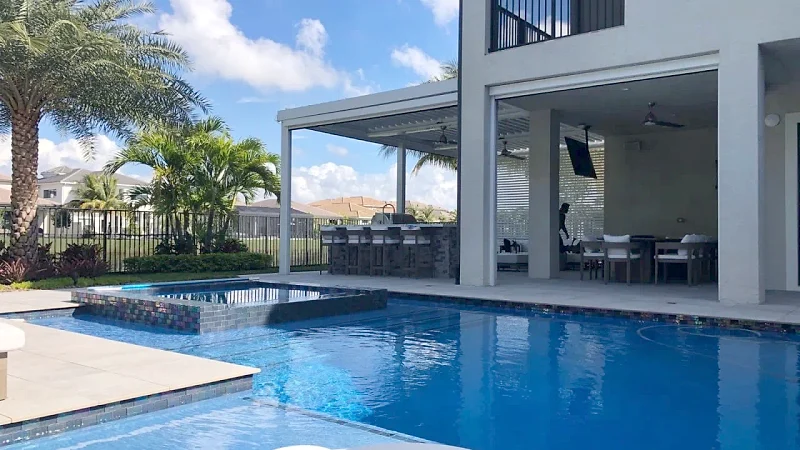
A typical custom pool in Florida runs about $83,000 to $102,000 on our estimator, a compact plain pool starts near $33,000, and a large luxury build passes $217,000. Eight decisions explain the gap.Read More: How Much Does It Cost to Build a Pool in Florida? 8 Decisions That Set the Price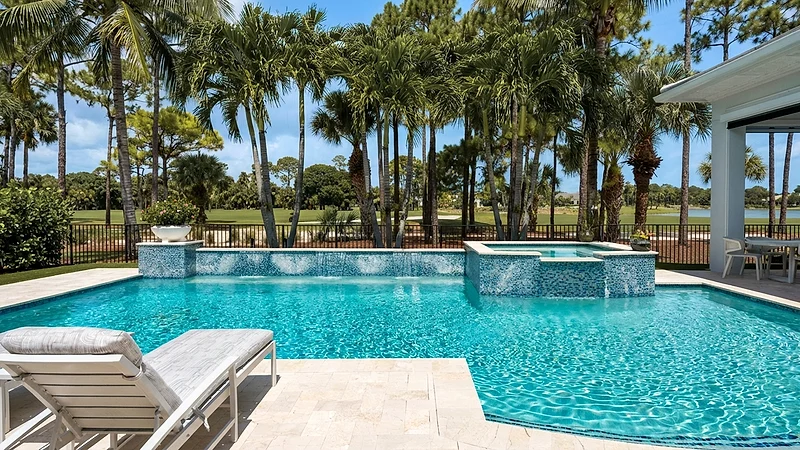
10 Pool Upgrades Worth Planning Before Construction Begins
The options list on a pool proposal looks like one decision about money. It is really three decisions about timing: what closes at the shell, what needs something buried, and what can wait.Read More: 10 Pool Upgrades Worth Planning Before Construction Begins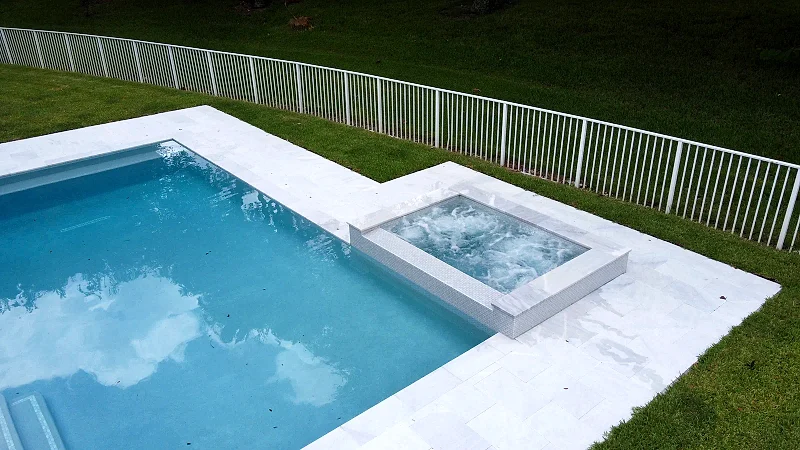
Top 10 Luxury Pool Designs for Florida Homes
Luxury in a Florida pool is not a feature list. It is a pool that fits the house and the lot, with finishes and details chosen together. These ten design directions are the ones we build most, with what each asks of the site and the budget.Read More: Top 10 Luxury Pool Designs for Florida Homes
Request a Design-Build Project Evaluation
Share your property details, project scope, and investment range. Our licensed design-build pool builders will review your request and confirm alignment before next steps.
Get a Free Estimate