Planning Water Features and Lighting in a New Pool: What to Decide Before the Shell
Water features are plumbing and pumps; pool lights are niches, conduit and bonding. In Florida all of it is inspected before the concrete is placed, so the decisions that matter are made on paper, before the shell, not when the pool is full.
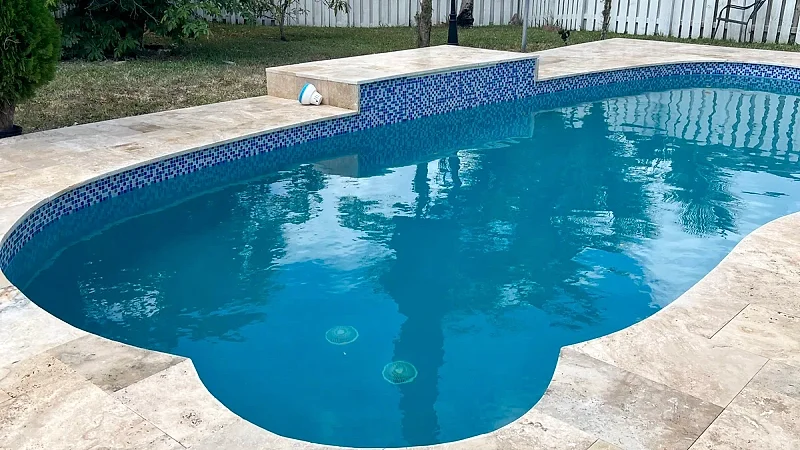
Decide water features and lighting before the shell is designed, because in Florida they are fixed at the first pool inspection. Every bubbler, deck jet or sheer descent is a plumbing line and a valve or pump at the equipment pad. Every light is a niche formed into the wall, with conduit and bonding behind it. The Florida Building Code inspects the steel, the bonding and the main drain before the concrete is placed, and the underground electrical before backfill. After that, adding a feature means cutting into a finished pool.
So the useful version of this decision is not a catalog of effects. It is a plan of what each feature needs from the shell, the pad and the electrical service, settled on paper.
The facts that set the schedule
| Fact | Source |
|---|---|
| First pool inspection: after excavation, steel, bonding and main drain, **before the concrete** | FBC Building 110.3 |
| Underground electrical inspected after the conduit is in and **before any backfill** | FBC Building 110.3 |
| Final electrical inspection **before the pool is filled** | FBC Residential R4501.19 |
| Ground-fault protection for pool pump motors, and for underwater lights operating above the low voltage contact limit | FBC Residential R4501.16 |
| Pool wiring, bonding and grounding follow the National Electrical Code, 2020 edition under the 8th Edition FBC | FBC Building 2701.1 and Chapter 35 |
| New dedicated pool pump motors of 0.5 total horsepower and up must be variable speed, on a schedule that began in 2025 | 10 CFR 431.485(c) |
Why it has to be decided before the shell
Look at the order of inspections and the rest follows. Steel, bonding and the main drain are checked in an open hole. Conduit is checked in an open trench. The final electrical happens before water goes in. Each step covers the one before it.
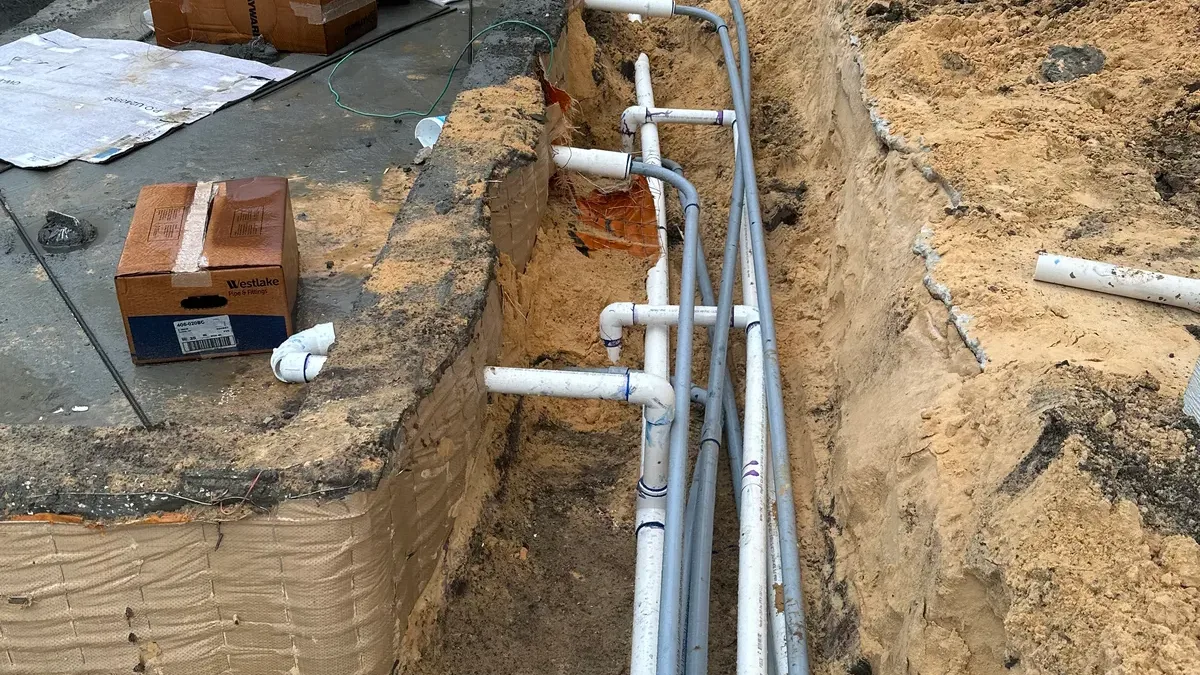
That is why features and lights belong in the design drawings, not in a change order. The same logic is behind our list of pool upgrades worth planning before construction, which covers when each upgrade closes. This article goes one level deeper on the two that close earliest.
Water features: what each one asks of the build
Every feature is water moving from the pad to a fitting and back, so each one needs a line, a way to control it and enough pump to drive it. Some also need structure.
| Feature | What the shell or deck needs | What the equipment pad needs |
|---|---|---|
| Bubblers on a sun shelf | Fittings set in the shelf floor at its final depth | A line and a valve, so they can be turned off |
| Deck jets | Nozzles set in the deck, aimed at the water, with the line under the deck | A line and a valve |
| Sheer descent or water wall | A raised wall built with the shell, with its own weir | A line sized for the width of the sheet |
| Spa spillway | A spa built higher than the pool, with a spillway edge | Usually shares the spa's circulation |
| Fire feature (gas) | A gas line run under the deck | Gas piping, which needs its own permit and rough inspection |
Two decisions are easy to get wrong.
Separate control. A spillway that runs constantly becomes background. Bubblers that are charming for an hour can be loud for an evening. If they share one line, you get all of them or none of them. Separate valves, or separate pumps, let you choose. Correcting that later means opening the deck.
Pump capacity. Features add flow to the system, and flow is what the pump has to supply. Federal energy standards now require new dedicated pool pump motors of 0.5 total horsepower and up to be variable speed, with the standard-size requirement in effect since September 29, 2025, and the smaller sizes from September 28, 2027. A variable-speed motor can run a feature at one flow and filtration at another, which is how features and an efficient pump coexist. Programming that is a job for pool automation.
Fire features are the exception to "it's all plumbing." The Florida Building Code requires a permit before installing or altering a gas system, and a rough inspection of the piping before it is concealed. The gas line goes in with the deck.
Lighting: niches, conduit and the code
A pool light is not a lamp you add. It is a niche in the shell wall, a conduit from the niche to a junction box, a run to the panel or transformer, and a bonded connection, all inspected before they are covered.
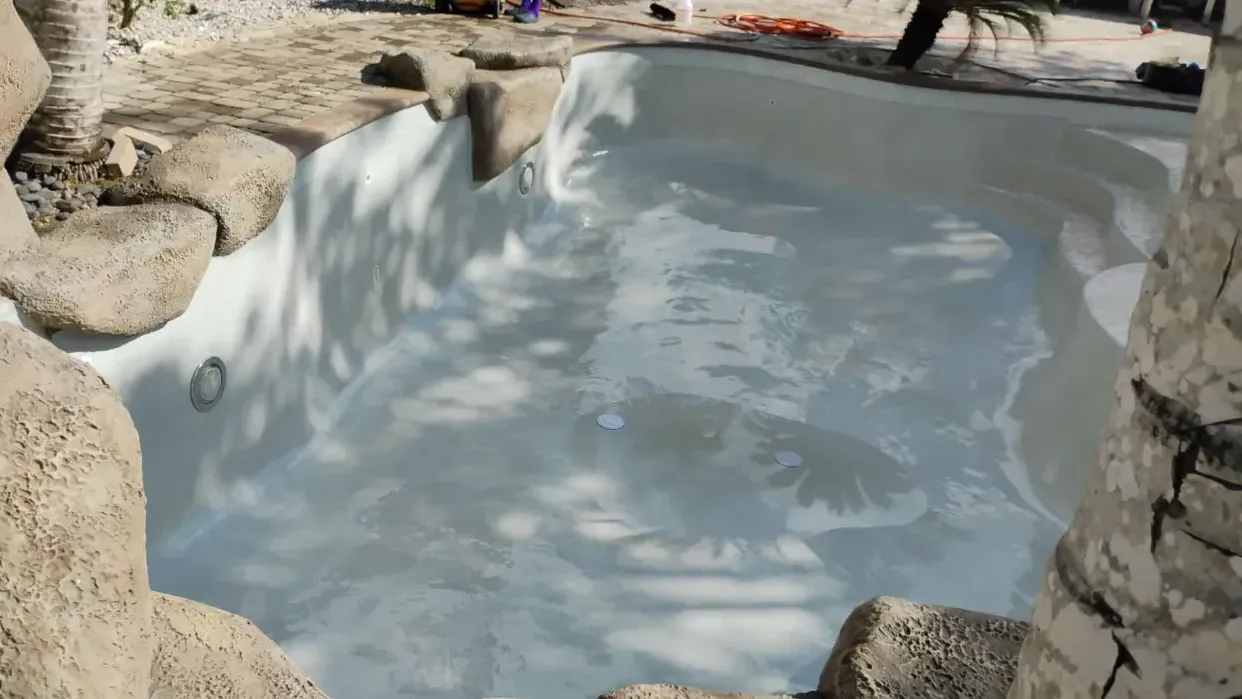
How many, and where. The count follows the shape, not the square footage. A light throws in one direction, so a pool with a deep end, a spa and a sun shelf has areas that go dark on their own. Which wall each light sits in matters as much as the number: a light in the far wall throws toward the house and the seating, one in the near wall throws back at the people looking at the water. What makes a pool look custom covers lighting as part of the night view.
Low voltage or line voltage. Pool lights are made in both kinds. The Florida Building Code requires ground-fault protection for underwater lights that operate above the low voltage contact limit, the same protection it requires for pool pump motors. Ask which kind is specified, and where the transformer for low-voltage lights will sit.
The electrical code governs the details. Under the 8th Edition, Florida applies the 2020 National Electrical Code to pool wiring, bonding and grounding, through Chapter 27 of the building code. Article 680 sets how deep an underwater light sits, where junction boxes and switches may go relative to the water, and how the pool and its surroundings are bonded. The 9th Edition of the Florida Building Code, which takes effect on December 31, 2026, moves to the 2023 National Electrical Code. Your electrician designs to the edition in force when the permit is submitted. Ask to see the junction boxes, the switch locations and the bonding on the plan, because each one is decided before the shell.
Are pool lights safe?
Installed to code and maintained, yes. The protections above exist because the risk is real: the U.S. Consumer Product Safety Commission says it is aware of 33 fatalities since 2002 that involved electrocutions in swimming pools and spas. Among the warning signs it lists are underwater lights that are on when they should be off, or that flicker. If you see that, keep everyone out of the water until an electrician has checked the system.
The night version is part of the design
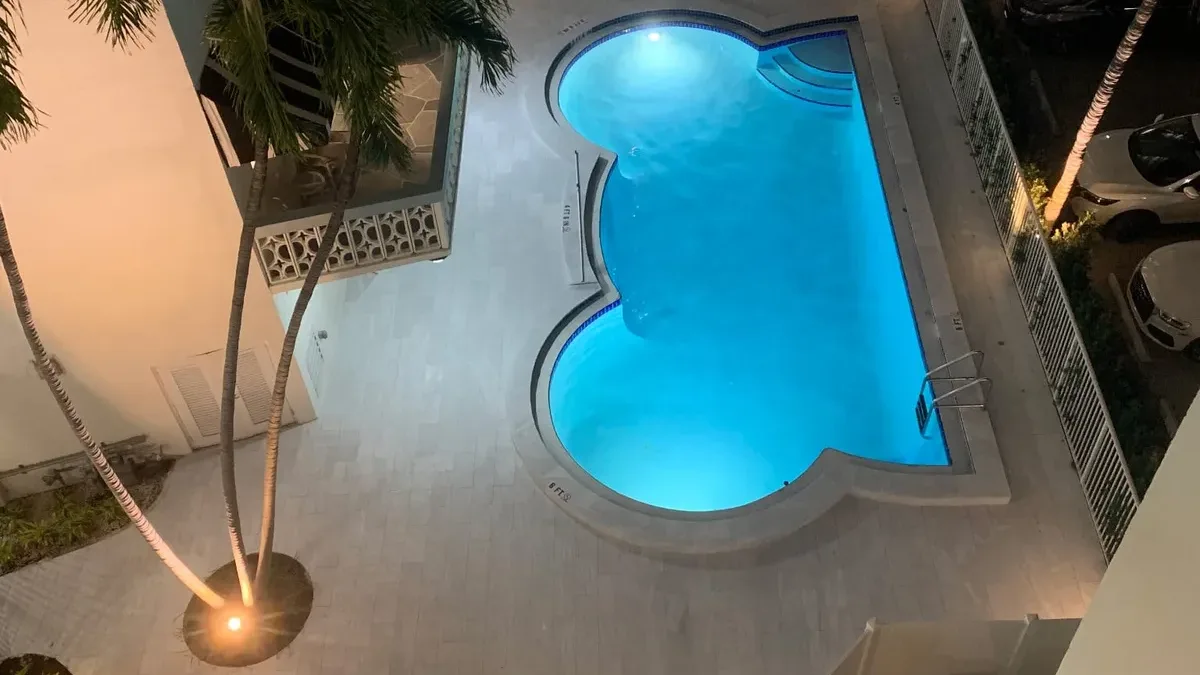
Lit water alone gives you a glowing rectangle in a dark yard. Lighting the vertical surfaces, a spa wall, a water wall, the trunks of the palms behind the pool, gives it depth. Those landscape and deck lights are a separate circuit, and their conduit runs under the deck you are about to pour.
What it costs
Our pool cost estimator prices pool LEDs at $450 per light. On its default project, going from three lights to six adds $1,350, and the difference between no lights and six is $2,700, before any other choice changes. Automation, which is how features and lights are scheduled from one control, is $3,500. A raised spillover spa is $18,000.
Sheer descents, deck jets, bubblers and fire bowls are not separate lines in the estimator, because their cost depends on the length, the height and the plumbing run. We price them in the design, which is why they belong in it. The top 10 luxury pool designs for Florida homes shows where features and lighting fit among the other design choices, and what those cost.
In Gainesville and Ocala
The inspection sequence is statewide, but who performs it depends on where the parcel is: inside Gainesville or Ocala city limits, the city; outside, Alachua or Marion County. Our guides to pool permits in Gainesville and Alachua County and pool permits in Ocala and Marion County explain each office.
On a larger lot, the equipment pad may sit farther from the pool and from the electrical panel. Then the plumbing runs for features and the conduit runs for lights get longer, and long runs are one more reason to settle them on paper. We design features and lighting with the shell. Our pages on pool builders in Gainesville and building a pool in Ocala and Marion County show how that fits into a full project. Our custom pool construction page covers the whole region.
Put the lights in the number
Set the number of lights, the spa and automation in our pool cost estimator and see how they move your range. Then bring the features you want to the design meeting, where they can still be drawn in.
Common questions
When do pool lights and water features have to be decided?
Before the shell. Under the Florida Building Code, the first pool inspection happens after the steel, the bonding and the main drain are in and before the concrete is placed, and underground electrical is inspected before backfill. Light niches, feature lines and conduit have to be in place by then.
Are pool lights safe?
When they are installed to code and maintained, yes. Florida's building code requires ground-fault protection for underwater lights that operate above the low voltage contact limit and for pool pump motors, and all pool wiring and bonding must follow the National Electrical Code. The CPSC lists pool lights that are on when they should be off, or flickering, among the warning signs to act on.
How many lights does a pool need?
The count follows the shape, not the square footage. A light throws in one direction, so a pool with a deep end, a spa and a sun shelf has areas that go dark on their own. Which wall each light sits in matters as much as how many there are.
Do water features need their own pump?
Often, and at least their own valve. A feature that runs constantly and one you turn on for an evening should not share a line. Federal rules now require most new dedicated pool pump motors to be variable speed, which suits features that run at different flows.
Does a fire bowl need a permit in Florida?
If it runs on gas, the gas piping does. The Florida Building Code requires a permit before installing or altering a gas system, and a rough inspection of the piping before it is concealed. Plan the gas line with the deck, not after it.
Sources
- Florida Building Code, Building, 8th Edition (2023) — Sections 105.1 and 110.3 (permits, required inspections)
- Florida Building Code, Building, 8th Edition (2023) — Chapter 27 Electrical, Section 2701.1
- Florida Building Code, Building, 8th Edition (2023) — Chapter 35, referenced standards (NFPA 70-2020)
- Florida Building Code, Residential, 8th Edition (2023) — R4501.16 Electrical, R4501.19 Final inspection
- Florida Building Commission — FY 2024-2025 Annual Report (9th Edition adopts the 2023 NEC)
- U.S. CPSC — Don't Swim with Shocks: Electrical Safety in and Around Pools
- 10 CFR 431.485 — Energy conservation standards for dedicated-purpose pool pump motors
- Mr & Mrs Outdoor Living — Pool Cost Estimator
About the author
Robert Wesley Brannen is the co-founder of Mr. & Mrs. Outdoor Living and a Florida-certified pool and spa contractor. Having started in his family's aluminum business at age 13 and previously led Happy House Outdoor Living, Robert brings extensive experience in custom pool construction, outdoor structures, and design-build project management.
Florida Licenses: CPC1460562 · CPC1461119 · SCC131153553.
Most Read Articles
Top 10 Luxury Pool Designs for Florida Homes
Luxury in a Florida pool is not a feature list. It is a pool that fits the house and the lot, with finishes and details chosen together. These ten design directions are the ones we build most, with what each asks of the site and the budget.Read More: Top 10 Luxury Pool Designs for Florida Homes
10 Pool Upgrades Worth Planning Before Construction Begins
The options list on a pool proposal looks like one decision about money. It is really three decisions about timing: what closes at the shell, what needs something buried, and what can wait.Read More: 10 Pool Upgrades Worth Planning Before Construction Begins
Pool Automation for New Construction: What to Decide Before the Equipment Pad Is Set
Automation is the part of a new pool that costs almost nothing to prepare for and a great deal to retrofit. The controller can wait; the conduit, the valve actuators and automation-ready equipment cannot. Here is what we decide with clients before the equipment pad is set.Read More: Pool Automation for New Construction: What to Decide Before the Equipment Pad Is Set
Request a Design-Build Project Evaluation
Share your property details, project scope, and investment range. Our licensed design-build pool builders will review your request and confirm alignment before next steps.
Get a Free Estimate