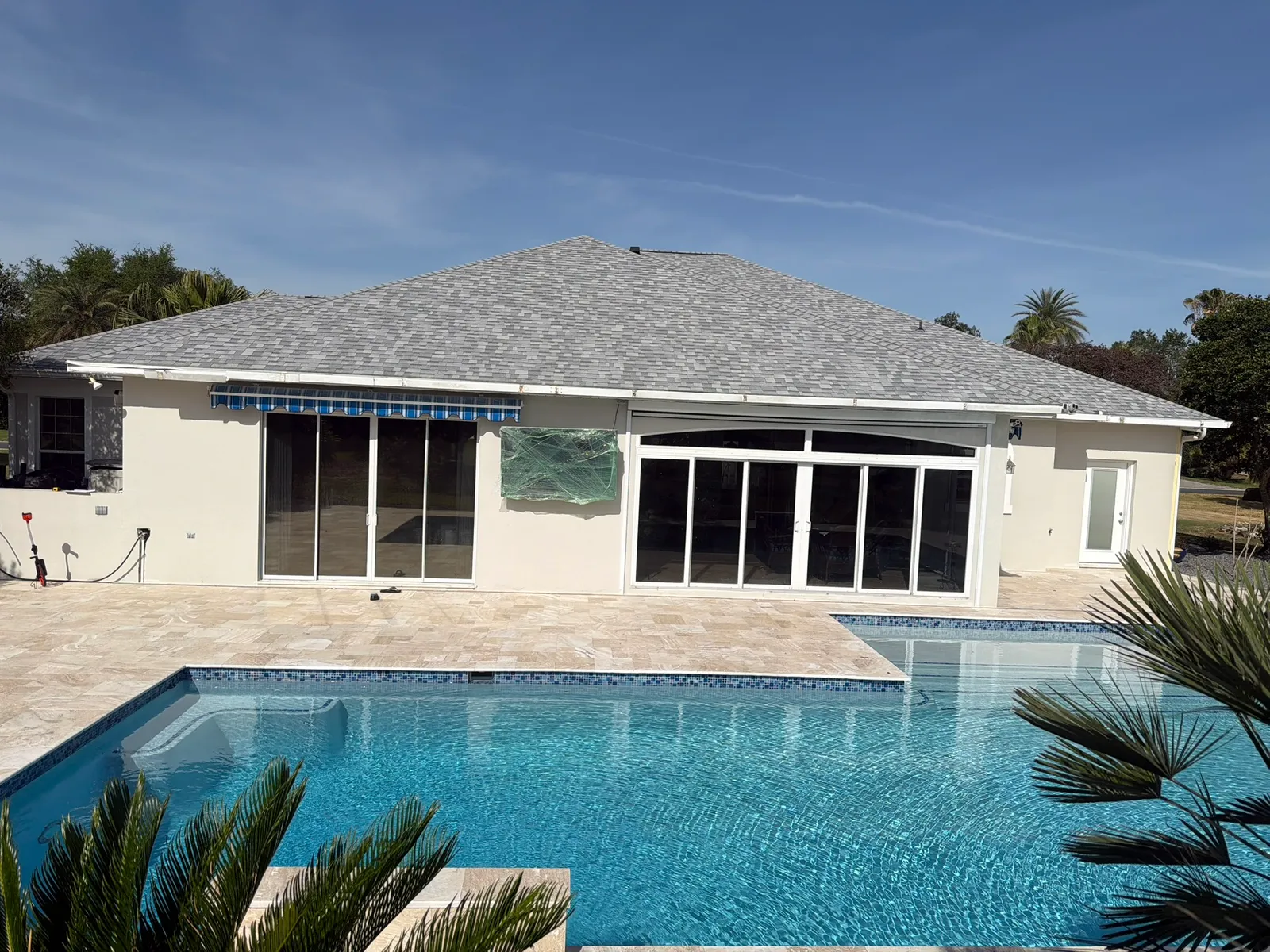
Adding a Spa to an Existing Pool: What Changes in the Structure, Plumbing and Heater
A spa added to a finished pool is a small construction project inside a remodel. Where it goes decides how much of the old pool gets cut, and the plumbing and heater decide whether it works the way you pictured.
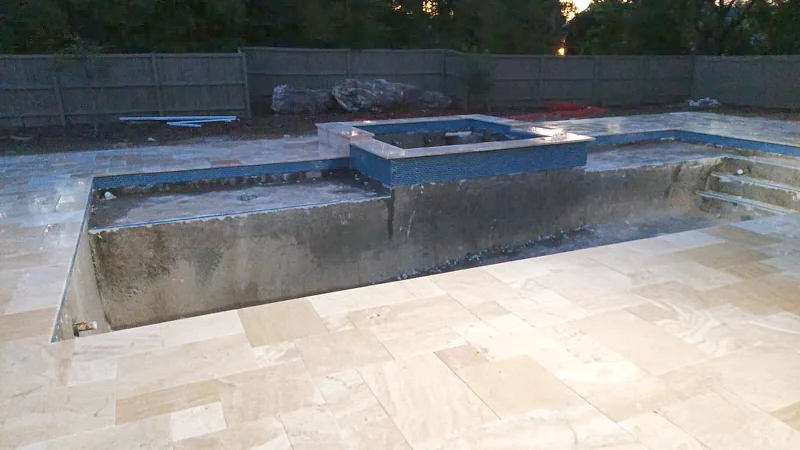
Adding a spa to an existing pool means building a second, smaller pool and connecting it to the first. The spa needs its own shell, suction and return lines, valves to switch between pool and spa, a heater and a permit. Where you put it decides how much of the existing pool and deck gets cut.
Our estimator prices a spa built with a new pool at $12,000 integrated or $18,000 with a spillover. A spa added to a finished pool is priced per site, after we see the shell and the equipment pad, because the demolition is different on every pool.
The facts that shape the project
| Fact | Where it comes from |
|---|---|
| A nonportable spa holding water **over 24 inches deep** is a private swimming pool under the building code | FBC R4501.2 |
| It is a residential swimming pool under Florida's pool safety law, including the barrier rules | F.S. 515.25 |
| New suction outlets need **entrapment protection** to ANSI/APSP/ICC 7 | FBC R4501.6.6 |
| All new pool piping is pressure tested at **35 psi for 15 minutes** | FBC R4501.12.1 |
| Heaters need a labeled unit, a bypass or anti-siphon device and unions at the heater | FBC R4501.14 |
| Pump and underwater lighting circuits need **ground-fault protection** | FBC R4501.16 |
Where can the spa go?
There are three places to put it, and each one opens a different amount of the existing pool.
| Placement | What gets cut | What it does well | What to watch |
|---|---|---|---|
| **Inside the pool's footprint** | A section of the existing shell and floor, plus the coping and deck along it | Uses space you already have; reads as part of the pool | You lose swimming area, and new steel and shell have to tie into old |
| **Raised against the edge, spilling into the pool** | The coping and deck along that edge; the pool wall where the spillover and connection go | The spillover becomes a feature; the pool keeps its full size | The spillover edge has to sit level with the pool's waterline, and the raised walls need their own finish |
| **Freestanding, away from the pool** | Deck and yard only; the pool shell is not touched | The least demolition of the existing pool | Longer plumbing runs, and the spa needs its own place inside the pool barrier |
The choice is usually made by the yard and the deck rather than by preference. A pool with a wide deck on one side often has room for a raised spa there. A pool tight against the house or the screen enclosure may only have room inside its own footprint.
What changes in the structure?
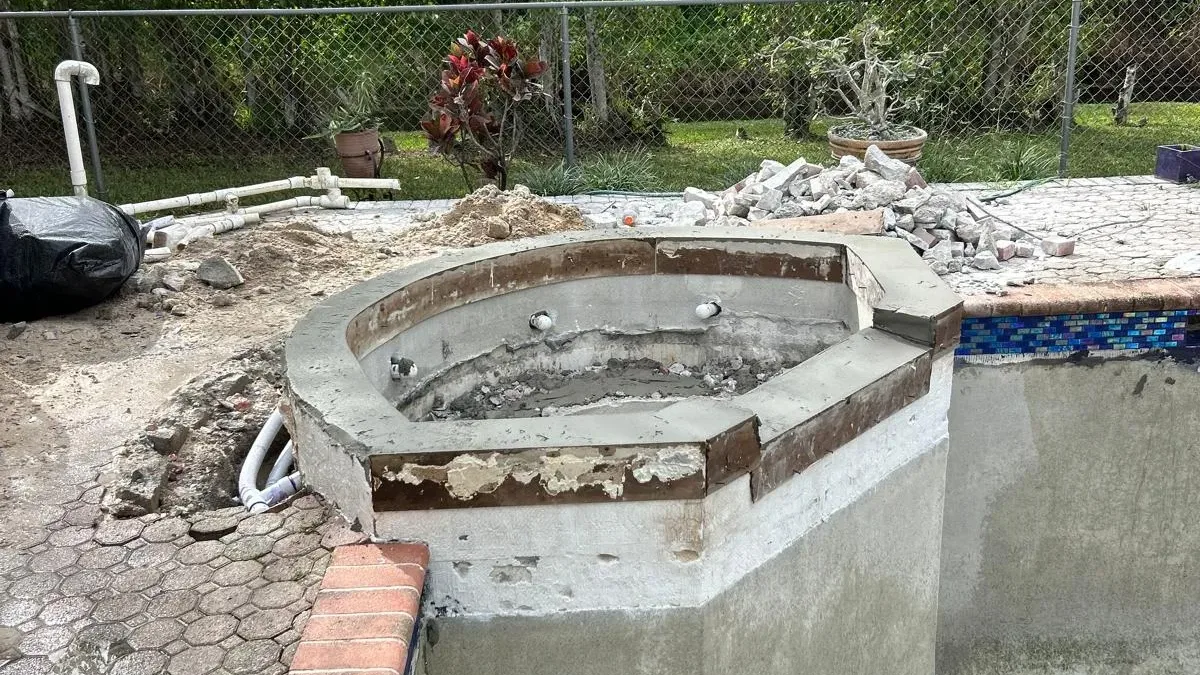
A spa is a concrete vessel with its own steel. When it touches the pool, the new steel and shell have to be tied into the old shell, and the joint between them has to hold water for as long as the pool does. That is why an attached spa starts with demolition rather than construction:
- the coping and deck around the connection come up;
- the interior finish and tile in that section come off;
- the old shell is cut back to sound concrete where the new work meets it.
The spa then gets its walls, its benches, its own finish and tile. If the pool is not being refinished at the same time, the new spa will not match the old finish exactly; finishes age, and even the same product reads differently next to one that is ten years old. That is one of the reasons most owners add a spa during a complete remodel rather than on its own.
What changes in the plumbing?
More than most people expect. A spa is a separate body of water that has to run on its own when it is heating and share water with the pool when it is spilling.
- Suction. The spa gets its own suction outlets, and new suction outlets have to meet the entrapment protection standard the code references, ANSI/APSP/ICC 7.
- Returns and jets. Returns bring filtered, heated water back in. Jets need their own lines, and their own pump capacity.
- Valves. In a typical pool-and-spa system, valves switch the flow between pool mode, spa mode and spillover. Without them, the spa cannot heat on its own.
- The trench. Every one of those lines runs from the spa to the equipment pad. On an existing pool, that usually means opening the deck between the two.
All of it is pressure tested before it is covered, at the 35 psi for 15 minutes the code requires.
What changes in the heater and the equipment pad?
The heater is what makes a spa a spa. If the pool has no heater, adding a spa almost always means adding one; our estimator prices a heater at $4,500 as part of a project. If the pool already has a heater, the question is whether it can bring the spa up to temperature as fast as you want, which depends on the type and size of the heater and is checked during design.
The equipment pad also changes:
- a pump that can run the spa's jets, or a second pump for them;
- the valves above, often automated so the switch from pool to spa is one button. Our estimator prices automation at $3,500;
- an electrical panel with capacity for the added equipment, and ground-fault protection on the circuits the code requires.
What does our estimator show for a remodel with a spa?
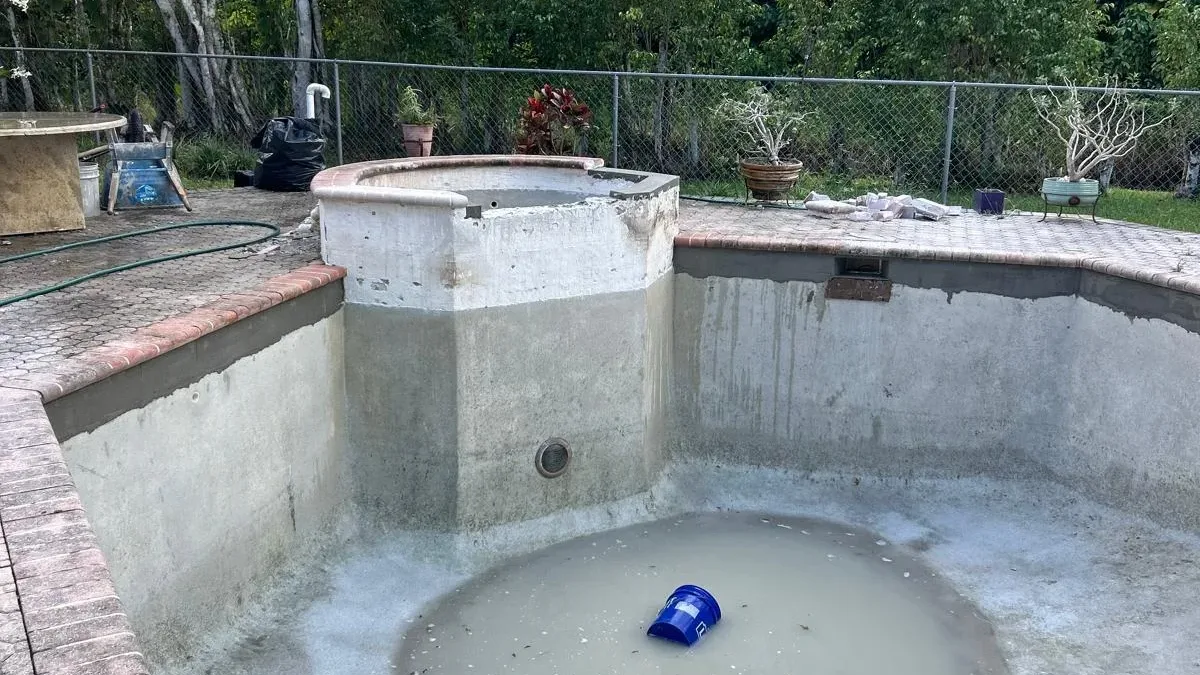
The estimator does not price a spa added on its own to a finished pool. What it does show is the effect of a spa on a complete remodel. These are its ranges for the default remodel: a 450 sq ft freeform pool with a pebble finish, 600 sq ft of pavers, a heater, a salt system, three LED lights and landscaping.
| Default remodel in our estimator | Range shown |
|---|---|
| Without a spa | $68,000 – $83,000 |
| With an integrated spa | $77,000 – $94,000 |
| With a spillover spa | $82,000 – $100,000 |
In remodel mode the estimator applies its remodel factor (82% of new construction) to the whole total, the spa included, so the difference between these rows is smaller than the spa line itself. Treat these as orientation, not a quote: the addition on your pool depends on where the spa goes and what has to be cut. For how the rest of a remodel is priced, see what a pool remodel costs in Florida.
Does the permit and barrier change?
Yes. A spa deep enough to count as a pool under the code is permitted and inspected as one. Florida's pool safety law also counts nonportable spas as residential swimming pools, so the barrier has to keep them in mind:
- a spa inside the existing pool barrier is usually covered by it;
- a freestanding spa outside the existing barrier needs to be brought inside it, or protected another way, for example with an approved safety cover, which the building code accepts as an exception to the barrier.
Whoever builds it should pull the permit under a pool/spa license, which in Florida covers the spa, its equipment, its heater and its piping.
When is the best time to add a spa?
During a complete remodel. The deck, coping, tile and finish are coming off anyway, so much of the demolition the spa needs is demolition you are already paying for, and the spa and the pool get the same finish at the same time. Our guide to what to upgrade during a complete pool remodel covers the other decisions that are cheapest at that moment.
If you are building a new pool instead, the decision is simpler and covered in pool and spa or pool only. If the existing pool needs new coping and tile anyway, our guide to pool coping and tile replacement explains that part of the work.
In Gainesville and Ocala
On the older pools we see in Alachua and Marion County, three things decide how a spa addition goes:
- The equipment pad. Many older pools were built with a filter and a pump and nothing else. A spa may need a new pad layout, not just a heater added to the old one.
- The deck. Older decks are often the first thing replaced in a remodel. If the deck is coming up anyway, the raised and freestanding options become much easier.
- The permit office. Inside Gainesville or Ocala city limits, the city reviews the permit; outside them, the county.
How we approach these projects is on our pages for pool remodeling in Gainesville and complete pool remodels in Marion County. Our pool remodeling page covers the whole region.
See what a remodel with a spa looks like in numbers
Our pool cost estimator lets you switch a remodel between no spa, an integrated spa and a spillover spa and see how the range moves, before anyone visits the site.
Common questions
Can you add a spa to an existing inground pool?
Yes. It can be built into the pool, raised against its edge with a spillover, or placed on its own nearby. Each option opens a different amount of the existing shell and deck, and each needs its own suction and return plumbing back to the equipment, a heater, and a permit.
Does adding a spa need a permit in Florida?
Yes. The Florida Building Code treats a nonportable spa holding water over 24 inches deep as a private swimming pool, so it is permitted and inspected like one: the piping is pressure tested, the electrical is inspected, and the barrier has to account for it.
Do I need a new heater to add a spa?
Usually, if the pool has none, because a spa that is not heated is rarely used. If the pool already has a heater, the question is whether it can bring the spa up to temperature as quickly as you want, which depends on the heater type and size and is checked during design.
When is the best time to add a spa to a pool?
During a complete remodel, when the deck, coping and interior finish are being replaced anyway. Much of the demolition a spa needs is then demolition you are already paying for, and the new spa and the old pool get the same finish and tile at the same time.
Sources
- Florida Building Code, Residential, 8th Edition (2023) — Chapter 45, Private Swimming Pools (R4501.2, R4501.6.6, R4501.12.1, R4501.14, R4501.16, R4501.17)
- Florida Statutes 515.25 — Definitions (residential swimming pool includes nonportable spas)
- Florida Statutes 489.105(3)(k) — residential pool/spa contractor scope
About the author
Robert Wesley Brannen is the co-founder of Mr. & Mrs. Outdoor Living and a Florida-certified pool and spa contractor. Having started in his family's aluminum business at age 13 and previously led Happy House Outdoor Living, Robert brings extensive experience in custom pool construction, outdoor structures, and design-build project management.
Florida Licenses: CPC1460562 · CPC1461119 · SCC131153553.
Most Read Articles
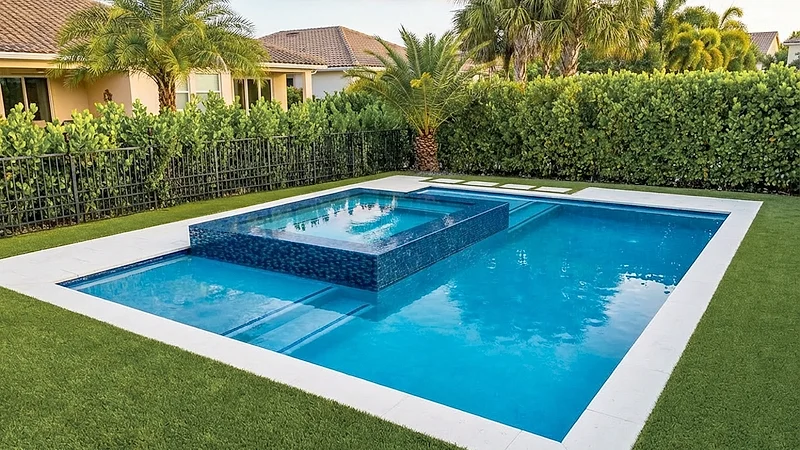
Pool & Spa or Pool Only? How to Decide Before Your Design Is Final
A spa adds $12,000 or $18,000 in our estimator. That is not the number the decision turns on — and unlike almost everything else in the yard, this one stops being available the day the shell is poured.Read More: Pool & Spa or Pool Only? How to Decide Before Your Design Is Final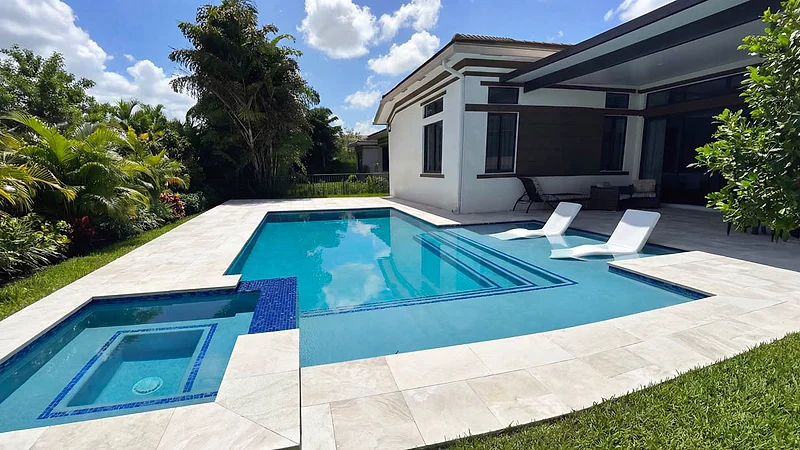
What Should You Upgrade During a Complete Pool Remodel?
A remodel is not a shopping list. It is a window in which the shell, the deck and the ground between them are open. Here is what belongs in that window, and what you can buy any year without penalty.Read More: What Should You Upgrade During a Complete Pool Remodel?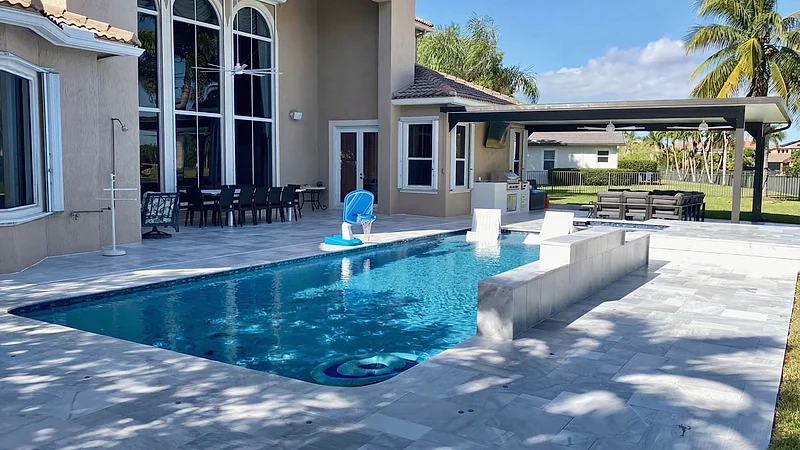
How Much Does a Pool Renovation Cost in Florida? Price Ranges and What Sets the Scope
A typical complete pool remodel in Florida runs about $68,000 to $83,000 on our estimator, a compact one starts near $27,000, and a large luxury remodel reaches $218,000. Four decisions explain the gap.Read More: How Much Does a Pool Renovation Cost in Florida? Price Ranges and What Sets the Scope
Request a Design-Build Project Evaluation
Share your property details, project scope, and investment range. Our licensed design-build pool builders will review your request and confirm alignment before next steps.
Get a Free Estimate