Can You Build Your Own Pool in Florida? What the Owner-Builder Law Actually Says
Florida lets you act as your own pool contractor on your own home. The statute is short, but what you sign takes on the contractor's job: supervising every trade, employing anyone unlicensed, and answering every inspection.
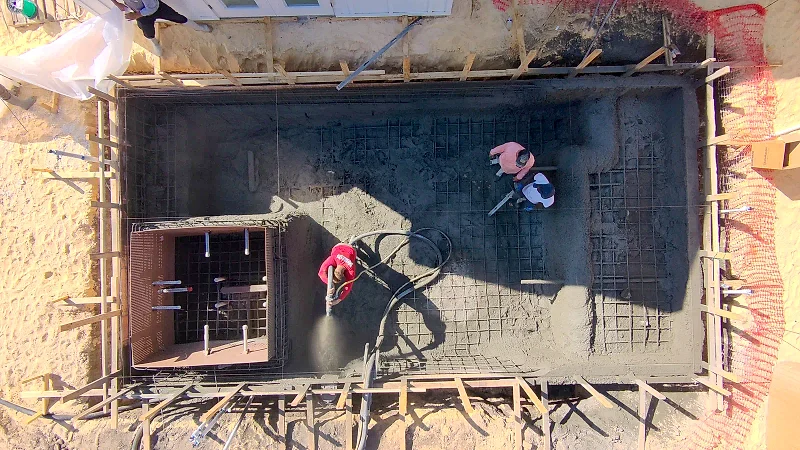
Yes. Florida's owner-builder exemption, section 489.103(7) of the Florida Statutes, lets you act as your own contractor to build a pool at a one- or two-family home you own and will use yourself, not one built for sale or lease. You must sign the permit application in person and directly supervise, on site, all work not done by licensed contractors.
That is the whole permission. What it costs you is in the disclosure statement you sign to get it: you become the party legally and financially responsible for the job, and the contractor's obligations become yours.
The facts that decide whether it works for you
| Rule | Where it comes from |
|---|---|
| The exemption covers a **one-family or two-family residence** you own, for your own use or occupancy | F.S. 489.103(7)(a)1 |
| It does not cover building **for sale or lease** | F.S. 489.103(7)(a)1 |
| Selling or leasing, or offering to, within **1 year** of completion creates a presumption it was built for sale | F.S. 489.103(7)(a)1 |
| You must **personally appear and sign** the permit application | F.S. 489.103(7)(c) |
| You cannot delegate supervision to anyone who is not licensed for that work | F.S. 489.103(7)(b) |
| Unlicensed workers must be **your employees**, with tax withholding and workers' compensation | Disclosure statement, item 8 |
| Breaking the rules lets the permit office **withhold final approval or revoke the permit** | F.S. 489.103(7)(c) |
What does the owner-builder exemption actually allow?
It allows you to be the contractor of record on your own home. The statute does not care whether you lay a single block yourself. It cares about three things: who owns the property, who will use it, and who supervises the work.
A pool is an improvement to the house, so a pool at a one- or two-family home you live in fits the exemption the same way an addition would. What it does not do is turn you into a pool contractor for anyone else. The moment the work is for a client, a buyer or a tenant, the exemption is gone.
To use it, the statute requires you to:
- appear in person and sign the building permit application;
- satisfy whatever the local permit office asks to prove you understand your obligations;
- sign the disclosure statement written into section 489.103(7)(c). The office keeps it, and the statute requires your driver license, a notarized signature or another verification the office accepts.
What does "direct, onsite supervision" mean on a pool?
It means you run the job. Section 489.103(7)(b) says you cannot hand supervision to anyone who is not registered or certified for the work being done. In practice that leaves two kinds of people on your site:
- Licensed contractors, working within the scope of their own license.
- Your employees. The disclosure statement is explicit: anyone unlicensed who works on your building must work under your direct supervision and be employed by you. That means withholding federal income tax and FICA, and providing workers' compensation.
There is no third category. A crew that "does pools" without a license, paid by the job, is not your employee and is not a licensed contractor. It is exactly the arrangement the disclosure statement warns about.
What owners assume, and what the statute says
Most of the trouble we hear about comes from reasonable assumptions that the statute contradicts.
| What owners often assume | What the law says |
|---|---|
| "The builder told me to pull the permit in my name to save time." | Item 7 of the disclosure statement: having the owner pull an owner-builder permit is "a frequent practice of unlicensed persons." |
| "I'm hiring a crew, so I'm not really the builder." | You are the responsible party of record on the permit (item 3), and unlicensed workers must be your employees (item 8). |
| "My homeowner's insurance covers anyone hurt on my property." | Item 7: you may be liable for injuries to unlicensed workers, and your homeowner's insurance may not cover them. |
| "If the contractor walks off, the state board will help." | The statement warns that the Construction Industry Licensing Board and DBPR may be unable to help with a loss caused by an unlicensed contractor; your remedy may be civil court. |
| "I can sell next spring if the market is good." | A sale or lease within 1 year of completion creates a presumption the pool was built for sale or lease. |
| "The inspector will catch anything I miss." | The inspector checks code compliance. Scheduling, sequencing, and correcting failed inspections are on you as the party of record. |
None of this makes owner-building illegal or a bad idea for everyone. It makes it a job, with an employer's duties attached.
Which parts of a pool still need a licensed contractor?
The exemption lets you hire licensed contractors for any part of the work, and on a pool you will meet at least three trades.
- Pool and spa work. Florida licenses pool contractors separately. Section 489.105(3) defines the commercial, residential and servicing pool/spa contractor, and DBPR's licensing board issues each one. The residential pool/spa scope covers the pool itself, its equipment, interior finishes, package heaters and the perimeter and filter piping.
- Electrical. Pool electrical is its own permit stage. Part II of chapter 489 has a separate owner exemption for electrical work on your own single-family or duplex home, in section 489.503(6), with its own conditions. Bonding, ground-fault protection and the equipment circuits are inspected either way.
- Plumbing and gas. The pool/spa scope in 489.105(3)(k) stops short of direct connections to a sanitary sewer or to potable water lines. A gas heater adds gas piping under the Florida Building Code, Fuel Gas.
If a licensed contractor does part of the work, the contract is enforceable on both sides. Section 489.128 makes a contract entered into by an unlicensed contractor unenforceable by that contractor, which protects you from paying for unlicensed work but does not finish your pool.
Which inspections will you be answering for?
The same ones a contractor answers for. The Florida Building Code's chapter on private pools does not change with who holds the permit, and two of its requirements set the rhythm of the job:
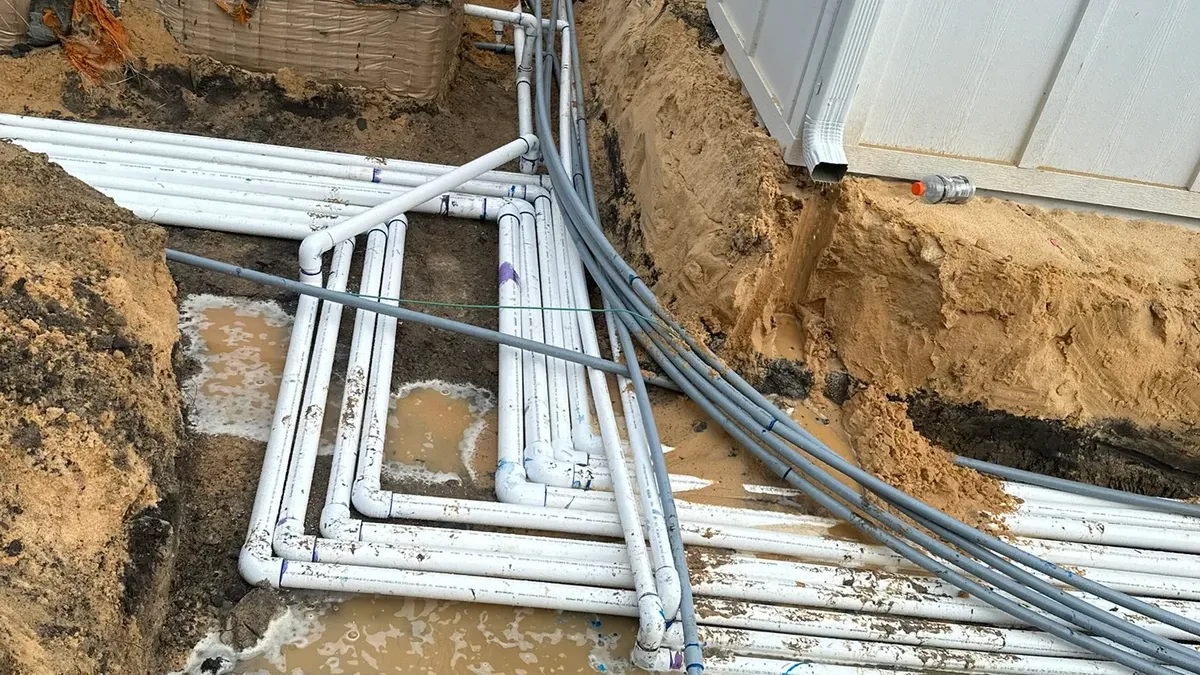
- The plumbing pressure test. All pool piping must hold a static water or air test of at least 35 psi for 15 minutes (FBC R4501.12.1). It happens before the trench is backfilled and the deck goes down.
- The order of the finish. The final electrical and barrier inspections must be completed before the pool is filled (FBC R4501.19). A pool that is plastered and ready but has an unfinished gate or alarm sits empty.
The barrier itself has a long list of measurements. Our guide to Florida pool barrier requirements walks through what fails most often, and what permits are required for pool construction in Florida covers the full set of reviews.
What an owner-builder still has to buy and coordinate
Owner-building changes who manages the project, not what the project is made of. Our pool cost estimator breaks a default project into the lines below: a 450 sq ft freeform pool with a pebble finish, 600 sq ft of pavers, a heater, a salt system, three LED lights and landscaping. Every line is still a scope someone has to price, schedule and inspect.
| Line in our estimator | Default project | Who answers for it as an owner-builder |
|---|---|---|
| Pool structure | $56,925 | You, plus whoever builds the shell and finish |
| Decking | $13,200 | You, plus the deck installer |
| Equipment and systems | $8,050 | You, plus licensed pool and electrical trades |
| Outdoor features (landscaping) | $8,000 | You |
| Permits and engineering (9% of pool and deck) | $6,311 | You, as the party of record |
The estimator shows that project as $83,000 – $102,000. It is our pricing for a project we build and manage under our license; we have no data on what an owner-builder saves, and we do not publish a number we cannot support. Our guide to what a custom pool costs in Florida explains what moves each line.
When owner-building makes sense
It makes sense for an owner who already manages construction, will stay in the house well past a year, and is ready to act as an employer. It makes less sense when the main reason is a contractor who suggested it. That suggestion is the single most useful warning sign in the statute, which is why it is printed in the disclosure statement.
If you are weighing it against hiring a builder, the questions in how to choose a pool builder in Florida work in both directions: they are the same questions you would have to answer as your own contractor.
In Gainesville and Ocala
The exemption is state law, so it reads the same in Alachua and Marion County. What changes is how each permit office collects the disclosure.
- Alachua County publishes an Owner-Builder Statement/Affidavit that repeats the statutory disclosure. Each statement is initialed separately, and the owner-builder's signature must be notarized.
- Inside Gainesville or Ocala city limits, the city is the permit office; outside them, the county. Which office handles your address, and what each one asks for, is in our guides to pool permits in Gainesville and Alachua County and pool permits in Ocala and Marion County.
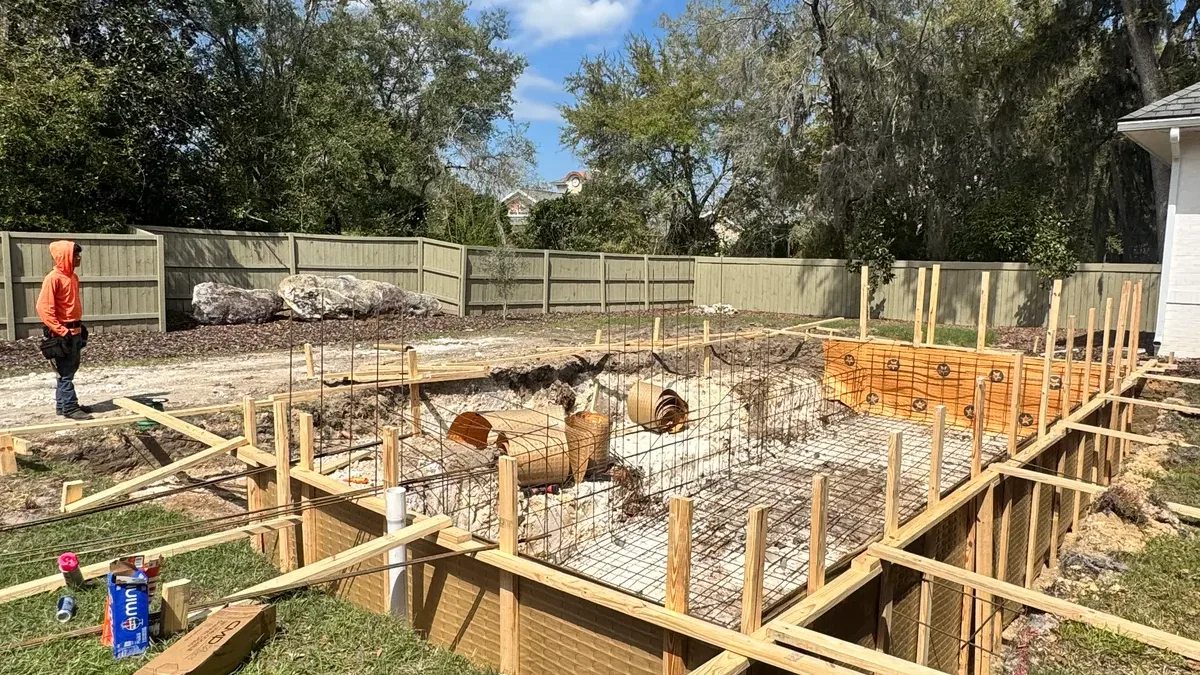
On these lots, the two items an owner-builder most often underestimates are the septic system and wells on the site plan, and rock in the excavation. Both are covered in building a pool in North Florida.
When we build, the permit is pulled under our license and we answer for every inspection. How that works is on our pool builders in Gainesville and pool builders in Ocala pages. Our custom pool construction page covers the whole region.
Get a design-build evaluation
If you are deciding between building it yourself and hiring it out, start with the lot. A design-build evaluation looks at the site, the permit office and the trades your pool needs, so you can see the full scope before you decide who should manage it.
Common questions
Can I build my own pool in Florida without a license?
Yes, under the owner-builder exemption in section 489.103(7) of the Florida Statutes, on a one- or two-family home you own and will use yourself, not built for sale or lease. You must personally sign the permit application and provide direct, onsite supervision of all work not done by licensed contractors.
Can a pool company ask me to pull the permit as an owner-builder?
It can ask, but the disclosure statement every owner-builder signs warns that this is a frequent practice of unlicensed persons. If you sign, you become the responsible party of record on the permit, and anyone unlicensed working on the job has to be your employee, with the tax and workers' compensation duties that come with it.
Can I sell my house after building the pool myself?
Yes, but timing matters. Under section 489.103(7), if you sell or lease the property, or offer it for sale or lease, within one year after the work is completed, the law presumes the pool was built for sale or lease, which falls outside the exemption.
Do I still need inspections as an owner-builder?
Yes. The permit, the inspections and the building code are the same whoever pulls the permit. The Florida Building Code still requires the final electrical and barrier inspections to be completed before the pool is filled, and the permit office can withhold final approval or revoke the permit if the exemption's rules are broken.
Sources
- Florida Statutes 489.103(7) — owner-builder exemption and disclosure statement
- Florida Statutes 489.105(3)(j)-(l) — commercial, residential and servicing pool/spa contractor scopes
- Florida Statutes 489.503(6) — owner exemption for electrical work
- Florida Statutes 489.128 — contracts entered into by unlicensed contractors unenforceable
- Florida DBPR — Construction Industry Licensing Board (pool/spa license categories)
- Florida Building Code, Residential, 8th Edition (2023) — Chapter 45, Private Swimming Pools (R4501.12.1, R4501.19)
- Alachua County Building Division — Owner-Builder Statement/Affidavit
About the author
Robert Wesley Brannen is the co-founder of Mr. & Mrs. Outdoor Living and a Florida-certified pool and spa contractor. Having started in his family's aluminum business at age 13 and previously led Happy House Outdoor Living, Robert brings extensive experience in custom pool construction, outdoor structures, and design-build project management.
Florida Licenses: CPC1460562 · CPC1461119 · SCC131153553.
Most Read Articles
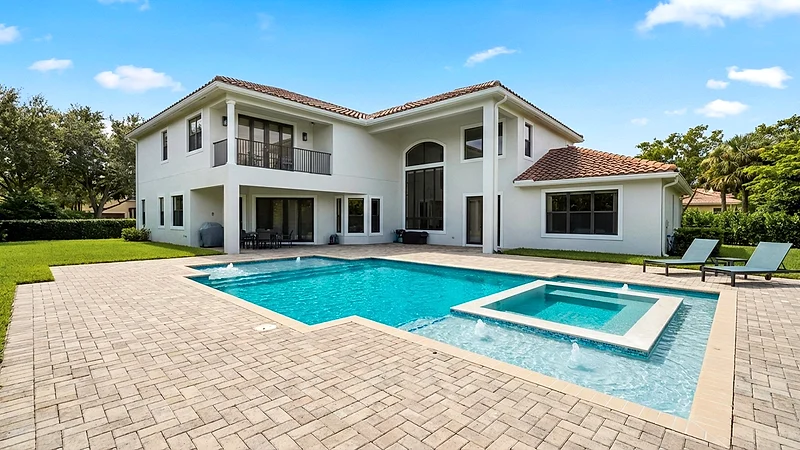
How to Choose a Pool Builder in Florida: 10 Questions to Ask Before You Sign
Most pool contracts are signed after comparing three prices. These are the ten questions that tell you more than the prices do, and what a good answer sounds like.Read More: How to Choose a Pool Builder in Florida: 10 Questions to Ask Before You Sign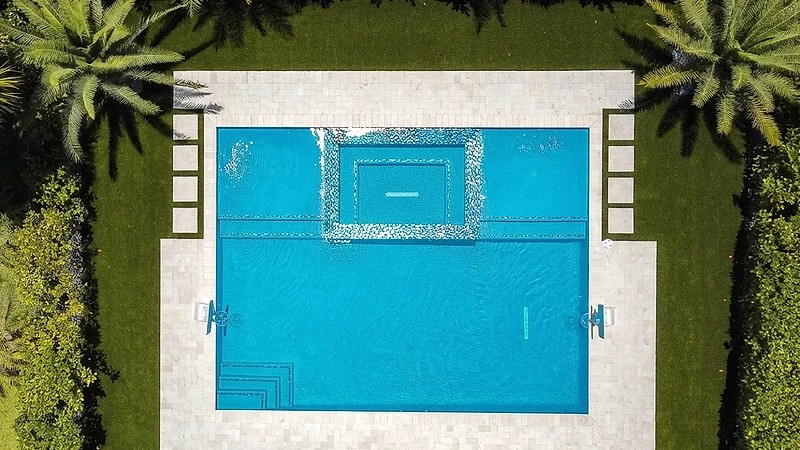
What Permits Are Required for Pool Construction in Florida?
A new inground pool in Florida needs a building permit from your city or county, with electrical and plumbing work covered under it, a set sequence of inspections, and a safety barrier that passes before the final. Here is what each piece is, who issues it and what slows it down.Read More: What Permits Are Required for Pool Construction in Florida?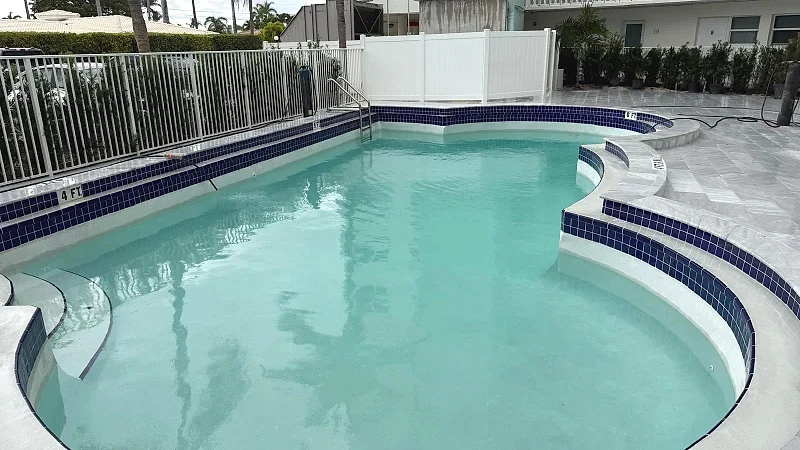
Florida Pool Barrier Requirements: What a New Pool Needs to Pass Final Inspection
Florida law gives a new residential pool five ways to pass final inspection, and the building code turns the barrier option into a set of measurements. Most failed finals come from a short list: the gate, the doors in the house wall, and gaps nobody measured.Read More: Florida Pool Barrier Requirements: What a New Pool Needs to Pass Final Inspection
Request a Design-Build Project Evaluation
Share your property details, project scope, and investment range. Our licensed design-build pool builders will review your request and confirm alignment before next steps.
Get a Free Estimate