Pool Financing in Florida: Loan, HELOC or Cash, and How Each One Fits the Build
A pool is paid for in stages over a build, and each way of financing it delivers money differently: all at once, as you draw it, or from savings. Here is how each one lines up with the payment schedule, and what each puts at stake.
There are four common ways to pay for a pool in Florida: cash, an unsecured personal loan, a home equity loan, or a home equity line of credit (HELOC). They differ in three ways that matter on a construction project: whether your home secures the debt, whether the money arrives all at once or as you draw it, and whether the rate can change.
The fourth difference is the one most comparisons leave out. A pool is not paid for on the day you sign. It is paid for in stages, over the build. How well a financing option fits depends on how its money arrives against those stages.
We do not publish payments, rates or terms here. They depend on the lender and on you, and any number we printed would be wrong for most readers. What follows is how each option works, from the federal consumer regulator's own explanations, and how each one meets the build.
Key facts
- A home equity loan is paid out as a lump sum and uses the equity in your home as collateral; if you cannot repay it, the lender could foreclose (CFPB).
- A HELOC lets you borrow up to a credit limit during a draw period, usually at a variable rate, so payments may change from month to month; after the draw period you enter a repayment period (CFPB).
- For credit secured by your principal dwelling, Regulation Z generally gives you three business days to rescind, in writing (12 CFR 1026.15 and 1026.23).
- Personal installment loans are paid back in periodic fixed amounts (CFPB).
- Under Florida law, a contractor who takes more than 10% of the contract price as the first payment must apply for permits within 30 days and start work within 90 days of the permits being issued, unless there is just cause or you agree otherwise in writing (F.S. 489.126).
How do loan, HELOC and cash compare?
| Cash | Personal loan | Home equity loan | HELOC | |
|---|---|---|---|---|
| Is your home the collateral? | No | No | Yes | Yes |
| How the money arrives | You hold it | Ask the lender how and when it is released | As a lump sum | Drawn as needed, up to a limit, during the draw period |
| Rate and payments | — | Repaid in fixed periodic amounts | Ask whether it is fixed | Usually variable; payments may change |
| Right to rescind after signing | — | Not a home-secured loan | Generally three business days, on a principal dwelling | Generally three business days, on a principal dwelling |
| The main thing at stake | Savings you no longer have on hand | Your credit and the payments | Your home, if you cannot repay | Your home, and payments that can rise |
None of these is the right answer for everyone. Cash costs nothing to borrow but empties an account you may want for something else. A personal loan keeps the house out of it. Home equity borrowing puts the house behind the debt, which is exactly why the federal rules give you time to change your mind after signing.
When does each payment fall in a pool build?
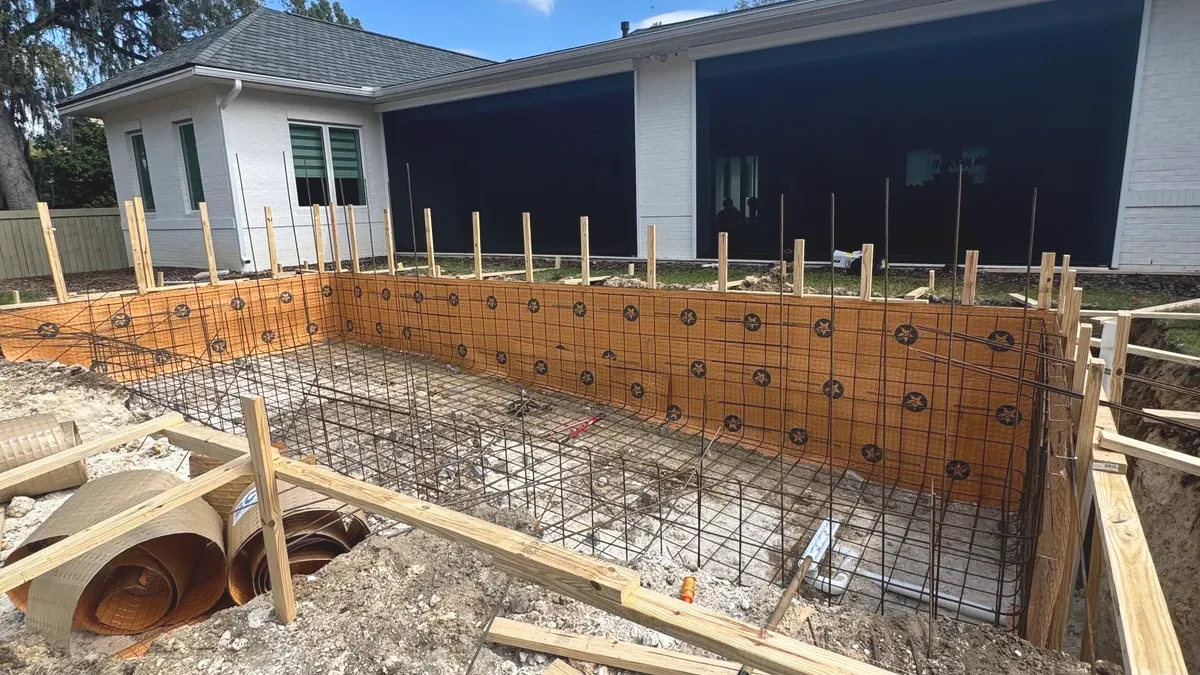
A pool is built in a fixed order, and a sensible payment schedule follows it. These are the stages our construction timeline uses:
| Stage | What is finished when it ends |
|---|---|
| 1. Layout and excavation | The hole, dug to the engineered profile |
| 2. Plumbing and steel | Lines run and pressure-tested, steel tied, inspection passed |
| 3. Shell | Gunite applied over the steel and cured |
| 4. Tile and coping | The edge of the pool set on the cured shell |
| 5. Electrical rough-in and deck | Conduit, lighting circuits and the deck, with their inspections |
| 6. Equipment | Pump, filter, heater, sanitation and controls installed and wired |
| 7. Interior finish and fill | The finish applied and the pool filled |
| 8. Start-up, barrier and final | Chemistry balanced, barrier complete, final inspections passed |
The full sequence, and what each stage waits on, is in our pool construction timeline. The point for financing is simple: payments should follow completed stages, not the calendar. The specific split is set in each contract; what you are checking is that every payment is tied to work you can see.
How does each option meet that schedule?
A HELOC fits a staged schedule most naturally. You draw when a stage is complete and a payment is due, so you borrow against the work as it happens rather than ahead of it. The trade-off is the one the CFPB puts first: the rate is usually variable, and the line is secured by your home.
A lump-sum loan arrives before most of the work exists. That applies to a home equity loan, and to a personal loan paid out at once. The money sits in your account while the stages are built and paid one at a time. That is manageable if you treat it as a construction fund and pay from it only against completed stages; it is a risk if it makes a large early payment feel painless.
Cash meets the schedule exactly, as long as the money is actually available on each payment date and not tied up somewhere that takes weeks to release.
A combination works too: cash for the deposit and the early stages, borrowing for the rest. What matters is that the total is in place before the first payment, not that it comes from one source.
What should be settled before the first payment?
Four things, in this order.
- A written scope with a fixed price. You cannot size a loan or a line of credit against an estimate. Our financing page puts it the same way: the design and the price come first, and financing is the third step.
- The financing itself. Approved, with the money's timing understood. If it is home equity, allow for the rescission period after closing.
- The payment schedule in the contract, tied to stages. What else a quote and a contract should contain is in what a pool quote should include.
- The deposit, matched to the law. If the first payment is more than 10% of the contract price, Florida law ties it to a permit application within 30 days and a start within 90 days of the permits being issued. Ask how the contractor's schedule meets those dates.
Two checks cost nothing. A lender making mortgage loans in Florida can be looked up through the Office of Financial Regulation's license verification page, which points to the national registry for mortgage lenders and loan originators. And the contractor's license can be checked in the state's public license search.
How much should you finance?
As much as the project you have decided on costs, and that is why the price comes first. Our pool cost estimator gives a planning range before anyone visits — about $83,000 to $102,000 for a typical new pool and about $68,000 to $83,000 for a typical complete remodel, as of November 2026. Those are ranges of plus or minus 10%, not quotes. The written scope after a site visit is the number to finance; how the estimator builds the range, and which decisions move it, is in what it costs to build a pool in Florida.
Whatever you finance, the advice from the CFPB is the same for every product: shop around and compare offers from more than one lender.
In Gainesville and Ocala
Financing works the same across the state. What is local is the paperwork the payments wait on.
- The permit office. The first stage cannot start until the permit is issued, and inside city limits that is the City of Gainesville or the City of Ocala; outside them, the county. The order is set out in pool permits in Gainesville and Alachua County and pool permits in Ocala and Marion County.
- The Notice of Commencement. You sign it, it is recorded in the county clerk's office before work begins, and on a contract over $5,000 the building department needs a copy before the first inspection. Plan for it before the excavation date: without it, the first inspection cannot happen.
How we design, price and build in each area is on our pages for pool builders in Gainesville and pool builders in Ocala. Our custom pool construction page covers the whole region.
Where to start
Settle the scope and the price, then choose the way of paying that matches how you want the money to arrive and what you are willing to put behind it. When you are ready to see what is available for a project we build, our financing options page explains how it works with our lending partner.
Common questions
What are the ways to finance a pool in Florida?
The usual options are cash, an unsecured personal loan, a home equity loan or a home equity line of credit, or a combination of them. The difference is whether your home secures the debt, whether the money arrives at once or as you draw it, and whether the rate can change.
Is a HELOC or a loan better for paying for a pool?
It depends on what you are comfortable putting at stake and how you want the money to arrive. A HELOC lets you borrow as payments come due, but it is secured by your home and usually has a variable rate. A personal loan does not use the home as collateral and is repaid in fixed periodic amounts. Compare offers from more than one lender.
Can I cancel a home equity loan or HELOC after signing?
For credit secured by your principal dwelling, federal rules generally give you a right of rescission: three business days to cancel, in writing, after the later of closing, delivery of the rescission notice or delivery of the required disclosures. It does not apply to an unsecured personal loan.
Do pool builders offer financing?
Some work with a third-party lender. We do: financing is provided by Acorn Finance, which reviews the application and sets the terms. We are not a lender, and how you pay does not change the price in your written scope.
Sources
- CFPB — What is a home equity line of credit (HELOC)?
- CFPB — What is a home equity loan?
- CFPB — What is the right of rescission?
- CFPB — Regulation Z, 12 CFR 1026.23, right of rescission (closed-end credit)
- CFPB — Regulation Z, 12 CFR 1026.15, right of rescission (open-end credit)
- CFPB — Do personal installment loans have fees?
- Florida Office of Financial Regulation — Verify a License
- Florida Statutes 489.126 — moneys received by contractors
About the author
Robert Wesley Brannen is the co-founder of Mr. & Mrs. Outdoor Living and a Florida-certified pool and spa contractor. Having started in his family's aluminum business at age 13 and previously led Happy House Outdoor Living, Robert brings extensive experience in custom pool construction, outdoor structures, and design-build project management.
Florida Licenses: CPC1460562 · CPC1461119 · SCC131153553.
Most Read Articles
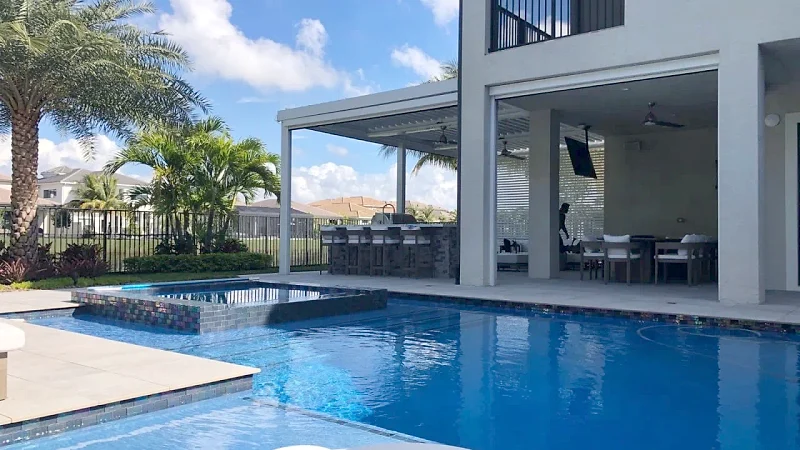
How Much Does It Cost to Build a Pool in Florida? 8 Decisions That Set the Price
A typical custom pool in Florida runs about $83,000 to $102,000 on our estimator, a compact plain pool starts near $33,000, and a large luxury build passes $217,000. Eight decisions explain the gap.Read More: How Much Does It Cost to Build a Pool in Florida? 8 Decisions That Set the Price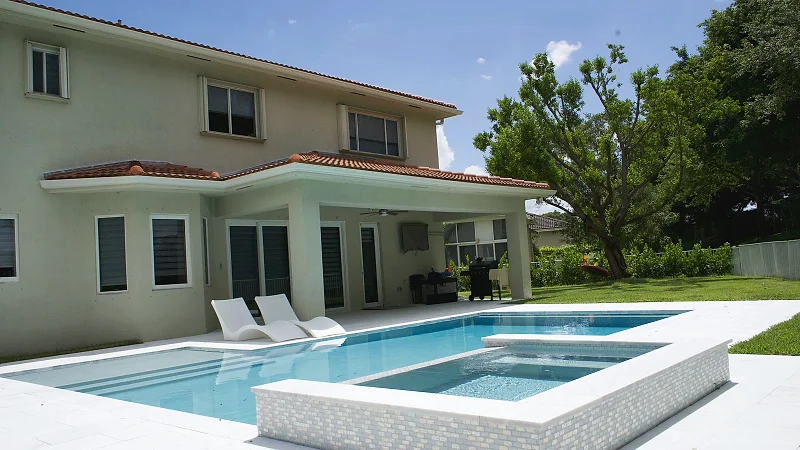
Pool Construction Timeline in Florida: What to Expect From Start to Finish
A Florida pool is built in a fixed order of phases, and the calendar is set by what each phase waits on: the permit, the weather, an inspection, or a cure time. Here is every phase in sequence, what gates it, and where the time actually goes.Read More: Pool Construction Timeline in Florida: What to Expect From Start to Finish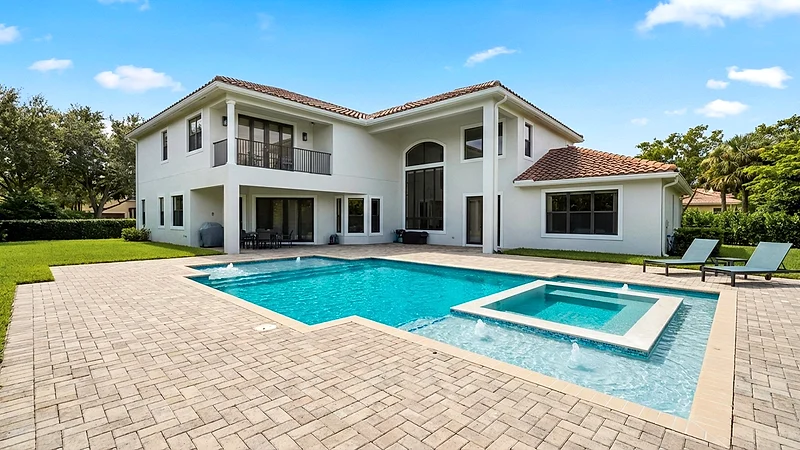
How to Choose a Pool Builder in Florida: 10 Questions to Ask Before You Sign
Most pool contracts are signed after comparing three prices. These are the ten questions that tell you more than the prices do, and what a good answer sounds like.Read More: How to Choose a Pool Builder in Florida: 10 Questions to Ask Before You Sign
Request a Design-Build Project Evaluation
Share your property details, project scope, and investment range. Our licensed design-build pool builders will review your request and confirm alignment before next steps.
Get a Free Estimate