How Outdoor Living Spaces Increase Property Value in Florida
Outdoor living space adds value to a Florida home when it is permitted, built from materials that survive the climate, sized to the house, and usable most of the year. It subtracts value when it is not. Here is what buyers, appraisers and insurers actually look at, and how to build for it.
Outdoor living space adds value to a Florida home when four things are true: the work was permitted, the materials survive the climate, the space is usable most of the year, and the design fits the house. When those hold, a pool, a covered lanai, a pergola or an outdoor kitchen is something a buyer will pay for and an appraiser can support. When they do not, the same features are a liability a buyer prices down.
You will see percentages online for how much a pool or a lanai "adds." We do not publish them, because none of them apply to your house: value comes from recent comparable sales in your neighborhood, and a figure that is true in one Boca Raton subdivision is false in a Gainesville one. What we can tell you is what the people who set the value actually look at.
What a buyer sees
Buyers in Florida are evaluating a lifestyle, and the backyard is where it happens. The features that register:
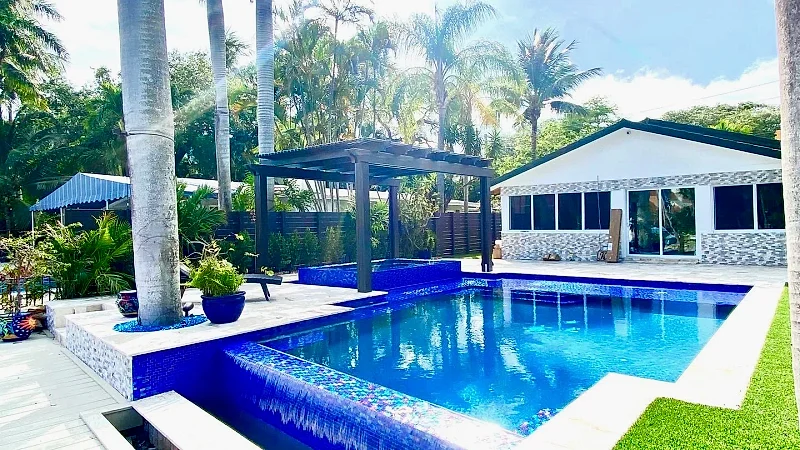
- A pool that looks cared for. Finish, tile and equipment in good condition read as "move-in ready"; a stained, dated pool reads as a project with a cost attached. This is why a complete remodel before listing changes how a home shows.
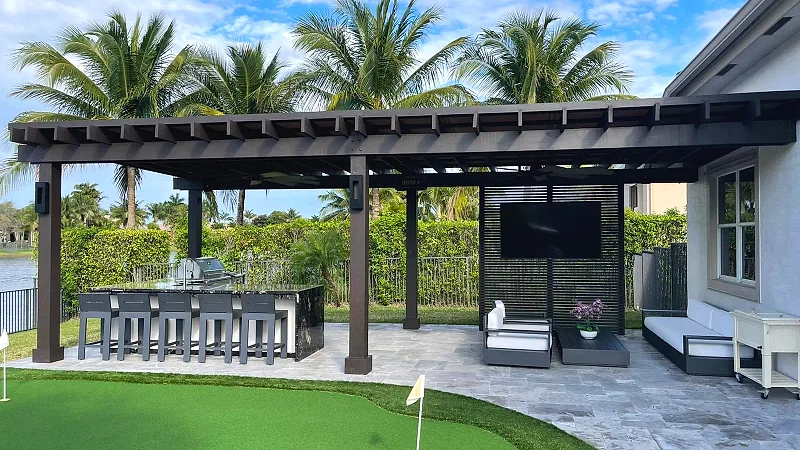
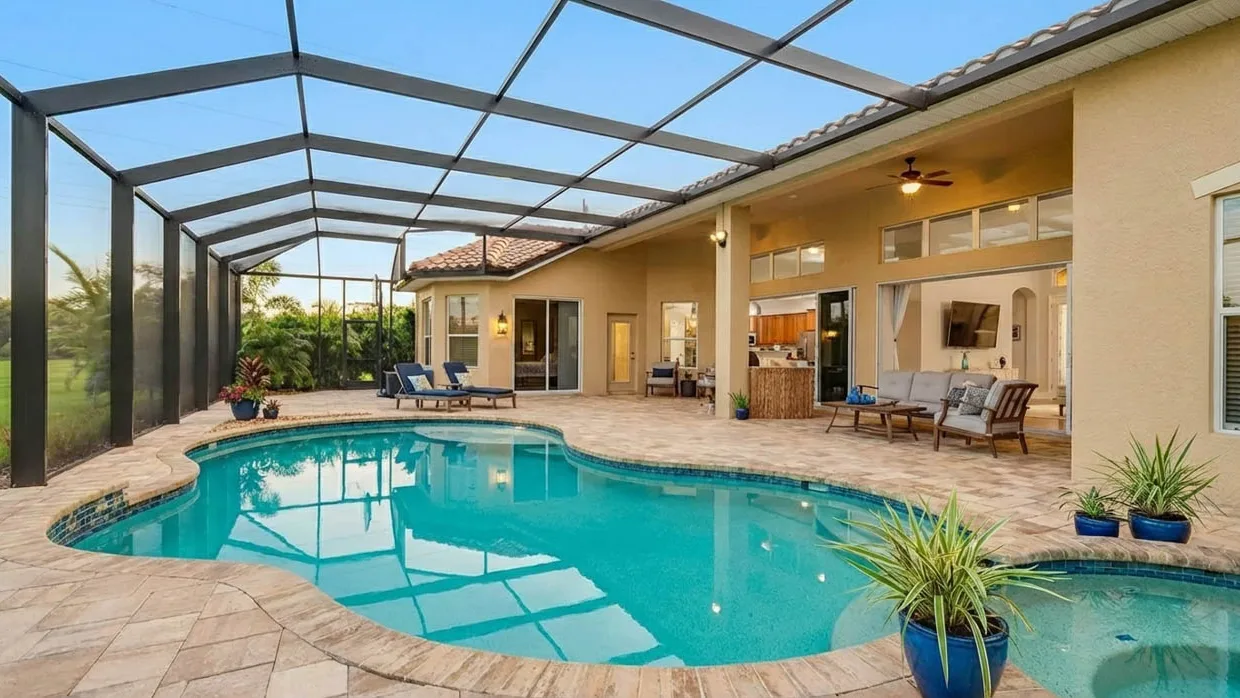
- Covered, screened space. Shade and insect protection are what make a Florida patio usable at 5 p.m. in July. A lanai, a screen enclosure or a pergola that connects to the house extends the living area in a way buyers feel immediately.
- An outdoor kitchen that is part of a room, not a grill on a slab. Counter space, a sink, lighting and cover.
- A layout that flows from the kitchen or living room to the patio to the pool, without a fence or a step in the wrong place.
What an appraiser sees
An appraiser is comparing your home to recent sales of similar homes nearby and adjusting for differences. For outdoor improvements the questions are:
- Was it permitted? Permitted square footage and structures can be counted; unpermitted work often cannot, and can be flagged.
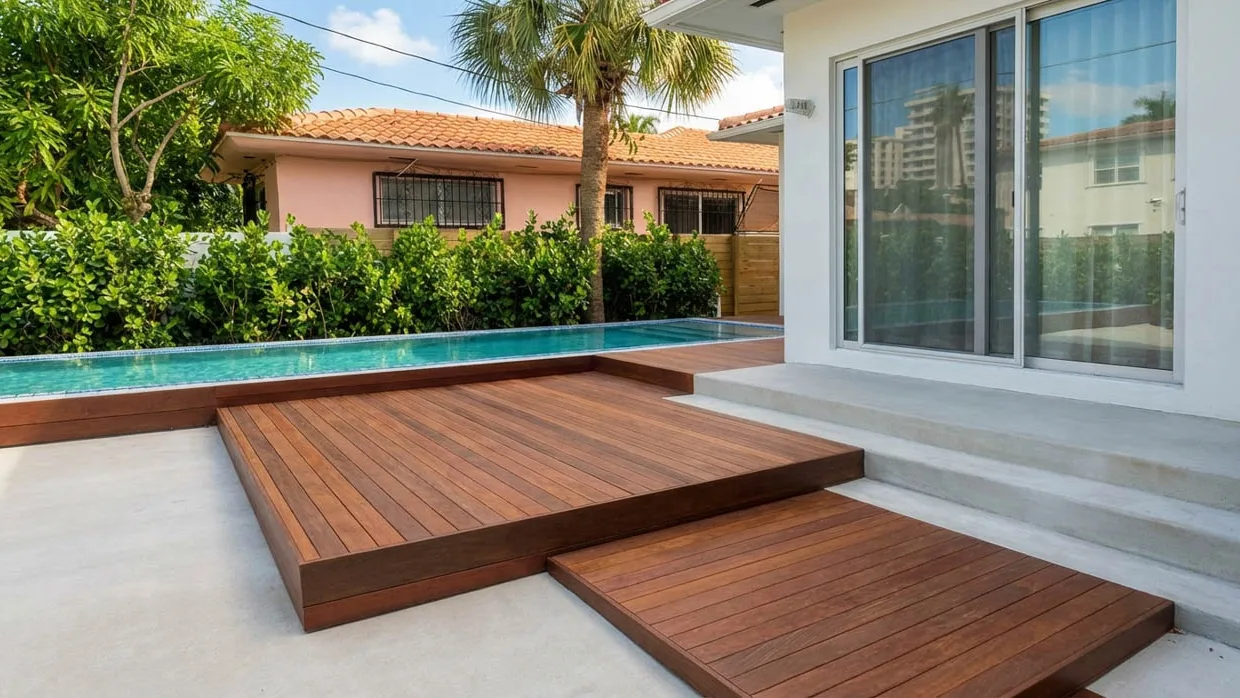
- Is it a durable improvement or a temporary one? A built pool, a roofed lanai and a masonry outdoor kitchen are improvements. Furniture, portable features and above-ground installations generally are not.
- Do comparable homes have it? In a neighborhood where most homes have a pool, yours is expected and its absence is the adjustment. Where few do, the pool is a smaller adjustment than its cost.
- Condition. A dated or damaged feature can be adjusted down, not up.
The practical consequence: keep the permits, the plans and the closed inspection records with the house. They are the documents that let an improvement count.
What an insurer and the tax office see
A pool and permanent structures are reported to the county property appraiser when they are permitted, and they can change the assessed value. How Florida's homestead rules and assessment caps treat the change depends on your situation; the county property appraiser's office and a tax professional are the right sources, not a blog. Insurers price pools, screened structures and outdoor kitchens by their own underwriting; a conversation with your carrier before you build avoids surprises, and a permitted, code-compliant barrier is usually part of what they want to see.
What holds value in the Florida climate
Materials decide whether the space still looks like an asset in year ten.
| Element | What survives Florida | What does not |
|---|---|---|
| Decking and pool surround | Travertine, pavers on a proper base, properly finished concrete | Thin overlays, untreated wood at the water's edge |
| Shade structures | Aluminum pergolas and louvered roofs engineered for the local wind design | Undersized timber structures without footings or hardware rated for wind |
| Outdoor kitchens | Masonry or framed islands with weather-rated appliances and a cover | Indoor-grade appliances, uncovered cabinetry |
| Screens | Aluminum framing and screen rated for the exposure | Repaired-every-year mesh on a frame that was never sized for wind |
| Finishes and fixtures | Finishes chosen for the water chemistry, marine-grade metals | Metals that corrode in salt air or salt water |
Our outdoor living design guide goes deeper on materials, and what makes a pool look custom covers the design choices that read as quality.
Design that fits the house
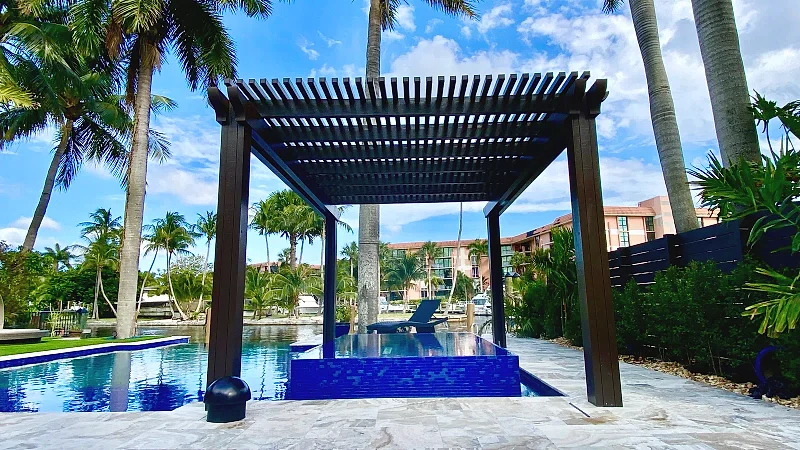
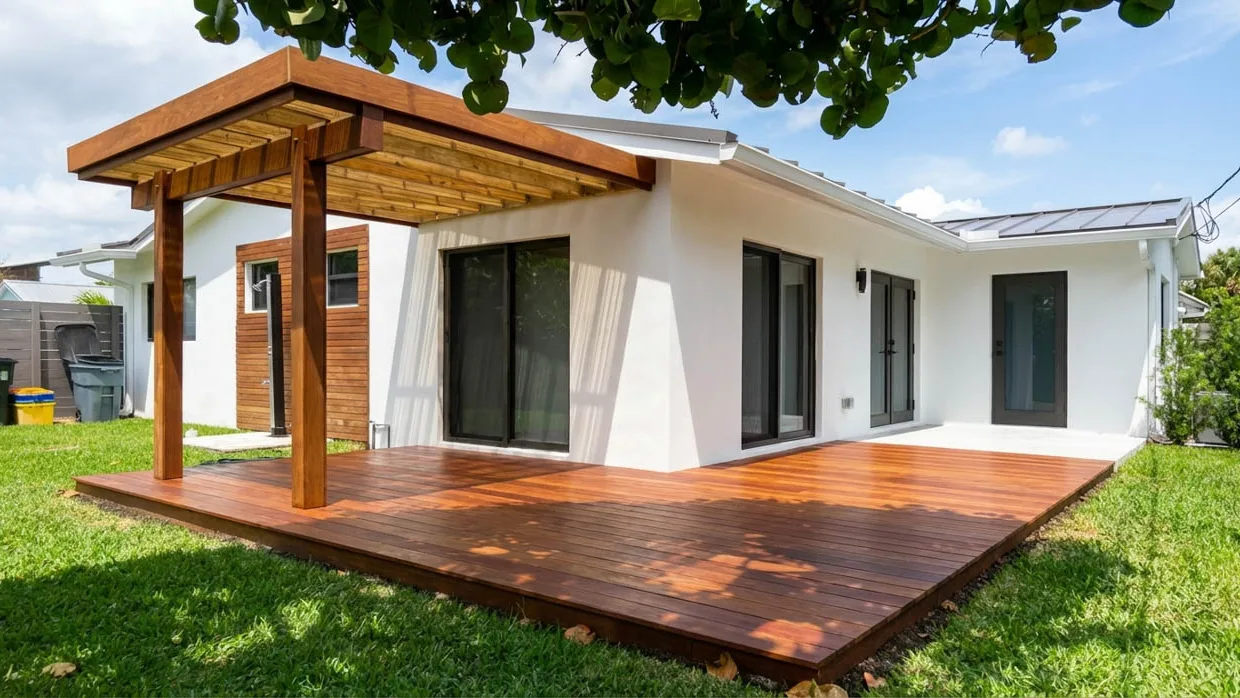
The improvements that add the most are the ones that look like they were always there. A pergola scaled to the elevation of the house, a deck material that matches the interior floor tone, a kitchen placed where the cook can see the pool, a screen enclosure whose roof line follows the house. Oversized, mismatched or awkwardly placed features are the ones buyers mentally budget to remove. Planning the pool and the structures together is how you avoid it; our guide to a pergola beside a pool is one example of what that planning looks like.
A practical order of operations
- Decide how you live outside: dining, lounging, swimming, cooking, watching children. The space should serve that, not a listing photo.
- Check the rules first: setbacks, easements, HOA, and what needs a permit.
- Build the durable elements before the decorative ones: drainage, the pool, the roof or pergola structure, the utilities for a kitchen.
- Choose materials for the climate, then for the look.
- Keep every permit and inspection record.
If you are weighing a project with resale in mind, we will tell you which parts of it tend to hold value and which are personal preference. Start with a project evaluation on our custom pool construction page if the pool is the centerpiece, or with our outdoor kitchen and custom deck pages for the rest of the backyard.
Common questions
How much value does a pool add to a house in Florida?
There is no reliable percentage that applies to your house. The value a pool adds depends on the neighborhood, whether comparable homes have pools, the pool's condition and whether it was permitted. In pool-heavy Florida markets a home without one can be at a disadvantage; in others a pool is a preference, not a premium. An appraiser compares your home to recent sales nearby, not to a national average.
Does unpermitted outdoor work hurt resale?
Yes. Unpermitted structures, electrical and gas work surface during inspections, appraisals and insurance underwriting, and can require after-the-fact permits or removal. Keep the permits and the closed inspection records with the house documents.
Which outdoor feature is the best investment?
The one that fits how you live and the house you have. A covered, screened space that is usable in rain and bugs gets the most use in Florida, and a pool is the feature buyers in many markets expect. An outdoor kitchen adds value when it is part of a coherent covered space rather than a grill on a slab.
Will outdoor improvements raise my property taxes or insurance?
Permitted improvements are reported to the property appraiser and can change the assessed value; how that interacts with Florida's homestead rules depends on your situation, so ask the county property appraiser or a tax professional. Insurers price pools and structures by their own rules; confirm with your carrier before building.
Most Read Articles