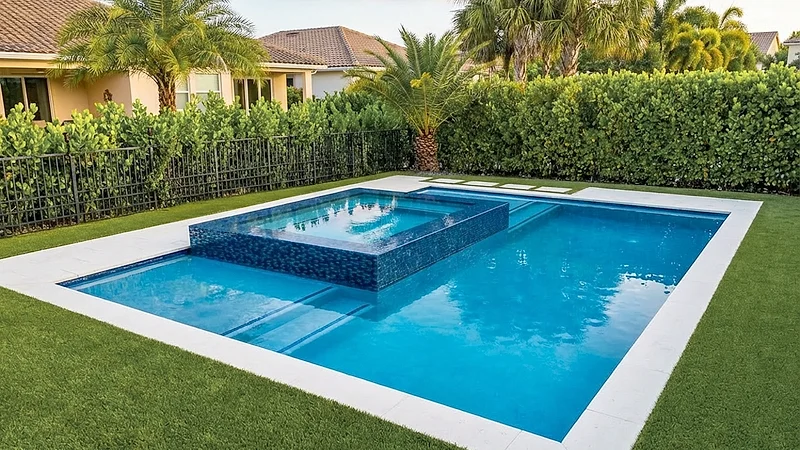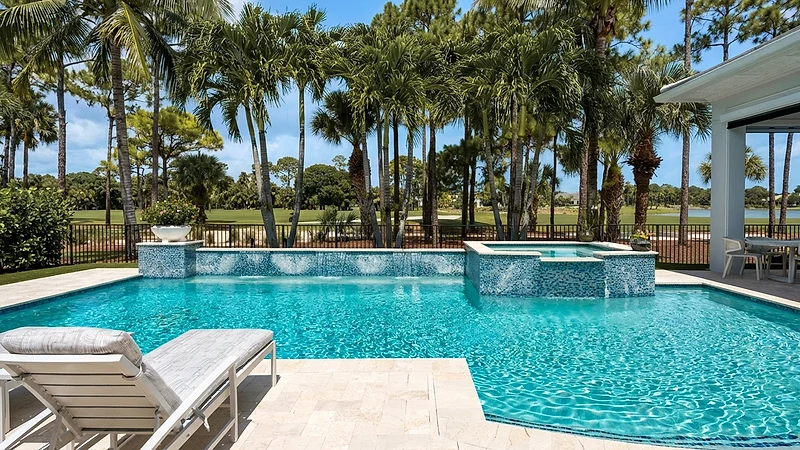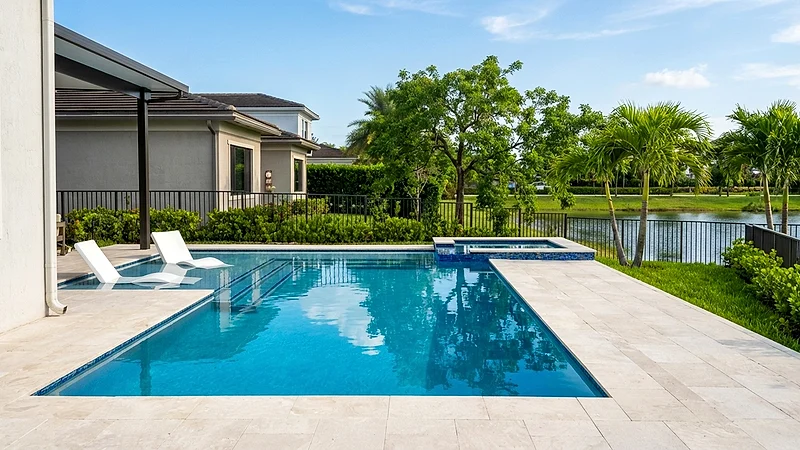
A cold plunge built with the pool is a small vessel on its own loop: its own pump, its own filter, its own sanitation and a chiller sized for Florida's heat. Almost everything that makes it work is decided before the shell is shot. Here is what we settle with clients who want one.
A cold plunge built with a new pool is a small vessel on its own loop: its own pump, its own filter, its own sanitation and a chiller sized to hold cold water in a climate that does everything it can to warm it. It can sit beside the spa, share the equipment pad and run from the same controller, and it can look like part of the pool. What it cannot do is share the pool's water or be added easily after the deck is poured. This guide covers what we settle with clients who want one, in the order it comes up.
A Florida pool runs in the 80s for much of the summer, and a spa runs around 100°F. A cold plunge is meant to sit decades below both, so none of the three can share water. A plunge that is plumbed into the pool loop is simply a cold spot that the pool warms up in minutes.
That is why a built-in plunge gets:
What it can share is the equipment pad, the trench from the pad to the house, the electrical feed, the automation controller and, visually, the finish, tile and coping of the pool.
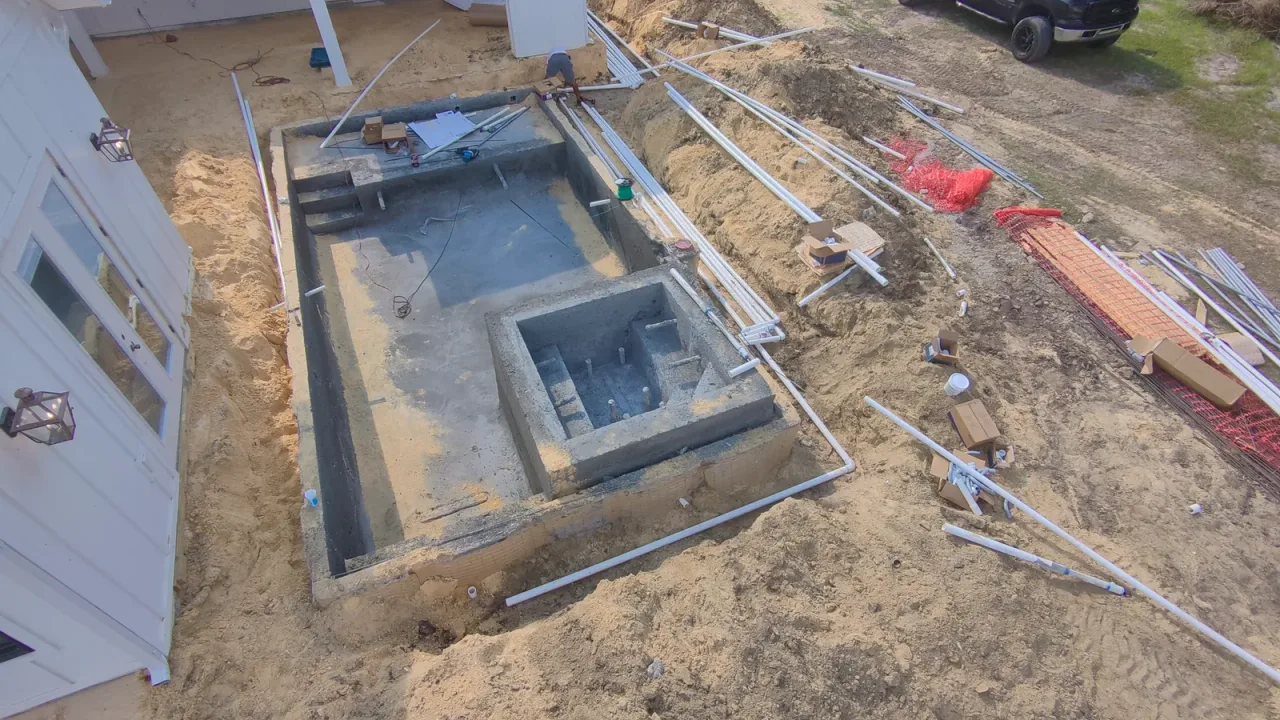
Chiller capacity is the decision that separates a plunge that holds 50°F in August from one that creeps into the 60s by the afternoon. The load depends on the volume of water, the temperature you want, the surface area exposed to air and sun, how well the shell and plumbing are insulated, and how often the cover is off. We size it from those numbers for your lot, with a margin for the hottest weeks, rather than from the vessel's catalog volume alone. Undersizing is the mistake we see most in plunges added later, because the only way to fix it is to replace the chiller.
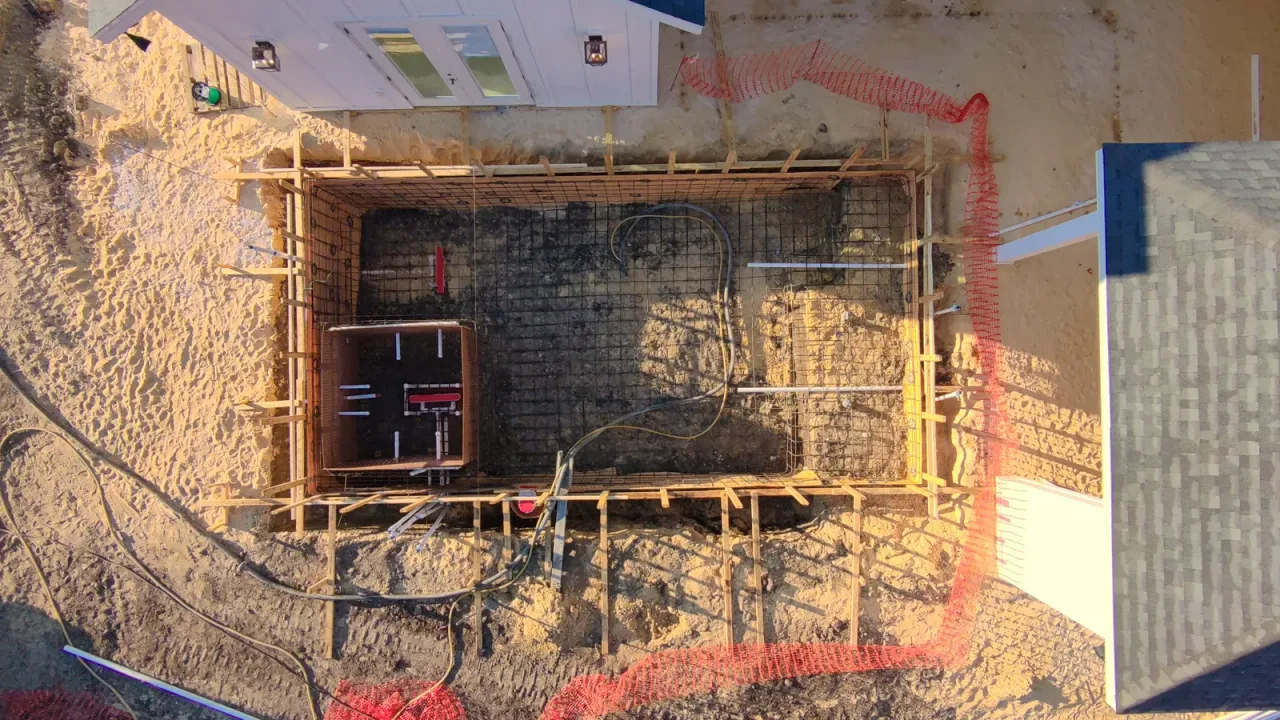
A chiller is a dedicated electrical load, and a plunge adds its own pump and often a small heater. All of it is permitted with the pool's electrical, bonded and installed to the code's pool and spa provisions, with the panel capacity confirmed before the pad is set. Running the circuit later means opening a finished deck or wall. This is the same point our guide to upgrades worth planning before construction makes about heaters and automation: the equipment can wait, the capacity and the conduit cannot.
Where the plunge goes decides how much it is used and how safe it is.
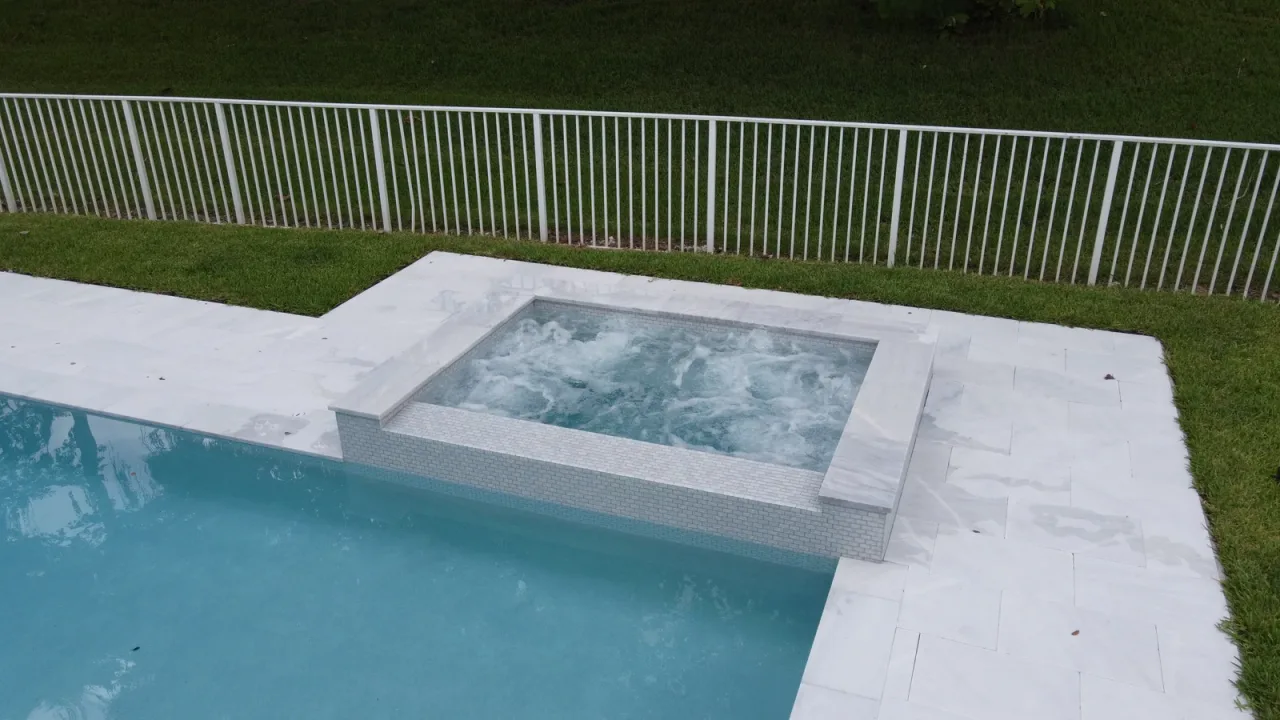
A plunge can be a gunite vessel finished to match the pool, a prefabricated shell set into the deck, or a freestanding tub placed on the deck after the fact. The three are not the same project:
| Built-in gunite or set-in shell | Freestanding tub on the deck | |
|---|---|---|
| When it is decided | With the pool, before the shell | Any time |
| Equipment | Own pump, filter, sanitation and chiller on the pad | Integrated in the unit, plugged in nearby |
| Permits | Part of the pool permit and barrier | Depends on size and electrical; ask the building department |
| Look | Matches the pool's finish, tile and coping | A separate object on the deck |
| Capacity in Florida heat | Sized for the lot | Fixed by the product |
We build the first kind, and we will tell you if the second is the better answer for your situation.
Cold water immersion is a stress on the heart and breathing, and that is the point of it for the people who use it. It is also why anyone with a cardiovascular condition, who is pregnant, or who has another health concern should talk to a physician first, and why it should not be used alone. We build the vessel to be safe to enter and leave; how it is used is between the owner and their doctor.
A cold plunge is one of the features that has to be in the plan from the first drawing, alongside the spa, the sun shelf and the equipment pad. Our guide to a pool and spa or a pool only covers the warm side of that decision, and the complete guide to pool construction in Florida covers the process the plunge becomes part of. When you want to see it on your own lot, request a project evaluation on our custom pool construction page and tell us a plunge is on the list.
Not in practice. The pool runs in the 80s in a Florida summer and the plunge is meant to sit decades colder, so they cannot share water or a filter loop. A built-in cold plunge gets its own pump, filter, sanitation and chiller, usually on the same equipment pad. What it can share is the pad, the trench, the electrical feed and the automation controller.
As cold as the chiller is sized to hold against the heat gain. Most people who use one for recovery keep it somewhere between the mid-40s and about 60°F. In Florida the water, the deck and the air are all working against that, so the chiller is sized to the vessel's volume, its insulation and whether it sits in sun or shade, not to a catalog number.
Yes. It is a vessel of water that holds more than the barrier threshold, built with electrical and plumbing, so it is permitted with the pool under the Florida Building Code and sits inside the same pool barrier. An above-ground tub on the deck is a different product with different rules; ask the building department for your address.
No. Cold water immersion stresses the heart and breathing, and people with cardiovascular conditions, pregnancy or other health concerns should talk to a physician before using one. We design the vessel with steps, a handrail and a seat so nobody has to climb in or out of cold water unsupported, and we recommend it is never used alone.